
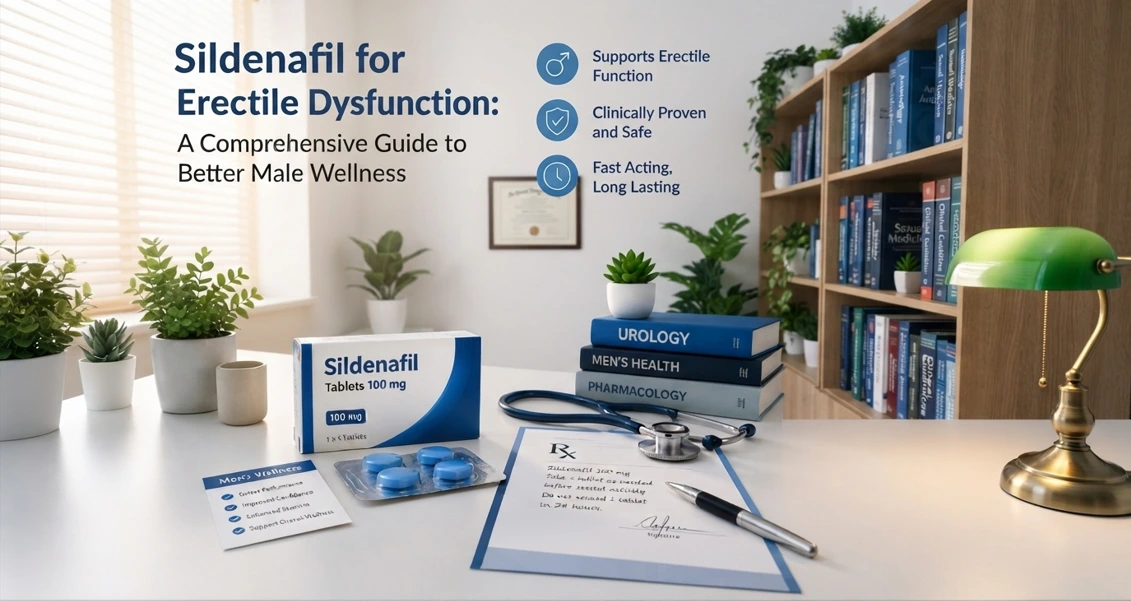
Sildenafil Citrate is a widely prescribed treatment for erectile dysfunction (ED). This guide explains how sildenafil citrate works, its benefits, proper use, safety tips, and potential side effects to help you use it effectively.
What Is Sildenafil?
Sildenafil is a prescription medication primarily used to treat erectile dysfunction (ED). It belongs to a class of medicines called phosphodiesterase type 5 (PDE5) inhibitors, which work by blocking the PDE5 enzyme to improve blood flow to the penis during sexual stimulation. Other medications in this class, such as Cialis (tadalafil), work in a similar way but differ in how long their effects last and their dosing options. This increased blood flow helps men achieve and maintain an erection suitable for sexual activity.
However, sildenafil does not cure ED, increase sexual desire, prevent pregnancy, or protect against sexually transmitted infections (STIs).First approved by the U.S. FDA in 1998 under the brand name Viagra, sildenafil citrate is now widely available as an affordable generic medication containing the same active ingredient.
How Does Sildenafil Work?
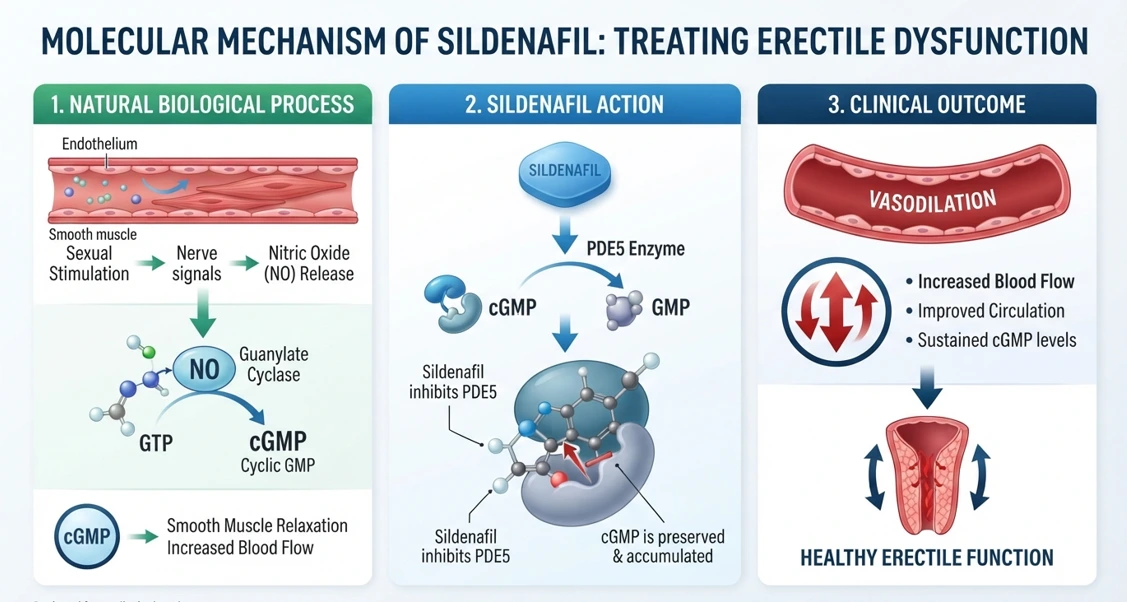
Sildenafil enhances the body’s natural erectile response by supporting the normal blood flow process. During sexual stimulation, the body releases nitric oxide (NO), which activates the production of cyclic guanosine monophosphate (cGMP). This chemical relaxes the smooth muscles and widens the blood vessels in the penis, allowing more blood to flow in and produce an erection.
In a man with ED, the levels of cGMP are often degraded too quickly by the PDE5 enzyme. This rapid breakdown prevents the blood vessels from staying dilated long enough for a firm, sustained erection. This is where sildenafil comes into play. As a PDE5 inhibitor, sildenafil blocks the action of this specific enzyme, slowing down the breakdown of cGMP. By preserving higher levels of cGMP, sildenafil enhances the body’s natural response to sexual stimulation, promoting and maintaining healthy blood flow to the penis.
Approved Uses of Sildenafil
While the approved uses of sildenafil are best known for treating erectile dysfunction, it also has another important FDA-approved application.
Erectile Dysfunction (ED)
The primary use of sildenafil is for the treatment of ED, which is the inability to get or keep an erection sufficient for satisfactory sexual performance . It is a reliable and effective treatment for many men, with clinical trials showing that 62% to 82% of men who take it report improved erections.
Pulmonary Arterial Hypertension (PAH)
Sildenafil is also approved under the brand name Revatio (in generic form) for the treatment of pulmonary arterial hypertension (PAH). PAH is a condition characterized by high blood pressure in the arteries of the lungs, which can cause symptoms such as shortness of breath, dizziness, and fatigue. In this condition, sildenafil works by relaxing the blood vessels in the lungs, allowing blood to flow more easily and reducing the workload on the heart.
The dosage and frequency of sildenafil for PAH differ significantly from those used to treat erectile dysfunction (ED). For PAH, it is typically taken three times a day, whereas for ED, it is taken as needed before sexual activity. Do not take sildenafil for ED if you are already prescribed Revatio for PAH, as combining these treatments is not recommended and may result in an unsafe total dose.
Dosage: Finding the Right Strength for You
Sildenafil for ED is available in three standard tablet strengths: 25 mg, 50 mg, and 100 mg. Your sildenafil dosage should be individualized based on your response to treatment and your healthcare provider’s recommendations.
A summary of the recommended dosages is presented below:
| Dosage | Effectiveness | Recommended For |
| 25 mg | Mild treatment effect with fewer side effects | Elderly patients, men with liver or kidney impairment, medication-sensitive individuals, and those taking interacting drugs |
| 50 mg | Balanced effectiveness for most users | Standard starting dose for the majority of men with erectile dysfunction |
| 100 mg | Strongest approved treatment effect | Healthy men who do not respond adequately to lower doses and can tolerate sildenafil well. |
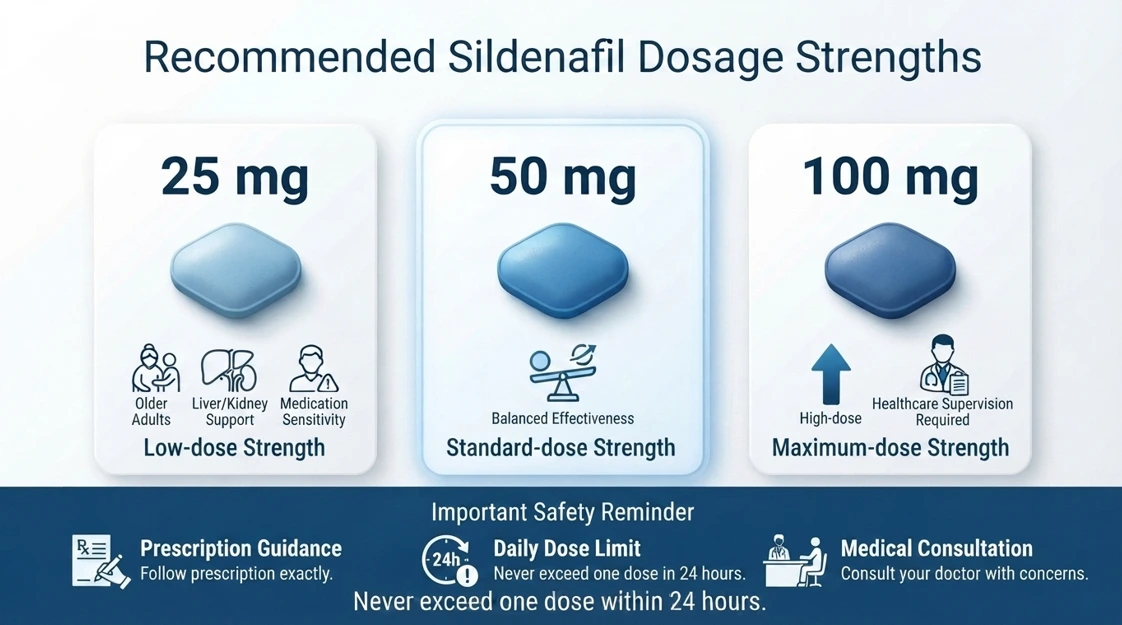
It is important to remember the maximum recommended dosing frequency for sildenafil is once per day. Taking more than the prescribed dose or taking it more than once daily increases the risk of side effects and does not improve the medication’s effectiveness.
How to Take Sildenafil for Best Results
Taking sildenafil correctly is key to ensuring it works effectively for you. Here are the most important points to remember.
Timing is Everything
For ED, you should take sildenafil as needed, roughly one hour before you anticipate sexual activity. It is effective when taken anywhere from 30 minutes to 4 hours before sex. Taking it too early (more than four hours before) or too late (less than 30 minutes before) may reduce its effectiveness. The medication does not need to be taken daily; it is only taken when you plan to be sexually active.
The Food Factor
You can take sildenafil with or without food. However, the type of meal you eat can significantly affect how well the drug works. A heavy or high-fat meal can slow down the absorption of sildenafil into your bloodstream. This delayed absorption means the drug will take longer to start working, and its peak effect may be reduced. For the most reliable and fastest results, it is best to take sildenafil on an empty stomach or after a light meal.
Alcohol and Grapefruit
Excessive alcohol consumption can impair your ability to get an erection and can also interfere with how sildenafil works, potentially reducing its effectiveness. It is best to limit alcohol intake when using this medication. Additionally, grapefruit and grapefruit juice can interfere with the enzymes in your body that break down sildenafil. This interaction can lead to higher levels of the drug in your blood, increasing the risk of side effects. Mention your grapefruit consumption to your healthcare provider before starting the medication.
Managing Side Effects: What to Expect
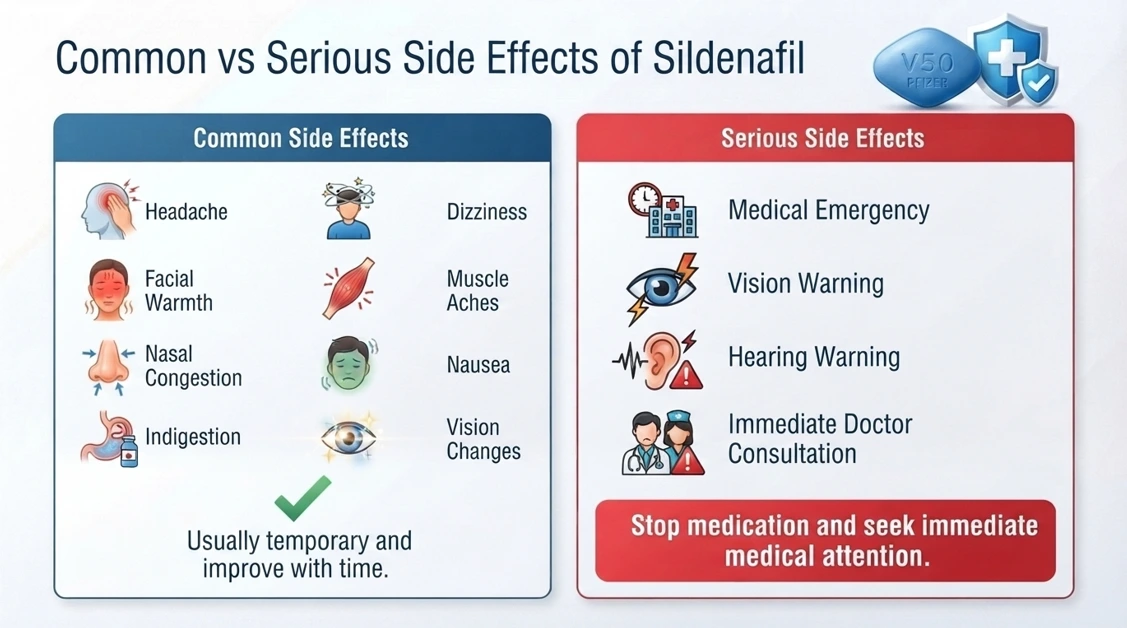
Like all medications, sildenafil can cause side effects. Most are mild and temporary, often resolving on their own as your body adjusts to the medication. It is important to be aware of both common and serious side effects.
Common Side Effects
These are reported by more than 2% of patients and are generally not a cause for alarm.
- Headache
- Flushing (feeling of warmth in the face, neck, or chest)
- Nasal congestion (stuffy or runny nose)
- Indigestion or heartburn
- Dizziness
- Back pain and muscle aches
- Nausea
- Rash
- Abnormal vision (such as a blue tinge to vision, sensitivity to light, or blurred vision).
Serious Side Effects
While rare, some side effects require immediate medical attention. If you experience any of the following, you should stop taking sildenafil and contact your healthcare provider or seek emergency care.
- Priapism: This is a painful erection that lasts for more than 4 hours. If this occurs, seek emergency medical assistance right away. If priapism is not treated promptly, it can cause permanent damage to penile tissue and lead to permanent loss of potency.
- Sudden Vision Loss: A sudden loss of vision in one or both eyes could be a sign of a rare condition called non-arteritic anterior ischemic optic neuropathy (NAION). While a causal relationship has not been definitively proven, men are advised to stop the medication and seek medical care immediately.
- Sudden Hearing Loss: A sudden decrease or loss of hearing, sometimes accompanied by ringing in the ears (tinnitus) or dizziness, has been reported in temporal association with the use of sildenafil. If this occurs, stop taking the medication and seek prompt medical attention.
Important Safety Information, Contraindications, and Drug Interactions
Sildenafil is a safe and effective treatment for most men, but it is not suitable for everyone. Understanding the contraindications and potential interactions is critical for your safety.
Who Should Not Take Sildenafil?
Sildenafil is absolutely contraindicated in men who take certain medications or have specific conditions.
- Nitrates: This is the most critical contraindication. Men who take any form of organic nitrates or nitric oxide donors including common medications for chest pain (angina) such as nitroglycerin, isosorbide dinitrate, and isosorbide mononitrate, as well as recreational drugs like “poppers” (amyl nitrate, butyl nitrate) must not take sildenafil. Combining sildenafil with these drugs can cause a severe and potentially life-threatening drop in blood pressure.
- Guanylate Cyclase (GC) Stimulators: Sildenafil should not be taken with medications like riociguat, which is used to treat PAH. This combination can also cause a dangerous drop in blood pressure.
- Hypersensitivity: Men with a known allergy or hypersensitivity to sildenafil or any other component of the tablet should not take it.
Cardiovascular Considerations
Sexual activity itself carries a potential cardiac risk for men with pre-existing cardiovascular disease. Therefore, sildenafil should not be used in men for whom sexual activity is inadvisable based on their cardiovascular status. A thorough medical assessment is essential before starting treatment.
Use sildenafil with caution if you have:
- A history of heart attack, stroke, or life-threatening arrhythmia within the last 6 months.
- Resting hypotension (low blood pressure) or uncontrolled hypertension (high blood pressure).
- Cardiac failure or coronary artery disease causing unstable angina.
Other Conditions Requiring Caution
Sildenafil should be used with caution in men with:
- Anatomical Penile Deformities: Conditions such as angulation, cavernosal fibrosis, or Peyronie’s disease.
- Conditions Predisposing to Priapism: This includes sickle cell anemia, multiple myeloma, or leukemia.
- Retinitis Pigmentosa: A rare inherited eye condition.
- Severe Renal or Hepatic Impairment: Men with these conditions often require a lower starting dose.
Critical Drug Interactions
Sildenafil citrate interacts with several other medications, which can either increase the risk of side effects or reduce its efficacy.
- Alpha-Blockers: These are often prescribed for an enlarged prostate or high blood pressure. Combining them with sildenafil can cause additive blood pressure-lowering effects, potentially leading to dizziness, lightheadedness, or fainting. If co-administration is necessary, a starting dose of 25 mg is recommended.
- CYP3A4 Inhibitors: Certain medications inhibit the CYP3A4 enzyme, which is responsible for breaking down sildenafil. These include some antibiotics (erythromycin, clarithromycin), antifungals (ketoconazole, itraconazole), and HIV protease inhibitors (Saquinavir, ritonavir). This inhibition can lead to increased sildenafil levels in the blood, increasing the risk of side effects. A starting dose of 25 mg is often recommended for these patients. For patients on ritonavir, the maximum single dose is 25 mg in a 48-hour period.
Lifestyle Factors That Enhance Erectile Function
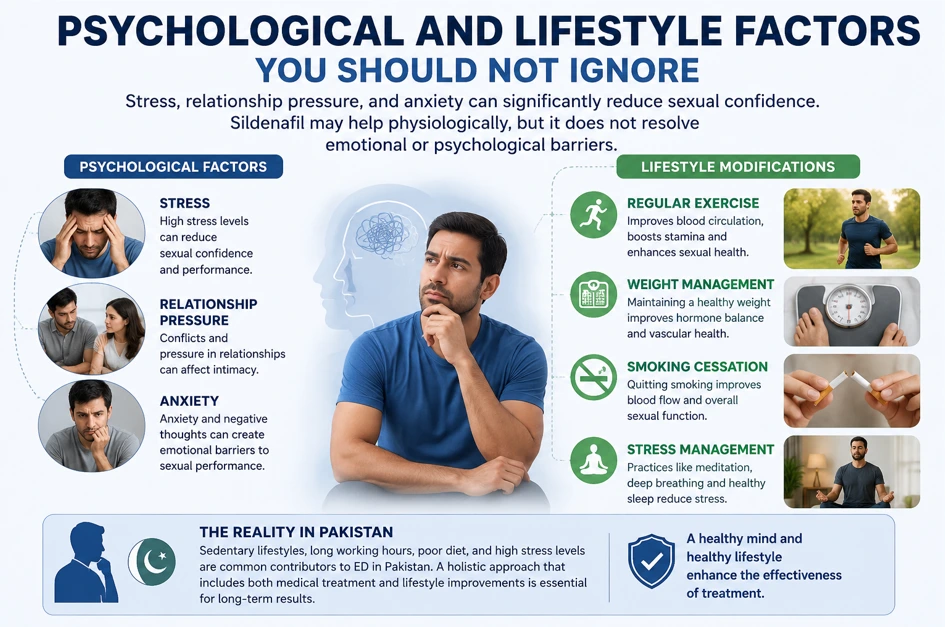
While sildenafil is highly effective, it works best as part of a comprehensive approach to male wellness. Integrating healthy lifestyle habits can improve overall erectile function and may even reduce the need for medication over time.
The Power of Aerobic Exercise
Regular physical activity has a profound impact on sexual health. A 2023 study found that men who exercised for 30 to 60 minutes three to five times a week saw significant improvement in mild to moderate ED, an improvement similar to that provided by common ED drugs. Another study showed that while PDE5 treatment alone improved erectile function in 39.3% of patients, when combined with regular aerobic exercise, the success rate jumped to 77.8%. The science behind this is that exercise enhances cardiovascular health, which is directly linked to blood flow and erectile function.
Diet and Nutrition
Adopting a heart-healthy, plant-based diet can contribute to better erectile function. Such diets are rich in nutrients that support healthy circulation and reduce inflammation. A diet that is low in fatty foods is also beneficial, as high-fat meals can interfere with the absorption of sildenafil itself.
Mental and Emotional Wellness
Erectile dysfunction often has psychological components, and the condition itself can significantly impact mental health. Anxiety, stress, and low self-esteem can both cause and be caused by ED, creating a vicious cycle. In fact, research estimates that approximately 40 percent of ED cases have psychological causes. For many men, taking sildenafil not only improves their physical function but also helps them regain confidence and self-esteem, breaking this cycle and improving their relationships.
Other Healthy Habits
- Quit Smoking: Smoking damages blood vessels and reduces blood flow, a primary cause of ED.
- Limit Alcohol: Excessive alcohol consumption can inhibit sexual function.
- Get Quality Sleep: Poor sleep can lower testosterone levels and impact libido and energy, which are essential for a healthy sex life.
Key Takeaways
- Understand the Mechanism: Sildenafil citrate is a PDE5 inhibitor that works by increasing blood flow to the penis during sexual arousal to help you get and maintain an erection. It does not create sexual desire or protect against STDs.
- Follow the Dosage Guidelines: The standard recommended dose is 50 mg, taken as needed about one hour before sex, but can be adjusted to 25 mg or 100 mg based on tolerance and effectiveness. The maximum frequency is once per day.
- Optimize Its Use: For best results, take sildenafil on an empty stomach or after a light meal and limit alcohol intake to avoid delayed or reduced effectiveness.
- Know the Red Flags: Be aware of common side effects like headaches and flushing, but seek immediate medical help for rare but serious events like priapism (erection >4 hours), sudden vision loss, or sudden hearing loss.
- Check for Interactions and Contraindications: Sildenafil is dangerous if taken with nitrates (often for chest pain). Always disclose all medications and supplements to your healthcare provider, especially those for blood pressure, prostate issues, or fungal infections.
- Adopt a Holistic Approach: The medication works best alongside a healthy lifestyle. Regular exercise, a good diet, and attention to mental well-being significantly improve erectile function and overall male wellness.
Frequently Asked Questions
Is sildenafil Citrate the same as Viagra?
Yes, Sildenafil is the generic version of Viagra and contains the same active ingredient, sildenafil citrate. Both medications work in the same way to treat erectile dysfunction and are equally effective. The main difference is that generic sildenafil is typically more affordable than the brand-name version.
How soon does sildenafil start working?
Sildenafil usually begins working within 30 to 60 minutes after taking the tablet. For the best results, take it on an empty stomach or after a light meal, as high-fat foods can delay absorption and reduce how quickly it takes effect.
How long do the effects of sildenafil last?
The effects of sildenafil generally last 4 to 5 hours. This does not mean you will have a continuous erection during that time. Instead, it enhances your body’s response to sexual stimulation, making it easier to achieve and maintain an erection. The duration may vary depending on factors such as dosage, age, overall health, and whether the medication was taken with food.
Can I take sildenafil every day?
Sildenafil is generally intended for as-needed use, approximately one hour before sexual activity, and should not be taken more than once within 24 hours. If you need a daily treatment for erectile dysfunction, your healthcare provider may recommend an alternative medication, such as tadalafil. Always follow your healthcare provider’s instructions regarding dosing.
What should I do if sildenafil doesn’t work for me?
If sildenafil does not work as expected, ensure you are taking it correctly—preferably on an empty stomach, with limited alcohol, and enough time before sexual activity. It may take several attempts to achieve the desired results. If it still doesn’t work, consult your healthcare provider to adjust the dose, explore alternative treatments, or assess underlying causes of erectile dysfunction. Never exceed the recommended dose or take more than one dose within 24 hours.