

Viagra Tablet, the little blue pill that revolutionized men’s health, remains the most recognized treatment for erectile dysfunction (ED) worldwide. This complete guide explores everything you need to know about Viagra.
Understanding Erectile Dysfunction and the Need for Treatment
Erectile dysfunction is the inability to achieve or maintain an erection sufficient for satisfactory sexual performance. This condition affects men of all ages, though its prevalence increases with age. ED can result from physical factors, psychological issues, or a combination of both.
Common causes of erectile dysfunction include cardiovascular disease, diabetes, high blood pressure, high cholesterol, obesity, stress, anxiety, depression, and certain medications. Lifestyle factors such as smoking, excessive alcohol consumption, and lack of exercise also contribute significantly.
The emotional and relational impact of ED should not be underestimated. Men with untreated ED often experience reduced self-esteem, anxiety about sexual performance, and strained relationships with their partners. This is why effective treatment options like Viagra are so important for overall male wellness.
What Is Viagra and How Does It Work?
Viagra is the brand name for sildenafil citrate, a medication belonging to a class of drugs called phosphodiesterase type 5 (PDE5) inhibitors. It treats erectile dysfunction by increasing blood flow to the penis during sexual stimulation. This increased blood flow enables men to get and maintain a firm erection suitable for sexual activity.
Understanding how Viagra works can help explain why sexual stimulation is required for the medication to be effective. The mechanism of action involves blocking the PDE5 enzyme, which is responsible for breaking down cyclic GMP (cGMP), a hormone that allows blood vessels in the penis to relax and expand. When PDE5 is inhibited, cGMP levels remain elevated, promoting sustained blood flow to the penile tissues during arousal.
Importantly, Viagra does not automatically produce an erection. Like other PDE5 inhibitors such as Cialis, it requires sexual stimulation to be effective. Sexual stimulation is absolutely necessary for the medication to work effectively . It also does not increase sexual desire or cure erectile dysfunction permanently.
The discovery of Viagra’s primary use was somewhat serendipitous. Scientists originally developed sildenafil citrate in 1989 to treat high blood pressure and angina. During clinical trials in the early 1990s, researchers noticed that many male participants experienced increased erections, leading to its repurposing as an ED treatment.
The Benefits of Using Viagra for Erectile Dysfunction
- Viagra offers numerous benefits for men struggling with erectile dysfunction. Understanding these advantages helps men make informed decisions about their treatment options.
- One of the primary benefits is improved sexual satisfaction. Clinical trials have shown that Viagra is effective for 62 to 82 percent of men, with effectiveness increasing with higher doses. This means the majority of men who use the medication experience improved ability to get and keep erections.
- The psychological benefits are equally significant. Treating erectile dysfunction often leads to reduced anxiety around sexual performance, decreased stress levels, and an improved overall sense of well-being. Many men report feeling more confident and relaxed in intimate situations when they know they have reliable support for their erections.
- Relationships often benefit as well. By improving sexual function, Viagra can help restore intimacy and connection between partners that may have been affected by ED. This can strengthen emotional bonds and improve overall relationship satisfaction.
- Flexibility represents another advantage. Viagra can be taken as needed, usually about one hour before sexual activity. This allows users to take the medication only when they plan on being sexually active, rather than committing to a daily medication regimen.
- Being a non-invasive oral medication is also a significant benefit. Compared to other ED treatments like penile implants, vacuum devices, or injections, Viagra offers a simple, discreet, and convenient option that requires no special preparation or equipment.
How to Take Viagra: Dosage Guidelines and Best Practices
Taking Viagra correctly makes a significant difference in how well it works. Following these guidelines ensures the best possible results while minimizing the risk of side effects.
Recommended Dosage
Viagra tablets come in three strengths: 25 milligrams, 50 milligrams, and 100 milligrams. For most patients, the recommended Viagra dosage is 50 milligrams, taken as needed approximately one hour before sexual activity. Based on effectiveness and toleration, your doctor may increase the dose to 100 milligrams or decrease it to 25 milligrams.
The maximum recommended dosing frequency is once per day. Taking more than one dose in a 24-hour period increases the risk of side effects without providing additional benefits.
Timing and Administration
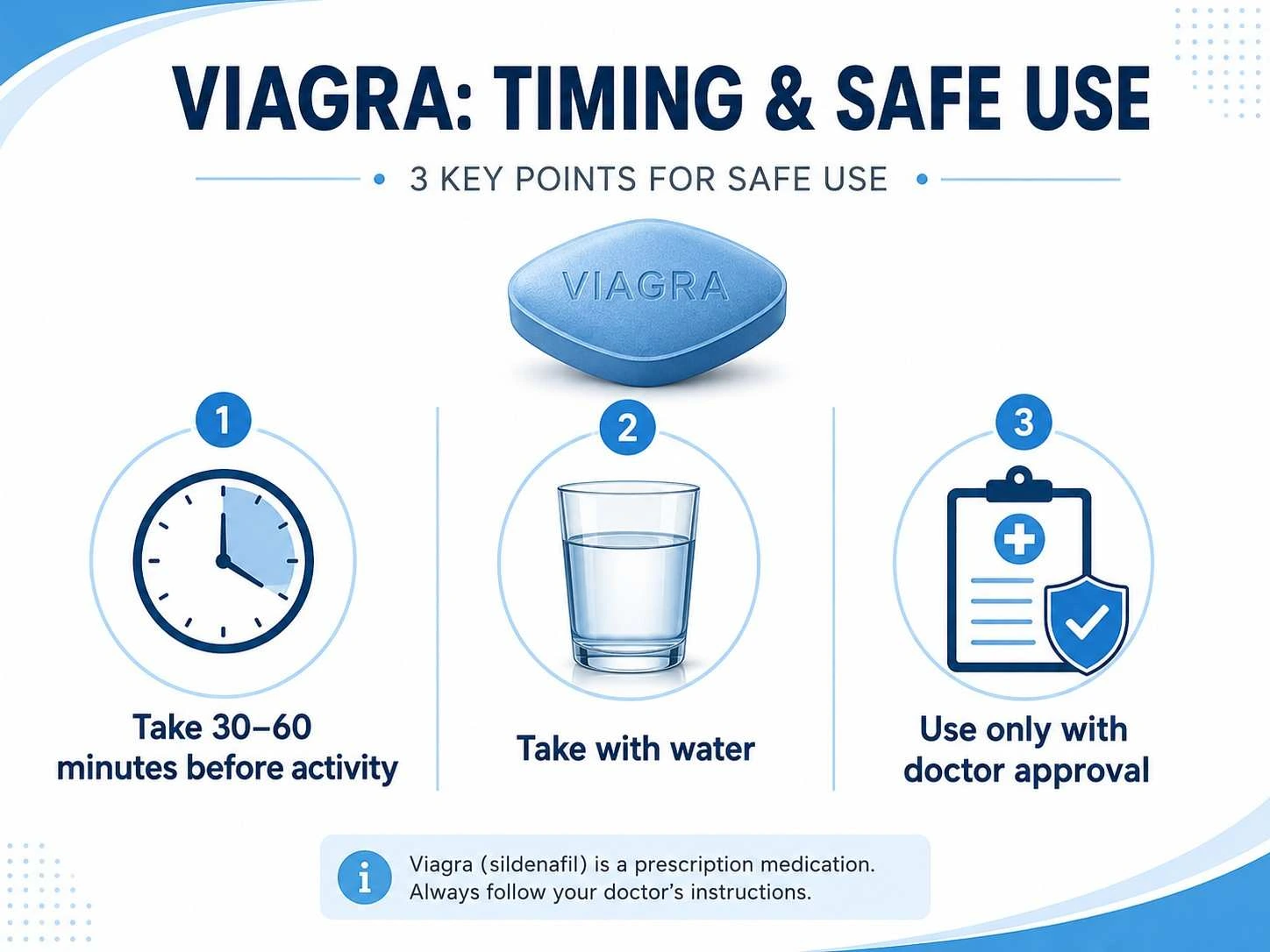
Viagra can be taken anywhere from 30 minutes to 4 hours before sexual activity. While it is most effective when taken about one hour before sex, the medication remains in your system and can support erections for up to 4 to 5 hours.
You can take Viagra with or without food, but a high-fat meal will delay how quickly the medication starts to work. For the fastest absorption and best results, take it on an empty stomach or after a light meal.
Swallow the tablet whole with water. Do not crush, chew, or split the tablet unless specifically directed to do so by your pharmacist.
Factors That Affect Effectiveness
Several factors influence how well Viagra works for you:
- Diet plays a significant role. Heavy or fatty meals can slow absorption and reduce the medication’s effectiveness. A cheeseburger and fries, for example, may delay the onset of action by 30 minutes or more.
- Alcohol consumption can also reduce effectiveness. Drinking too much can make it harder to get and keep an erection, even with Viagra. Moderate consumption is generally acceptable, but excessive drinking should be avoided.
- Your overall health status matters. Conditions like diabetes, cardiovascular disease, and hormonal imbalances can affect response to treatment. Men with these conditions may require dosage adjustments or combination therapies.
- The importance of sexual arousal cannot be overstated. Viagra requires sexual stimulation to be effective. The medication creates the physiological conditions for an erection, but psychological and physical arousal is still necessary.
What to Do If Viagra Doesn’t Work
If Viagra does not produce the desired effect, try taking it on an empty stomach with water, allow at least 30 to 60 minutes before sexual activity, ensure you are sexually aroused, and avoid excessive alcohol consumption. If you still experience no improvement after several attempts, speak with your healthcare provider. They may recommend a dosage adjustment or alternative treatment.
Doctors typically recommend trying a particular dosage at least eight times before switching to a higher dose or different medication. Sometimes it takes a while for the medication to work optimally, and the body needs time to respond consistently.
Available Strengths and Dosage Strategies
| Strength | Typical Use | Practical Notes |
| 25 mg | Sensitive users or older men | Lower side effect risk |
| 50 mg | Most men | Standard starting dose |
| 100 mg | Severe ED | Requires careful monitoring |
Doctors usually start with 50 mg and adjust based on response and tolerance.
On-Demand Use vs Regular Use
| Usage Pattern | Explanation |
| On-Demand | Take 30-60 minutes before sexual activity |
| Regular use | Only under medical supervision in selected cases |
Viagra is mainly designed for on-demand use rather than daily long-term therapy.
Side Effects of Viagra: What to Expect and When to Seek Help
Like all medications, Viagra can cause side effects. Understanding what to expect helps you use the medication safely and reduces unnecessary anxiety.
Common Side Effects
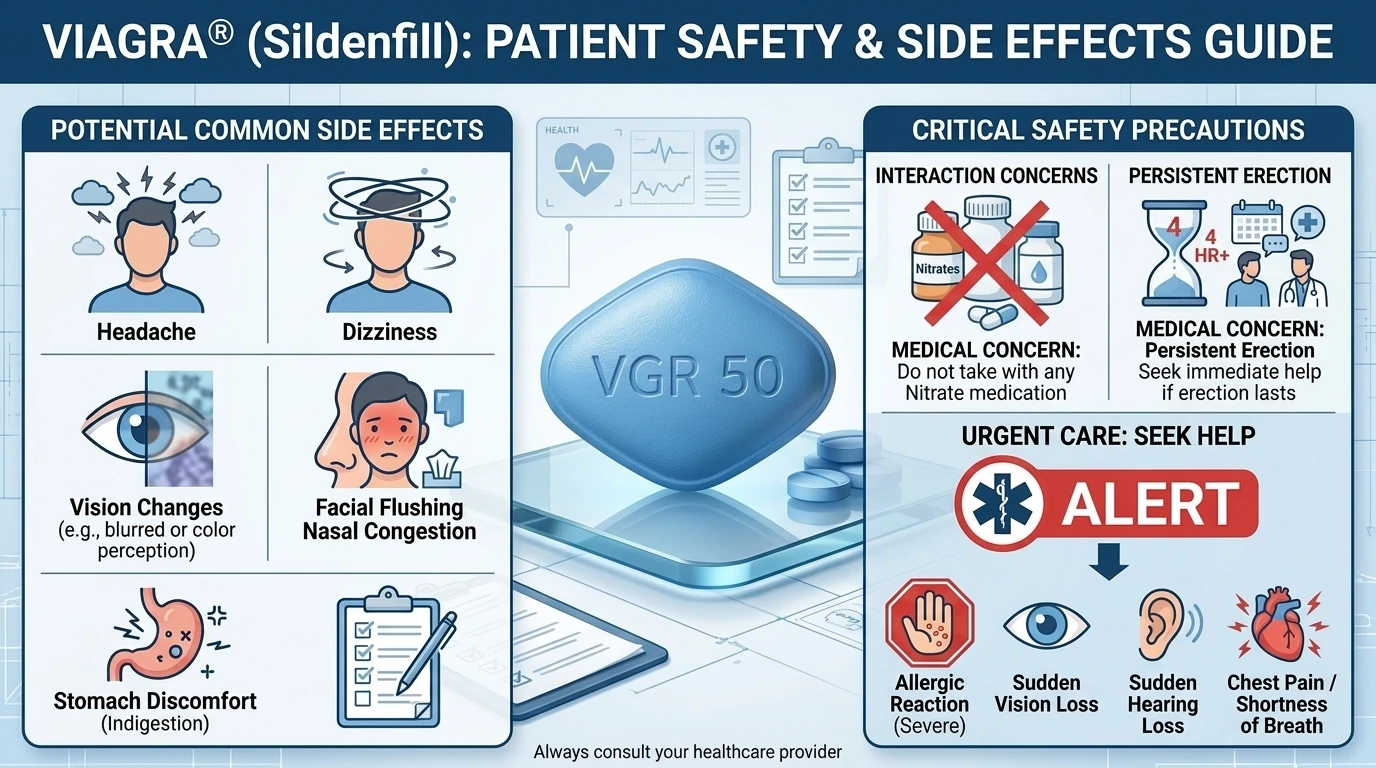
Most side effects are mild and temporary. The most frequently reported include headache, flushing (feeling of warmth in the face or chest), indigestion or upset stomach, nasal congestion, dizziness, changes in color vision (seeing a blue tinge or difficulty distinguishing blue and green), sensitivity to light, blurred vision, muscle aches, and back pain.
These side effects typically resolve on their own within a few hours or days as your body adjusts to the medication. If they persist or become bothersome, speak with your healthcare provider.
Serious Side Effects Requiring Immediate Attention
While rare, some side effects require emergency medical attention. Seek help immediately if you experience any of the following:
- An erection that is painful or lasts longer than 4 hours. This condition, called priapism, can cause permanent damage to the penis if not treated promptly. Do not delay seeking medical assistance.
- Sudden severe loss of vision in one or both eyes. This can be a sign of non-arteritic anterior ischemic optic neuropathy (NAION), a serious eye condition that may cause permanent vision loss. Stop taking Viagra and contact your healthcare provider immediately.
- Sudden decrease or loss of hearing, sometimes accompanied by ringing in the ears or dizziness. This requires prompt medical evaluation.
- Chest pain, irregular heartbeat, or worsening shortness of breath. These symptoms may indicate cardiovascular problems requiring urgent care.
- Severe allergic reactions including rash, itching, hives, difficulty breathing or swallowing, or swelling of the eyes, face, throat, or lips.
Long-Term Safety
For most men, Viagra is safe for long-term use when taken as directed. There is currently no evidence that taking the medication for extended periods causes lasting problems. Side effects like headaches, flushing, or indigestion are usually mild and may persist with regular use.
Regular check-ins with your healthcare provider are advisable, especially if you use Viagra frequently. This allows for monitoring of your overall health and any changes in your medical status that might affect your treatment plan.
Important Safety Information and Contraindications
Viagra is not suitable for everyone. Understanding who should avoid the medication and what precautions to take ensures safe use.
Who Should Not Take Viagra
- Viagra is contraindicated for men who take any form of nitrate medication, including nitroglycerin, isosorbide dinitrate, and isosorbide mononitrate. Combining Viagra with nitrates can cause a dangerous and potentially life-threatening drop in blood pressure. This also applies to recreational drugs called poppers that contain nitrates.
- Men taking guanylate cyclase stimulators such as riociguat should not use Viagra. This combination can also lead to unsafe reductions in blood pressure.
- Men who are allergic to sildenafil or any ingredients in Viagra tablets should avoid the medication.
- Men for whom sexual activity is inadvisable due to cardiovascular risk factors, such as those with severe heart disease, unstable angina, or recent heart attack or stroke, should not use Viagra. Sexual activity itself may pose a risk for these patients.
- Men who have experienced vision loss in one eye due to NAION should not take Viagra, regardless of whether the episode was connected to previous PDE5 inhibitor use.
Precautions and Medical History
Discuss your complete medical history with your healthcare provider before taking Viagra. Important conditions to disclose include:
Heart problems such as heart attack, irregular heartbeat, angina, narrowing of the aortic valve, or heart failure. History of heart surgery within the last 6 months. Stroke or transient ischemic attack. High or low blood pressure, particularly if not controlled. Deformed penis shape or conditions like Peyronie’s disease. History of priapism (erection lasting more than 4 hours). Blood cell problems including sickle cell anemia, multiple myeloma, or leukemia . Retinitis pigmentosa or other inherited eye diseases. Bleeding disorders . Stomach ulcers . Liver or kidney problems . Diabetes.
Drug Interactions
Many medications can interact with Viagra, increasing the risk of side effects or reducing effectiveness. Inform your healthcare provider about all medications you take, including prescriptions, over-the-counter drugs, vitamins, and supplements.
Particularly important interactions include:
- Alpha-blockers (used for prostate problems or high blood pressure): May cause significant blood pressure drops, dizziness, or fainting when combined with Viagra.
- HIV protease inhibitors (such as ritonavir): Can increase Viagra levels in the body and may require dosage adjustments.
- Oral antifungal medications (such as ketoconazole and itraconazole): May increase Viagra exposure and the risk of side effects.
- Certain antibiotics (including erythromycin and clarithromycin): Can affect Viagra metabolism and alter its effectiveness.
- Other blood pressure medications: May have additive blood-pressure-lowering effects when used with Viagra.
- Other ED treatments and PDE5 inhibitors: Should not be combined with Viagra due to increased risk of adverse effects.
- Grapefruit and grapefruit juice: May interfere with Viagra metabolism and should be avoided.
Viagra vs Other ED Treatments
Understanding how Viagra compares to other options helps you make an informed decision about your treatment.
Generic Sildenafil
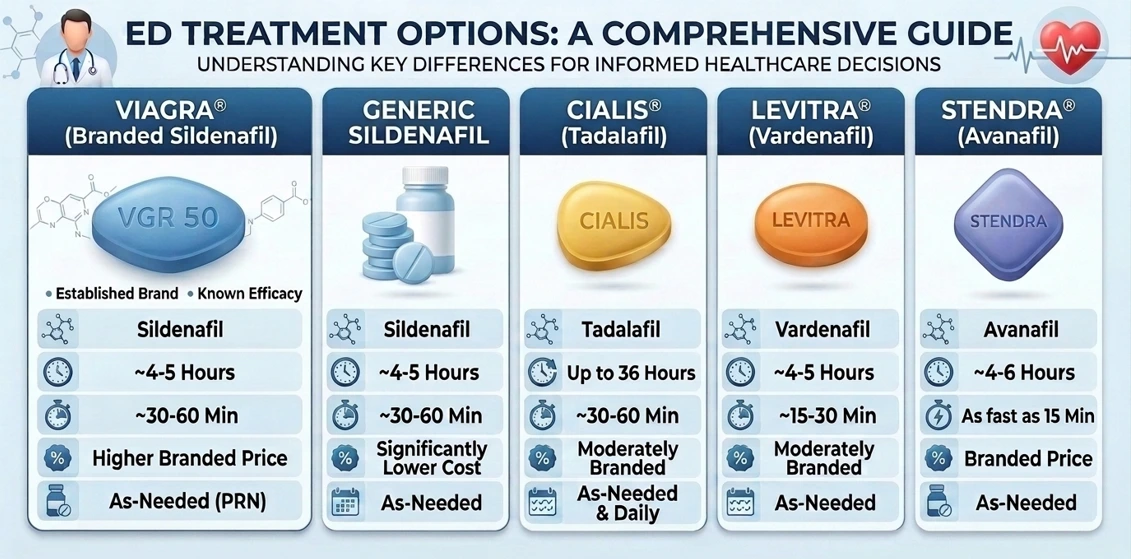
Viagra’s patent has expired, making generic sildenafil widely available at significantly lower costs. Generic sildenafil contains the same active ingredient and works identically to brand-name Viagra. The choice between brand and generic usually comes down to preference and cost, as efficacy is identical.
Other PDE5 Inhibitors
Other medications in the same class include Cialis (tadalafil), Levitra (vardenafil), and Stendra (avanafil). Each has slightly different characteristics. Cialis lasts up to 36 hours and can be taken daily. Levitra has a similar onset to Viagra but may cause fewer visual side effects. Stendra works more quickly, within 15 to 30 minutes for some men. These alternatives offer options for men who experience side effects with Viagra or who prefer different dosing regimens.
Alternative Treatments
For men who cannot take oral medications or do not respond to them, other treatments exist including penile injections, vacuum erection devices, penile implants, and lifestyle modifications. Psychological counseling may also help men with ED related to anxiety, stress, or relationship issues.
Maximizing Results: Lifestyle Factors and Best Practices
Beyond taking the medication correctly, several lifestyle factors can improve Viagra’s effectiveness and your overall sexual health.
Diet and Nutrition
Eating a heart-healthy diet supports erectile function naturally. Focus on fruits, vegetables, whole grains, lean proteins, and healthy fats. Limit processed foods, saturated fats, and simple sugars. Remember that high-fat meals delay Viagra absorption, so plan your meals accordingly on days you intend to be sexually active.
Exercise and Physical Activity
Regular exercise improves cardiovascular health, which is fundamental to erectile function. Aerobic activities like walking, jogging, swimming, or cycling help maintain blood vessel health and promote better erections. Pelvic floor exercises, known as Kegel exercises, can strengthen muscles involved in erections and ejaculatory control.
Stress Management
Psychological factors significantly affect erectile function. Stress, anxiety, and depression can interfere with arousal and response to medication. Practice stress reduction techniques such as deep breathing, meditation, or mindfulness. Consider speaking with a therapist if anxiety about sexual performance is affecting your enjoyment.
Sleep and Recovery
Quality sleep is essential for hormonal balance and overall health. Poor sleep patterns can affect testosterone production and erectile function. Aim for 7 to 9 hours of quality sleep per night.
Communication With Partners
Open communication with your partner about ED and its treatment can reduce anxiety and improve sexual experiences. Discussing expectations, concerns, and desires helps create a supportive environment that enhances treatment effectiveness.
Frequently Asked Questions
Is Viagra safe for long-term use?
For most men, Viagra is safe for long-term use when taken as directed. There is currently no evidence that taking the medication for extended periods causes lasting problems. Side effects like headaches, flushing, or indigestion are usually mild and may persist with regular use. Regular check-ins with your healthcare provider are advisable, especially if you use Viagra frequently. This allows for monitoring of your overall health and any changes in your medical status that might affect your treatment plan. However, if you have underlying health conditions like heart disease or take multiple medications, more frequent monitoring may be necessary.
Can I take Viagra daily?
Viagra is typically taken as needed, not every day. The maximum recommended dosing frequency is once per day. Daily use is not recommended because Viagra has a relatively short duration of action compared to other ED medications. However, some men with certain medical conditions may be prescribed a lower daily dose, but this should only be done under medical supervision. Taking Viagra more than once daily increases the risk of side effects without providing additional benefits.
What happens if I take Viagra and don’t have sex?
Viagra works by increasing blood flow to the penis in response to sexual stimulation. If you take Viagra but do not engage in sexual activity, you will typically not experience an erection. The medication does not automatically produce erections; it simply creates the physiological conditions that make them possible when arousal occurs. The medication will still be metabolized and eliminated by your body. You may still experience side effects like headache or flushing even without sexual activity.
Can I drink alcohol while taking Viagra?
Moderate alcohol consumption is generally acceptable with Viagra, but excessive drinking should be avoided. Alcohol can reduce the medication’s effectiveness by making it harder to achieve an erection despite the presence of the drug. Additionally, both Viagra and alcohol can lower blood pressure, and combining the two in excessive amounts may lead to dizziness, lightheadedness, or fainting. For best results, limit alcohol intake on days you plan to take Viagra.
Why does Viagra give me a headache?
Headache is one of the most common side effects of Viagra, occurring because the medication causes blood vessels throughout the body to dilate. This vasodilation increases blood flow not only to the penis but also to other areas, including the head. The headache is usually mild to moderate and resolves on its own within a few hours. Drinking water, resting in a dark room, or using over-the-counter pain relievers like acetaminophen may help. If headaches persist or become severe, discuss this with your healthcare provider.
How long does it take for Viagra to work?
Viagra usually starts working within 30 to 60 minutes after taking it . However, this can vary based on several factors including metabolism, what you’ve eaten, and how much alcohol you’ve consumed. A high-fat meal can significantly delay absorption, potentially extending the onset time to 90 minutes or more. The effects of Viagra can last up to four to five hours, during which time you can achieve erections in response to sexual stimulation.
What should I do if I experience an erection lasting more than 4 hours?
An erection lasting more than 4 hours is a medical emergency called priapism. Seek immediate medical attention at the nearest emergency room. Do not wait to see if it resolves on its own. Untreated priapism can cause permanent damage to the penis and lead to long-term erectile dysfunction. If you cannot get to a hospital immediately, call emergency services for guidance.
Can women take Viagra?
Viagra is not approved for use in women. The medication was developed specifically for erectile dysfunction in men, and its safety and effectiveness in women have not been established. Women with certain medical conditions may be prescribed sildenafil for other indications, such as pulmonary arterial hypertension under the brand name Revatio, but this is a different medical use and should only occur under close medical supervision.
Does Viagra cause permanent vision loss?
A small number of men taking Viagra have reported sudden vision loss, sometimes permanent, though it is not known whether the medication caused this condition. This condition, called NAION (non-arteritic anterior ischemic optic neuropathy), occurs when blood flow to the optic nerve is blocked. The exact relationship between PDE5 inhibitors and NAION remains unclear, but men with certain risk factors are advised to use caution. If you experience sudden vision loss in one or both eyes, stop taking Viagra and seek immediate medical attention.
Key Takeaways
- Viagra has transformed erectile dysfunction treatment by offering millions of men a reliable, effective, and convenient solution that can improve overall quality of life.
- Understanding how Viagra works, how to take it correctly, and what to expect helps users maximize benefits while reducing potential risks.
- Viagra is a treatment option, not a cure for underlying health conditions that may contribute to erectile dysfunction.
- Combining Viagra with healthy lifestyle practices, addressing psychological factors, and maintaining open communication with healthcare providers and partners can support better outcomes.
- Always use Viagra under medical supervision and share your complete health history and current medications with your healthcare provider.
- Do not exceed the recommended dosage to help minimize the risk of side effects and complications.
- When used properly, Viagra can help improve confidence, support satisfying sexual experiences, and strengthen intimate relationships.