

This comprehensive guide explains Viagra tablet uses, how the medication works, its recommended dosage, benefits, potential side effects, and important safety precautions.
What Is Viagra and How Does It Work?
Viagra is the brand name for sildenafil citrate, a PDE5 inhibitor used to treat erectile dysfunction (ED). During sexual stimulation, the body releases nitric oxide, which increases cyclic guanosine monophosphate (cGMP) levels. This relaxes the smooth muscles in the penis, allowing more blood to flow in and produce an erection.
Viagra works by blocking the PDE5 enzyme, preventing the breakdown of cGMP. This helps maintain increased blood flow, making it easier to achieve and sustain an erection. However, Viagra only works in the presence of sexual stimulation and does not cause an automatic erection.
Viagra is available in 25 mg, 50 mg, and 100 mg tablets. The recommended starting dose for most men is 50 mg, taken about one hour before sexual activity. Your doctor may adjust the dose based on its effectiveness and how well you tolerate the medication.
How Viagra Differs from Other ED Treatments
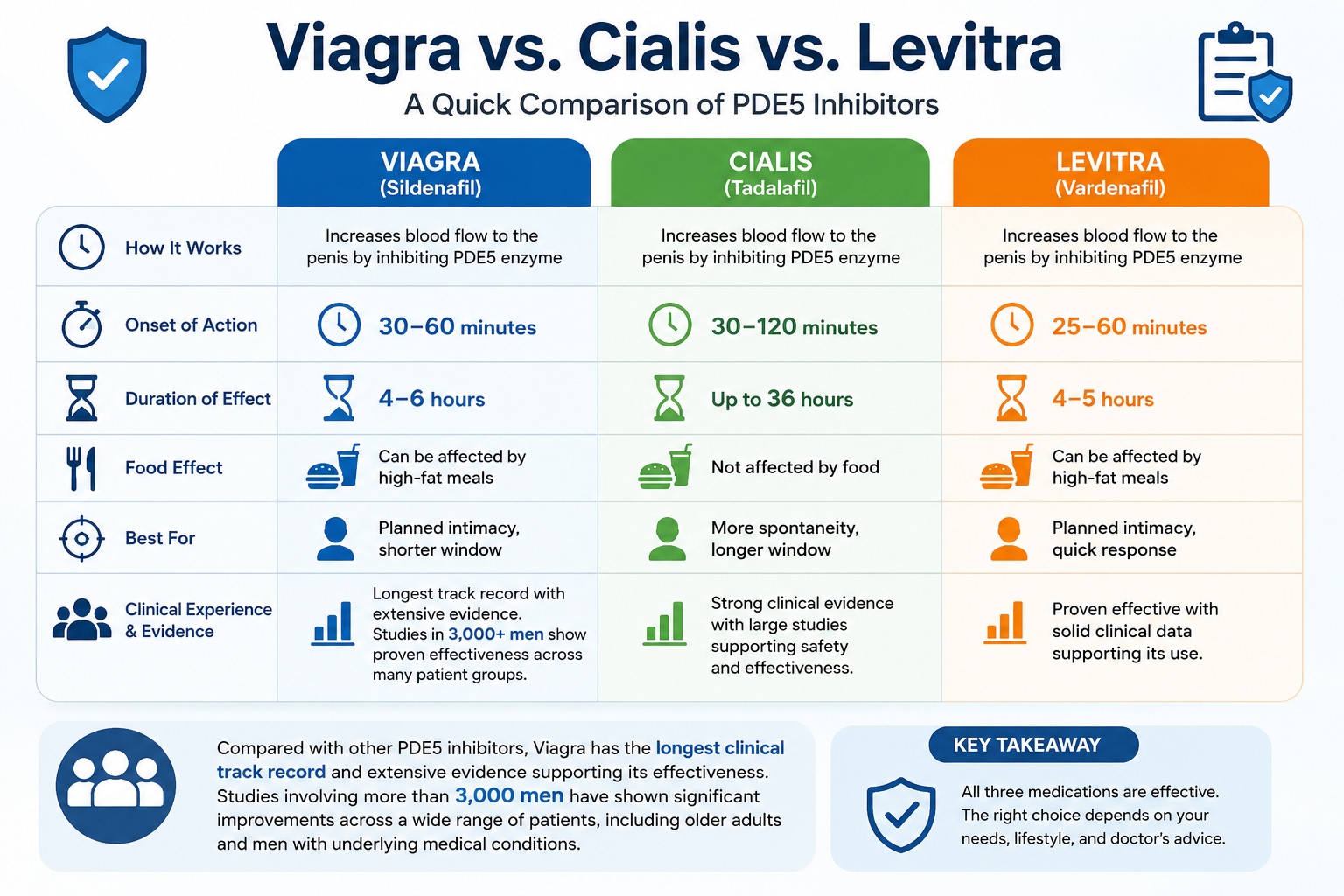
Viagra is one of the most researched and widely prescribed treatments for erectile dysfunction. Its active ingredient, sildenafil, selectively targets the PDE5 enzyme to improve blood flow while maintaining a well-established safety profile.
Compared with other PDE5 inhibitors, such as Cialis (tadalafil) and Levitra (vardenafil), Viagra has the longest clinical track record and extensive evidence supporting its effectiveness. Studies involving more than 3,000 men have shown significant improvements across a wide range of patients, including older adults and men with underlying medical conditions.
Primary Viagra Tablet Uses and Benefits
Treatment of Erectile Dysfunction
The primary use of Viagra is treating erectile dysfunction (ED), the persistent inability to achieve or maintain an erection sufficient for satisfactory sexual performance. Clinical studies have consistently shown that Viagra significantly improves erectile function in men with organic, psychological, or mixed causes of ED.
Research shows that 62% to 82% of men experienced improved erections depending on the dose, compared with 24% on placebo. Viagra also increased successful intercourse rates and improved overall sexual satisfaction, including erection quality, orgasm, and confidence.
Benefits Beyond Physical Function
The benefits of Viagra extend beyond improving erections. By restoring erectile function, it can boost confidence, reduce performance anxiety, and strengthen intimate relationships, leading to better overall quality of life.
Long-term studies also show that Viagra remains effective with continued use. Up to 88% of men reported sustained improvement in erections after one year, making it a reliable long-term treatment option for chronic erectile dysfunction.
Using Viagra for Sexual Confidence
An often overlooked aspect of Viagra tablet use is its role in restoring sexual confidence. Many men experience a cycle where anxiety about erectile function leads to performance issues, which in turn increases anxiety. This cycle can be difficult to break without intervention.
Viagra provides a tangible solution. By enabling erections when sexually stimulated, it removes the uncertainty that often contributes to performance anxiety. Many men report that once they experience success with the medication, their confidence increases to the point where they may need it less frequently.
The medication should be seen as a tool to support healthy sexual function, not a crutch. When used as prescribed and in conjunction with open communication with your partner, Viagra can help restore natural patterns of sexual intimacy.
Proper Dosage and Administration of Viagra
Recommended Starting Dose
Getting the right dosage is essential for effectiveness. The standard starting dose for most men is 50 mg, taken as needed approximately one hour before sexual activity. This dose provides a good balance between effectiveness and tolerability for the majority of patients.
Your doctor may adjust this dose based on your individual response. If you find the 50 mg dose is not effective enough and you tolerate it well, you may be increased to 100 mg. Conversely, if you experience significant side effects on 50 mg, your doctor may reduce your dose to 25 mg . The maximum recommended dose is 100 mg, and you should not take more than one tablet in a 24-hour period.
The flexibility in dosing allows for personalization of treatment. Some men find that lower doses work well for them, while others require the maximum dose for satisfactory results. Your healthcare provider will guide you toward the most appropriate dose based on your individual circumstances, overall health, and response to the medication.
Timing and Administration Tips
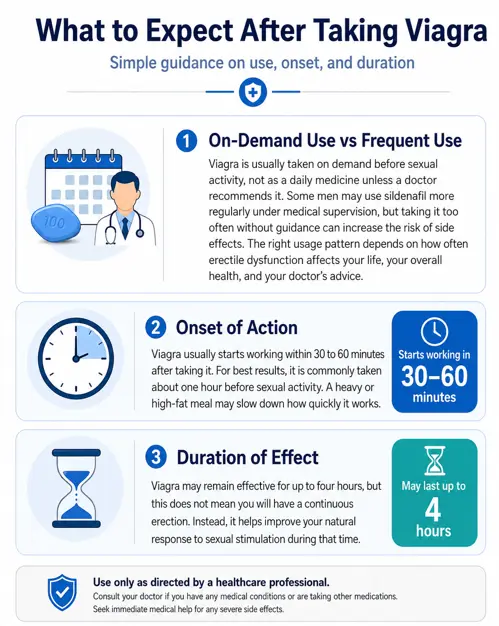
To use Viagra effectively, take Viagra 30 to 60 minutes before sexual activity, although it can be taken up to 4 hours in advance. It works best when taken on an empty stomach or with a light meal, as high-fat meals may delay its effects.
Limit alcohol consumption, as excessive drinking can reduce Viagra’s effectiveness and increase the risk of side effects. Swallow the tablet whole with water and take only the dose prescribed by your healthcare provider. Never adjust your dose without medical advice.
Dosage Adjustments for Special Populations
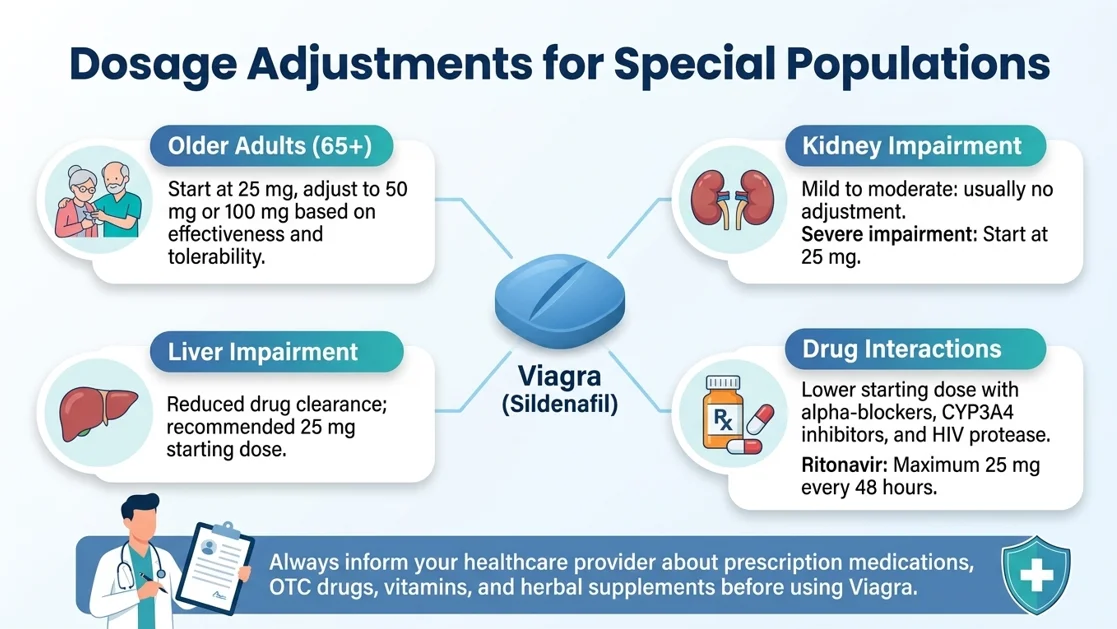
Viagra tablet uses require careful consideration in certain populations. Dose adjustments may be necessary based on age, kidney function, liver function, and concomitant medication use.
- Older Adults (65+): A starting dose of 25 mg is recommended, with adjustments to 50 mg or 100 mg based on effectiveness and tolerability.
- Kidney Impairment: No adjustment is usually needed for mild to moderate impairment. Men with severe kidney disease should start with 25 mg.
- Liver Impairment: Patients with liver conditions, such as cirrhosis, should begin with a 25 mg dose due to slower drug clearance.
- Drug Interactions: Men taking alpha-blockers, CYP3A4 inhibitors, or HIV protease inhibitors may require a lower starting dose. Those taking ritonavir should not exceed 25 mg every 48 hours.
Always tell your healthcare provider about all prescription medications, over-the-counter drugs, vitamins, and herbal supplements before using Viagra to help prevent potentially harmful drug interactions.
How Long Do the Effects Last?
Understanding the duration of Viagra tablet uses is important for planning. The medication’s effects typically last for up to 4 to 5 hours after taking it. However, this does not mean you will have an erection for the entire period. Instead, Viagra makes it easier to achieve and maintain an erection when you are sexually aroused during this window. This is one of the main benefits of Viagra for many men with erectile dysfunction.
The duration can be influenced by several factors. Higher doses tend to provide longer-lasting effects, while individual metabolism plays a role in how quickly the medication is processed by the body. Age, food intake, and alcohol consumption can all affect both the onset and duration of action.
If you experience an erection that lasts longer than 4 hours, you should seek immediate medical attention. Priapism, or a prolonged erection, is a rare but serious side effect that can cause permanent damage to penile tissues if not treated promptly.
Medical Conditions and Viagra Uses
Who Can Take Viagra?
Understanding who can safely benefit from Viagra tablet uses starts with identifying suitable candidates. Viagra is intended for adult men diagnosed with erectile dysfunction. The medication has demonstrated effectiveness across various patient populations, but it is not appropriate for everyone.
You are generally a candidate for Viagra if you are over 18, have been diagnosed with ED, and are in good enough cardiovascular health to engage in sexual activity safely. Sexual activity itself places additional strain on the heart, which may be a concern for men with underlying cardiac conditions .
Your healthcare provider will evaluate your medical history and overall health to determine whether Viagra is right for you. Be prepared to discuss any cardiovascular conditions, including high blood pressure, heart disease, and history of stroke. Your doctor will also review your current medications to check for potential interactions.
Conditions That May Affect Viagra Use
Cardiovascular Conditions: Heart health is an important consideration when using Viagra. It should not be used if sexual activity is unsafe due to cardiovascular disease. Men who have had a heart attack within the past 6 months, have severe heart failure, or uncontrolled high blood pressure should avoid Viagra and consult their healthcare provider.
Eye Conditions: Viagra can affect the retina due to its mild effect on PDE6, an enzyme found in the eye. Men with retinitis pigmentosa, a rare genetic eye disease, should use caution. If you have ever experienced sudden vision loss due to a condition called non-arteritic anterior ischemic optic neuropathy (NAION), you should not take Viagra .
Blood Cell Disorders: Conditions like sickle cell anemia, multiple myeloma, or leukemia may increase the risk of priapism, a prolonged and painful erection. Men with these conditions should use Viagra with caution .
Anatomical Issues: Men with a deformed penis shape, Peyronie’s disease, or a history of priapism should discuss these conditions with their doctor before taking Viagra. These structural issues can increase the risk of complications.
Contraindications: When You Should Not Take Viagra
Nitrates: The most critical contraindication is concurrent use of nitrates. Men taking any form of nitrate medication for chest pain, including nitroglycerin, isosorbide dinitrate, and isosorbide mononitrate, should never take Viagra. The combination can cause a dangerous and potentially fatal drop in blood pressure . Street drugs containing nitrates, such as amyl nitrate or “poppers,” also fall into this category. These substances, sometimes used recreationally, similarly increase the risk of severe hypotension when combined with Viagra .
Guanylate Cyclase Stimulators: Riociguat (Adempas), a medication for pulmonary hypertension, is another absolute contraindication. Taking Viagra with this medication can also cause dangerous drops in blood pressure .
Allergy: Men who are allergic to sildenafil or any of the inactive ingredients in Viagra tablets should not take the medication. Signs of an allergic reaction can include rash, itching, swelling, severe dizziness, or difficulty breathing .
Using Viagra with Other Medications
Viagra tablet uses can be complicated by interactions with other medications. Understanding these potential interactions helps prevent adverse effects.
Alpha-blockers: Medications like terazosin (Hytrin), tamsulosin (Flomax), doxazosin (Cardura), and others used for prostate problems or high blood pressure can interact with Viagra. In some patients, the combination can lead to a drop in blood pressure or fainting. If you are taking an alpha-blocker, your doctor will likely start you on a 25 mg dose of Viagra and monitor you carefully .
CYP3A4 Inhibitors: Medications that inhibit the CYP3A4 enzyme can increase sildenafil levels in your blood. This includes certain antifungal medications like ketoconazole and itraconazole, some antibiotics like erythromycin and clarithromycin, and HIV protease inhibitors. A starting dose of 25 mg is often recommended .
Other ED Medications: You should never combine Viagra with other medications or treatments for erectile dysfunction. This includes other PDE5 inhibitors like tadalafil (Cialis) or vardenafil (Levitra), as well as other ED treatments. Combining these can increase the risk of side effects .
Side Effects and Safety Profile
Common Side Effects
Like all medications, Viagra tablet uses may cause side effects. Most are mild to moderate in severity and resolve on their own. Understanding what to expect can help you use the medication more confidently.
The most commonly reported side effects include:
- Headache
- Facial flushing (redness and warmth)
- Indigestion or upset stomach
- Stuffy or runny nose
- Dizziness
- Abnormal vision, including changes in color perception (blue tinge) and blurred vision
These side effects occur because the medication also affects PDE5 in other tissues. For example, flushing results from vasodilation in facial blood vessels, while nasal congestion occurs due to dilation of blood vessels in the nasal passages.
Most men find these side effects tolerable, especially when balanced against the benefits of restored erectile function. They typically decrease in intensity with continued use. If you experience bothersome side effects, discuss them with your healthcare provider. They may recommend a lower dose or suggest strategies to minimize discomfort.
Rare but Serious Side Effects
Although uncommon, some side effects require immediate medical attention:
- Priapism: An erection lasting more than 4 hours is a medical emergency and can cause permanent damage if left untreated.
- Sudden Vision Loss: Stop taking Viagra and seek medical help immediately if you experience sudden vision loss in one or both eyes.
- Sudden Hearing Loss: Hearing loss, ringing in the ears (tinnitus), or dizziness should be evaluated by a doctor without delay.
- Allergic Reactions: Symptoms such as rash, swelling of the face or throat, difficulty breathing, or severe dizziness require emergency care.
- Cardiovascular Events: Rare cases of heart attack, stroke, and irregular heartbeat have been reported, particularly in men with underlying heart disease. Discuss your cardiovascular health with your doctor before using Viagra.
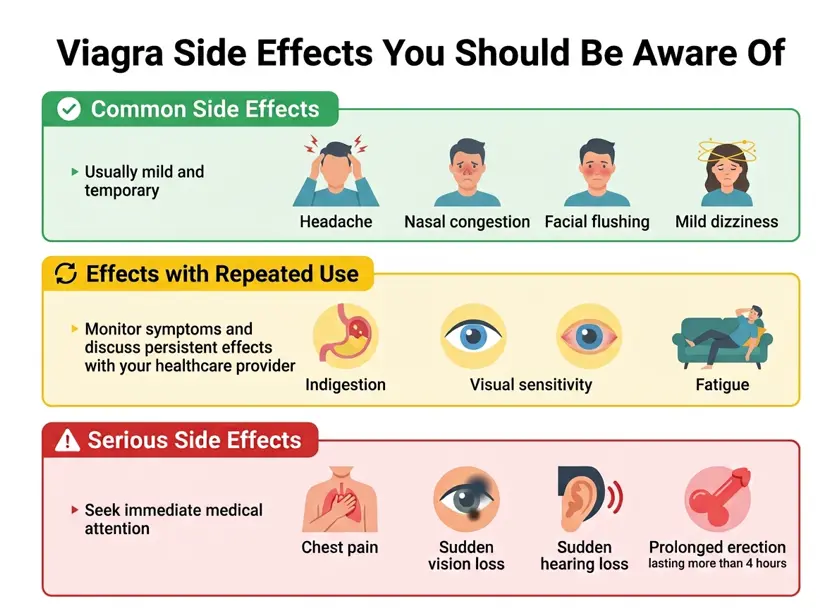
A guide to side effects associated with viagra tablet uses.
Managing Side Effects
Practical strategies can help minimize side effects from Viagra tablet uses. Knowing how to respond to adverse effects can improve your experience with the medication.
Headache: This common side effect can often be managed with over-the-counter pain relievers like acetaminophen or ibuprofen. Staying well-hydrated may also help. If headaches are severe or persistent, discuss this with your doctor, who may recommend a lower dose.
Indigestion: Taking Viagra with a light meal or snack may help reduce stomach upset. However, avoid heavy, high-fat meals, as these can delay the medication’s absorption and reduce its effectiveness. Antacids can sometimes help, but check with your pharmacist about potential interactions.
Dizziness: If you feel dizzy, avoid driving or operating machinery until the sensation passes. Get up slowly from sitting or lying positions, as sudden changes in posture can worsen dizziness. If dizziness is severe, contact your healthcare provider.
Vision Changes: Visual side effects, particularly the blue tinge to vision or increased sensitivity to light, generally resolve as the medication clears from your system. If these are bothersome, a lower dose may be recommended. Inform your doctor about any persistent vision changes.
Long-Term Safety Considerations
Current evidence does not suggest that long-term use of Viagra causes lasting health problems. Side effects like headaches, flushing, and indigestion, while they may occur with each dose, typically do not indicate long-term harm. These effects are related to the medication’s mechanism of action and usually subside as the drug is metabolized and eliminated from the body.
Regular check-ins with your healthcare provider are advisable, especially if you use Viagra frequently. Your doctor can assess whether the medication continues to be appropriate for you and whether any adjustments are needed. If you have underlying health conditions that progress over time, your medication needs may change.
It is also important to note that erectile dysfunction can be an early warning sign of underlying cardiovascular disease. If you develop ED, it is worth discussing with your doctor, even if Viagra effectively treats your symptoms. Treating ED with medication does not address potential underlying health issues that may need medical attention.
Effectiveness of Viagra: What to Expect
Factors Affecting Effectiveness
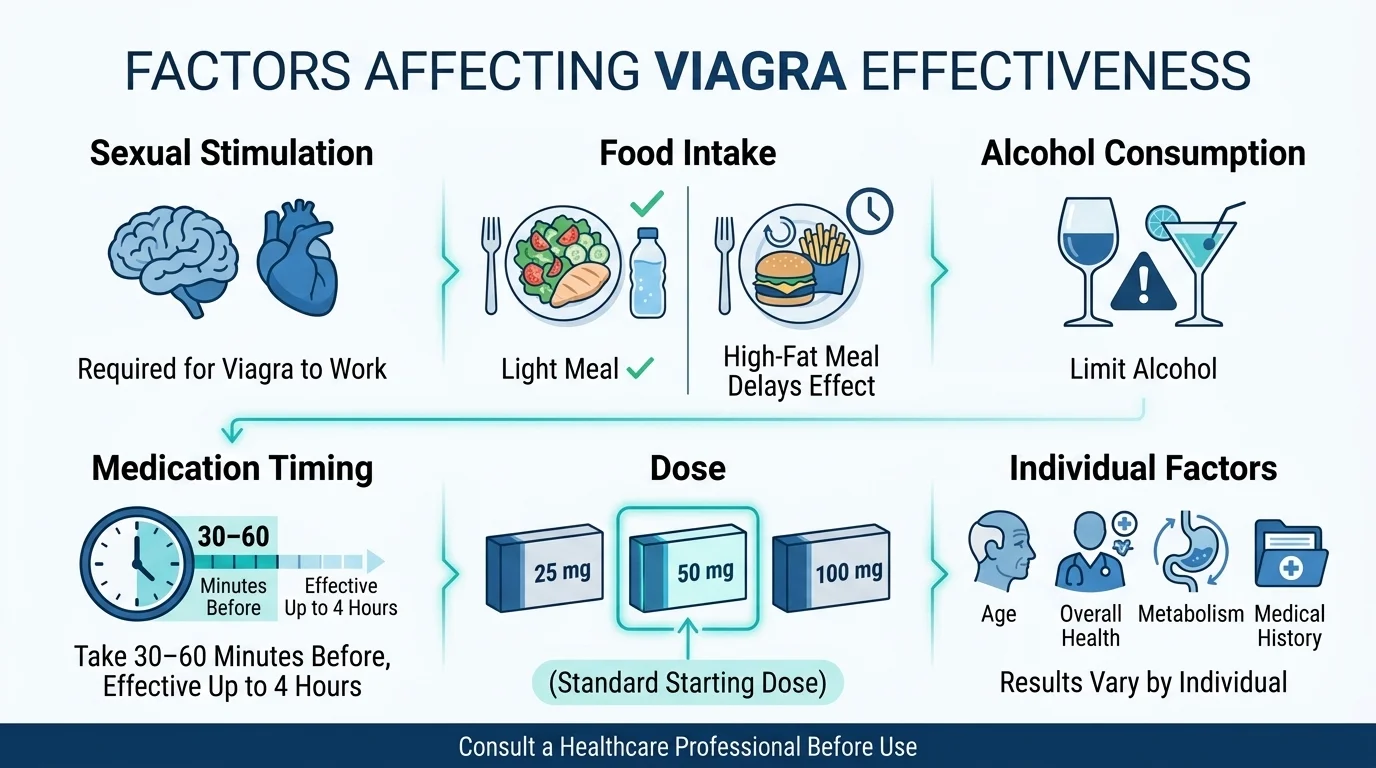
Several factors can influence how well Viagra tablets work for you. Understanding these can help optimize your results.
Sexual Stimulation: Viagra only works if you are sexually stimulated. The medication facilitates the physiological response to arousal but does not create desire or physical arousal on its own. If you are not feeling aroused, the medication will not be effective.
Food Intake: Taking Viagra with a heavy or high-fat meal can slow absorption, delay the onset of action, and potentially reduce effectiveness. For the best results, consider taking it on an empty stomach or with a light meal.
Alcohol Consumption: Excessive alcohol intake can impair erectile function and reduce the effectiveness of Viagra. It can also increase the risk of side effects. Moderate drinking may be acceptable for some men, but discuss this with your healthcare provider.
Medication Timing: Taking Viagra too close to sexual activity may not allow enough time for optimal effect. The recommended timing is about one hour before sexual activity, but the medication can be taken anywhere from 30 minutes to 4 hours before.
Dose: Not everyone responds equally to the same dose. If you are not achieving satisfactory results on your current dose, discuss this with your doctor. They may recommend increasing to 100 mg or, if side effects are an issue, decreasing to 25 mg.
Individual Variation: Response to Viagra can vary based on age, overall health, metabolism, and the underlying cause of your ED. Some men find that the medication works extremely well, while others may require a dose adjustment or alternative treatment.
Combining Viagra with Lifestyle Changes
The Role of Diet and Exercise
While Viagra tablets provide an effective solution for ED, combining the medication with healthy lifestyle changes can enhance its effectiveness and potentially reduce your reliance on it. Addressing the root causes of ED through lifestyle modifications can improve your overall health and sexual function.
Cardiovascular Exercise: Regular aerobic exercise improves blood flow throughout the body, including to the penis. Activities like brisk walking, jogging, swimming, or cycling for 30 minutes most days of the week can significantly improve erectile function. Exercise helps maintain healthy blood vessels, reducing the risk of conditions that cause ED.
Weight Management: Obesity is a risk factor for ED, in part because excess weight contributes to cardiovascular disease and diabetes. Losing weight can improve erectile function by enhancing blood flow and reducing inflammation in blood vessels. Even modest weight loss can produce significant improvements.
Dietary Changes: A heart-healthy diet rich in fruits, vegetables, whole grains, and lean proteins supports vascular health. Limit saturated fats, trans fats, and processed foods. Some studies suggest that a Mediterranean diet, rich in olive oil, fish, and antioxidants, may have particular benefits for sexual health.
Managing Stress and Anxiety
Psychological health can significantly affect erectile function and the effectiveness of Viagra. Managing stress, anxiety, and sleep can improve treatment outcomes.
- Manage Stress: Techniques like meditation, deep breathing, and regular exercise can reduce stress and support healthy blood flow.
- Reduce Performance Anxiety: Worrying about sexual performance can worsen ED. Viagra may help restore confidence and break this cycle.
- Prioritize Sleep: Aim for 7–9 hours of quality sleep each night, as poor sleep and conditions like sleep apnea can contribute to erectile dysfunction.
Frequently Asked Questions
What exactly does Viagra do?
Viagra treats erectile dysfunction by increasing blood flow to the penis during sexual stimulation. It works by blocking the PDE5 enzyme, allowing blood vessels to relax and improve circulation. However, Viagra only works when sexual arousal is present and does not increase sexual desire.
How long does it take for Viagra to work?
Viagra typically starts working within 30 to 60 minutes after taking the tablet. It is best taken about one hour before sexual activity, and its effects usually last for 4 to 5 hours. Taking it with a heavy or high-fat meal may delay how quickly it begins to work.
How often can I take Viagra?
Viagra should be taken only once within a 24-hour period. The recommended starting dose for most men is 50 mg, but your doctor may adjust it to 25 mg or 100 mg depending on your response and tolerance. Never exceed the prescribed dose without medical advice.
What happens if Viagra doesn’t work?
If Viagra doesn’t work, make sure you are taking it correctly, allowing enough time before sexual activity, and avoiding heavy meals or excessive alcohol. It may take a few attempts to achieve the best results. If it remains ineffective, consult your doctor to discuss dosage adjustments or other treatment options.
Can I take Viagra if I have heart problems?
It depends on the type and severity of your heart condition. While many men with stable cardiovascular disease can use Viagra safely, it is not suitable for everyone. Always consult your healthcare provider before taking Viagra if you have a history of heart disease, chest pain, or high blood pressure.
What are the most common side effects?
Common side effects include headache, facial flushing, indigestion, nasal congestion, dizziness, and temporary vision changes. These side effects are usually mild and disappear as the medication wears off. If symptoms are severe or persistent, seek medical advice promptly.
Can I drink alcohol while taking Viagra?
Light to moderate alcohol consumption may be acceptable for some men, but excessive drinking can reduce Viagra’s effectiveness and increase the risk of side effects such as dizziness, headaches, and low blood pressure. Limiting alcohol intake can help achieve better results.
Does Viagra protect against STDs?
No. Viagra is designed to treat erectile dysfunction and does not protect against sexually transmitted diseases (STDs), including HIV. To reduce the risk of infection, continue using barrier protection such as condoms during sexual activity.
Is Viagra safe for long-term use?
For most men, Viagra is considered safe for long-term use when taken exactly as prescribed by a healthcare provider. Regular medical check-ups are recommended to monitor its effectiveness, manage any side effects, and ensure it remains the most appropriate treatment for your needs.
Key Takeaways
- Primary Use: Viagra is approved for the treatment of erectile dysfunction, defined as the inability to achieve or maintain an erection sufficient for sexual activity.
- Mechanism: The medication works by inhibiting PDE5, allowing cGMP levels to rise and promoting smooth muscle relaxation and increased blood flow to the penis during sexual stimulation.
- Dosing: The standard starting dose is 50 mg, taken about one hour before sexual activity. Your doctor may adjust this to 100 mg or 25 mg based on your response.
- Effectiveness: Clinical studies show that Viagra is effective across diverse patient populations, with success rates ranging from 62% to 82% depending on dosage.
- Safety: Viagra is generally safe for long-term use but requires a prescription to ensure appropriate use and minimize risks. It should never be taken with nitrates.
- Lifestyle: Combining Viagra with healthy lifestyle changes, including regular exercise, a heart-healthy diet, and stress management, can enhance effectiveness.
- Communication: Open discussion with your healthcare provider and partner about ED is essential for optimal treatment outcomes.
- Alternatives: If Viagra is not appropriate or effective for you, other treatment options exist. Discuss these with your healthcare provider.