
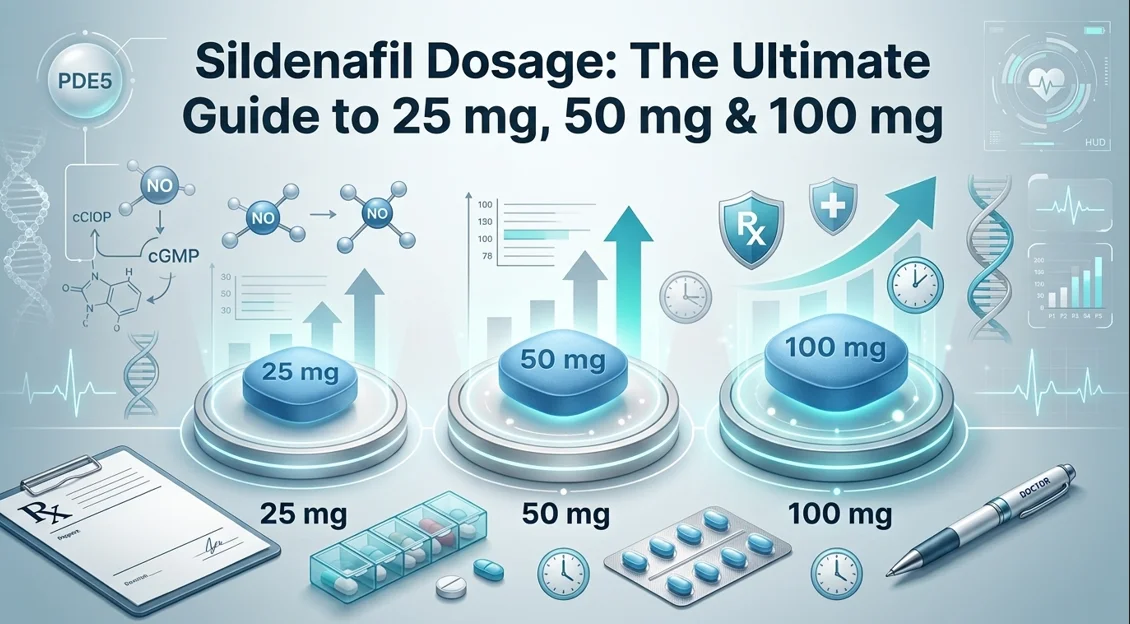
Choosing the right sildenafil dosage is key to safe and effective treatment. This guide covers recommended doses, strength options, dosage adjustments, and tips to help you achieve the best results.
Understanding Sildenafil: The Mechanism of Action
Before discussing the right sildenafil dosage, it’s helpful to understand the primary uses of sildenafil and how the medication works. During sexual stimulation, the body releases nitric oxide (NO), which increases cyclic guanosine monophosphate (cGMP) levels and relaxes the smooth muscles in the penis, allowing more blood to flow in and produce an erection.
Sildenafil works by blocking the PDE5 enzyme, preventing the breakdown of cGMP and prolonging its effects. However, it does not cause an erection on its own sexual stimulation is still required. Understanding this mechanism helps explain why choosing the appropriate sildenafil dosage is important for achieving safe and effective results.
Sildenafil Dosage and Strengths: The Standard Approach
The Recommended Starting Dose: 50 mg
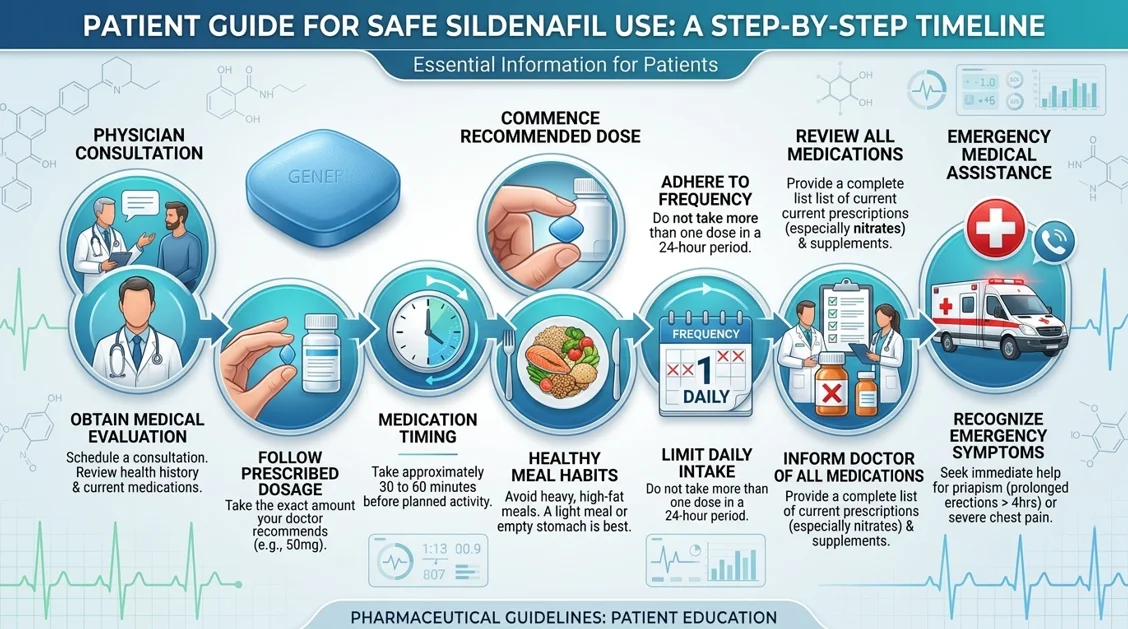
For most patients, the recommended starting dose of Sildenafil is 50 mg, taken as needed, approximately one hour before sexual activity. This dosage is considered the standard for initiating treatment because it provides a balanced combination of efficacy and tolerability for the majority of men .
The timing of administration is flexible. While the medication is optimally taken about one hour before anticipated sexual activity, it can be taken anywhere from 30 minutes to 4 hours beforehand . This window provides practical flexibility for planning intimate moments.
Adjusting the Dose: Finding Your Sweet Spot
Based on individual effectiveness and toleration, the Sildenafil dosage can be increased to a maximum of 100 mg or decreased to 25 mg. This flexibility allows patients to find the optimal balance between desired effects and side effect management.
The maximum recommended dosing frequency is once per day . Taking more than one dose within 24 hours does not improve efficacy and increases the risk of adverse effects.
Sildenafil Strengths Available
Sildenafil is manufactured in three standard tablet strengths:
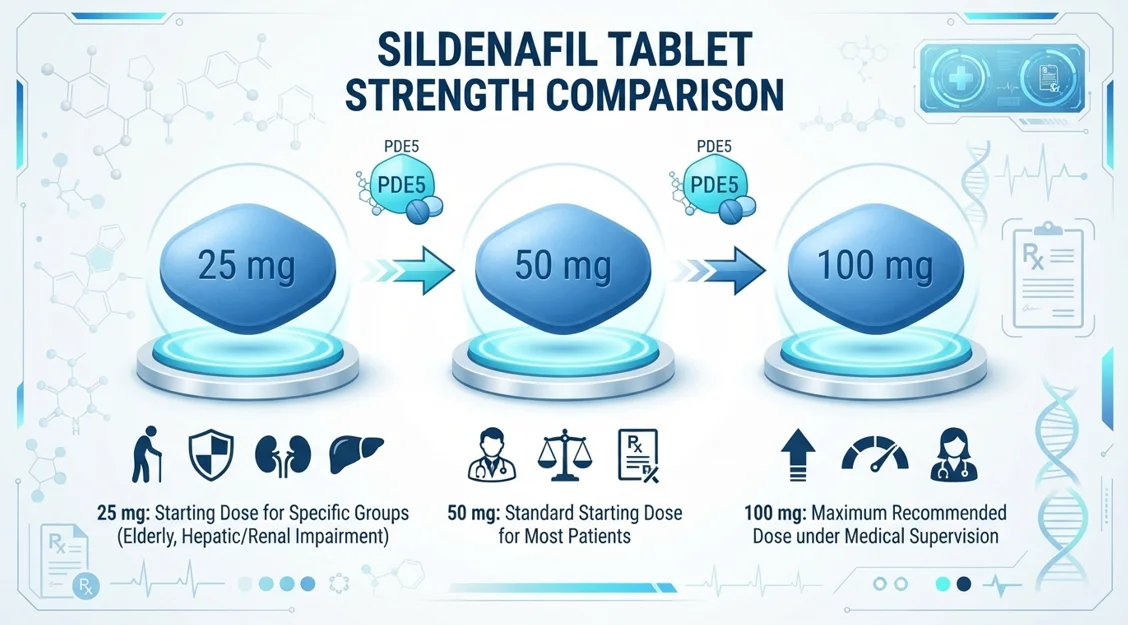
- 25 mg: Typically used for patients who are more sensitive to the medication, older adults, or those with certain medical conditions requiring a lower starting dose.
- 50 mg: The standard starting dose for most patients.
- 100 mg: The maximum recommended dose for patients who do not achieve an adequate response with lower strengths.
The right Sildenafil dosage varies from person to person and depends on factors such as age, overall health, underlying medical conditions, other medications, and individual response to treatment.
Special Populations and Adjusted Dosages
Elderly Patients (65 Years and Older)
For patients over 65, a lower starting dose of 25 mg is generally recommended. This adjustment accounts for the higher systemic exposure observed in older adults compared to younger patients. Age-related physiological changes can affect how the body processes Sildenafil, making a lower starting dose prudent.
Renal Impairment
Patients with severe renal impairment (creatinine clearance less than 30 mL/min) should consider a starting dose of 25 mg. This adjustment accounts for reduced drug clearance that can occur with compromised kidney function.
For those with mild to moderate renal impairment (creatinine clearance between 30 and 80 mL/min), no dosage adjustment is typically required.
Hepatic Impairment
Patients with hepatic impairment, such as cirrhosis, should also consider a starting dose of 25 mg . Liver dysfunction can affect Sildenafil metabolism, leading to increased plasma levels.
Drug Interactions Requiring Dose Adjustment
The interaction between Sildenafil and certain medications can significantly affect drug levels in the bloodstream.
Ritonavir
For patients taking ritonavir, the recommended dose of Sildenafil is 25 mg prior to sexual activity, with a maximum dose of 25 mg within a 48-hour period. Ritonavir substantially increases serum concentrations of Sildenafil, with an 11-fold increase in area under the curve (AUC) observed. This potent interaction necessitates careful dose reduction to prevent adverse effects.
Strong CYP3A4 Inhibitors
Patients treated with strong CYP3A4 inhibitors, including ketoconazole, itraconazole, and saquinavir, should consider a starting dose of 25 mg. These medications can increase Sildenafil plasma levels by approximately threefold.
Alpha-Blockers
When Sildenafil is co-administered with alpha-blockers, patients should be stable on alpha-blocker therapy before initiating Sildenafil. Sildenafil treatment should be initiated at 25 mg. Both medications are vasodilators with blood pressure-lowering effects, and concomitant use can cause significant hypotension in some patients.
Administration Guidelines: Maximizing Efficacy
Choosing the right sildenafil dosage is only one part of achieving the best results. Proper timing, food intake, and medical evaluation also play an important role in treatment effectiveness.
Food and Timing Considerations
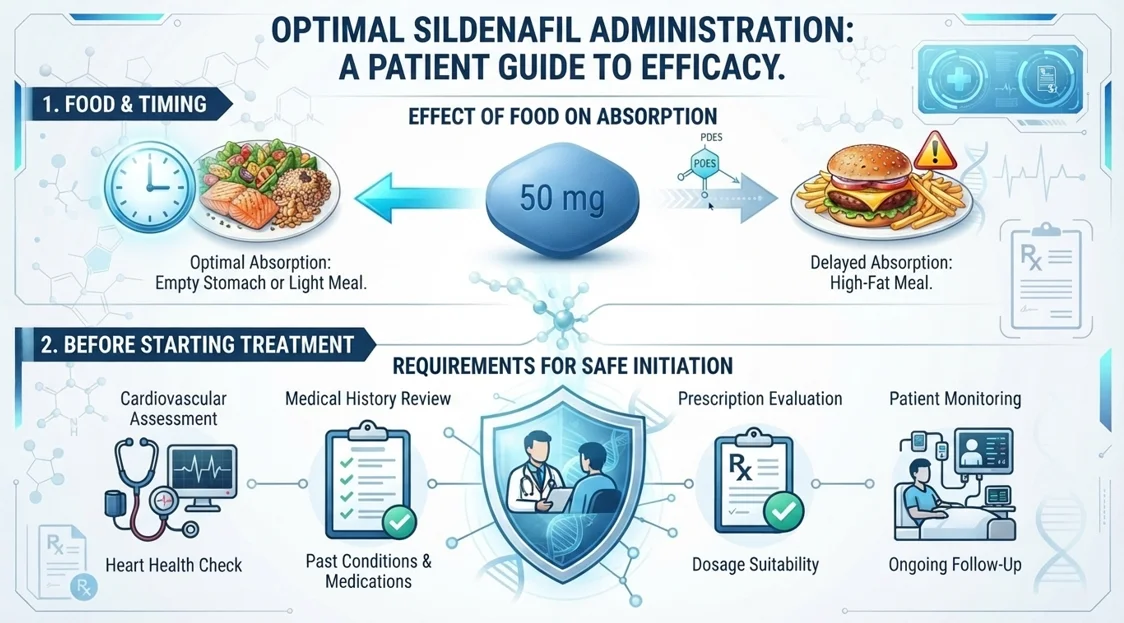
Sildenafil may be taken with or without food. However, a high-fat meal can delay the absorption of Sildenafil, potentially reducing its effectiveness. For optimal results, consider taking the medication on an empty stomach or with a light meal.
Initiating Treatment
When starting Sildenafil treatment, clinicians should evaluate the patient’s cardiovascular status to ensure sexual activity is safe. The assessment should include a determination of potential underlying causes of ED and identification of appropriate treatment following a complete medical evaluation.
Safety Warnings and Precautions
Cardiovascular Considerations
Understanding the effects of sildenafil dosage is important, especially for patients with cardiovascular conditions. Sildenafil may cause a temporary drop in blood pressure, so doctors should evaluate heart health before prescribing it.
Sildenafil should be avoided in men who are advised against sexual activity due to cardiovascular risks. Extra caution is needed in patients with:
- Those who have suffered a myocardial infarction, stroke, or life-threatening arrhythmia within the last six months
- Patients with resting hypotension (blood pressure below 90/50 mmHg) or hypertension (blood pressure above 170/110 mmHg)
- Patients with cardiac failure or coronary artery disease causing unstable angina
Prolonged Erection and Priapism
Prolonged erection lasting more than four hours and priapism (painful erections exceeding six hours in duration) have been reported with Sildenafil use. In the event of an erection persisting longer than four hours, immediate medical assistance should be sought. Without prompt treatment, priapism can result in penile tissue damage and permanent loss of potency.
Sildenafil should be used with caution in patients with:
- Anatomical deformation of the penis (such as angulation, cavernosal fibrosis, or Peyronie’s disease)
- Conditions predisposing to priapism (such as sickle cell anemia, multiple myeloma, or leukemia)
Effects on Vision
Patients should be advised to stop using all PDE5 inhibitors, including Sildenafil, and seek medical attention in the event of sudden vision loss in one or both eyes. Such an event may indicate non-arteritic anterior ischemic optic neuropathy (NAION), a rare condition that can cause permanent vision loss.
The annual incidence of NAION in males aged 50 and older is between 2.5 and 11.8 cases per 100,000 . Observational studies suggest an approximate two-fold increase in NAION risk associated with PDE5 inhibitor use, though a causal relationship has not been definitively established.
Effects on Hearing
Patients should stop taking PDE5 inhibitors and seek prompt medical attention if they experience sudden decrease or loss of hearing. These events, which may be accompanied by tinnitus and dizziness, have been reported in temporal association with PDE5 inhibitor intake.
Contraindications: When Sildenafil Should Not Be Used
Nitrates and Nitric Oxide Donors
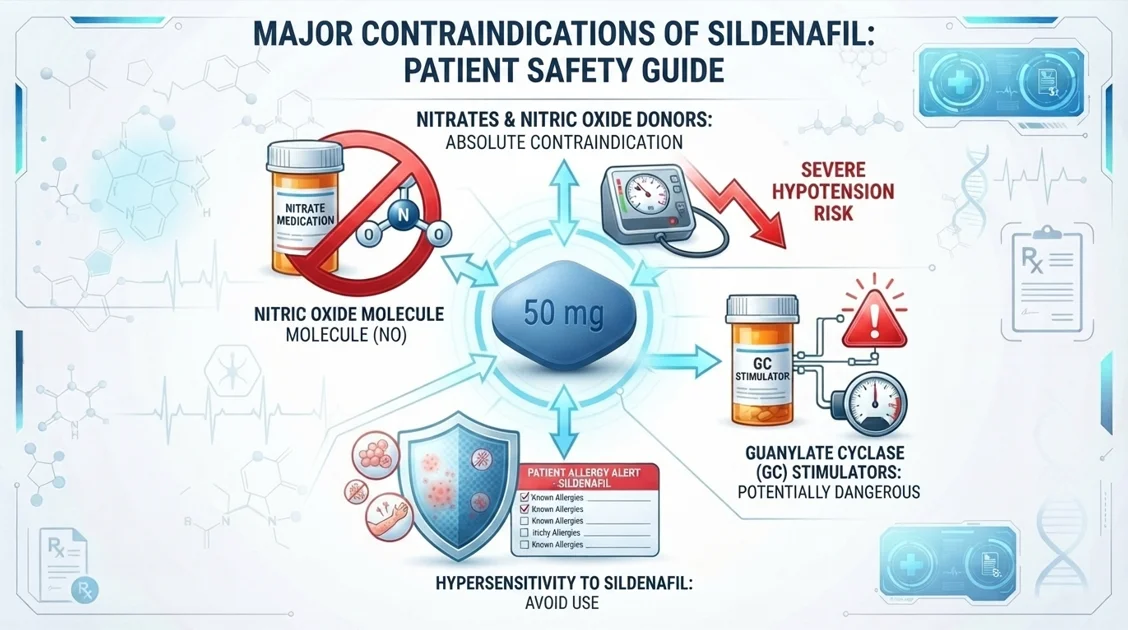
Sildenafil is absolutely contraindicated in patients taking any form of organic nitrate or nitric oxide donor, either regularly or intermittently. The combination can cause a severe and potentially life-threatening drop in blood pressure.
Guanylate Cyclase Stimulators
Patients using guanylate cyclase (GC) stimulators, such as riociguat, should not take Sildenafil. PDE5 inhibitors, including Sildenafil, can potentiate the hypotensive effects of GC stimulators.
Hypersensitivity
Sildenafil is contraindicated in patients with a known hypersensitivity to sildenafil or any component of the tablet. Hypersensitivity reactions have been reported, including rash and urticaria.
Common Side Effects and Management
Most common adverse reactions, occurring in more than 2% of patients, include:
- Headache
- Flushing
- Dyspepsia (indigestion)
- Abnormal vision (often described as a blue tinge to vision or difficulty distinguishing blue and green)
- Nasal congestion
- Back pain
- Myalgia (muscle pain)
- Nausea
- Dizziness
- Rash
Many of the Sildenafil side effects are dose-related and may diminish with continued use or dose adjustment. If side effects are bother me or persistent, patients should discuss options with their healthcare provider.
The Role of Sildenafil in Male Wellness
Choosing the right sildenafil dosage and using it appropriately can support more than just erectile function. By helping manage ED, Sildenafil may improve several aspects of male wellness, including:
- Psychological well-being: Reducing anxiety and depression associated with ED
- Relationship satisfaction: Enhancing intimacy and connection with partners
- Self-esteem and confidence: Restoring a sense of vitality and masculinity
- Overall quality of life: Improving general satisfaction and well-being
Practical Advice for Sildenafil Users
- Start with the recommended dose: Begin with 50 mg and adjust based on your response and your healthcare provider’s advice.
- Time your dose appropriately: Take Sildenafil about one hour before sexual activity, although it can be effective when taken 30 minutes to 4 hours beforehand.
- Account for food: Consider taking Sildenafil on an empty stomach for optimal absorption, as high-fat meals may delay its effects.
- Don’t exceed one dose daily: The maximum recommended frequency is one dose every 24 hours.
- Communicate with your healthcare provider: Report any side effects, lack of effectiveness, or concerns promptly so your treatment can be adjusted if needed.
- Be aware of interactions: Inform your healthcare provider about all medications and supplements you are taking to avoid potentially harmful drug interactions.
- Seek emergency care when needed: Get immediate medical attention if you experience a prolonged erection lasting more than four hours, sudden vision or hearing loss, or any severe allergic reaction.
Following these recommendations can help you use Sildenafil dosage safely and effectively while maximizing its benefits and minimizing the risk of side effects.
Frequently Asked Questions
What is the recommended starting dose of Sildenafil?
The recommended starting dose of Sildenafil for most patients is 50 mg, taken as needed approximately one hour before sexual activity . This dose provides a balance of effectiveness and tolerability for the majority of men. Based on individual response, the dose may be increased to 100 mg or decreased to 25 mg. The maximum recommended dosing frequency is once per day . Patients should work with their healthcare provider to find their optimal dose.
Can I take Sildenafil with food?
Yes, Sildenafil may be taken with or without food . However, a high-fat meal can slow the absorption of Sildenafil, potentially delaying its onset of action. For the fastest absorption and most predictable effects, consider taking the medication on an empty stomach or after a light meal. If you take Sildenafil with a heavy meal, allow additional time before expecting the full effect.
What should I do if Sildenafil does not work for me?
If Sildenafil does not work as expected, check factors such as proper timing, dosage, and sexual stimulation. If the 50 mg dose is ineffective, consult your healthcare provider about adjusting the dose or exploring alternative treatments. Further evaluation may be needed to identify underlying causes of ED.
Is Sildenafil safe for older men?
Sildenafil is generally safe for older men, but a lower starting dose of 25 mg is often recommended for those aged 65 and above due to age-related changes in metabolism. A cardiovascular evaluation is also important before starting treatment. With proper dosing and medical guidance, Sildenafil can be effective for older adults.
What are the most common side effects of Sildenafil?
The Common Sildenafil side effects include headache, flushing, indigestion, vision changes, nasal congestion, dizziness, and muscle aches. These effects are usually mild and may improve as your body adjusts. If side effects persist, consult your healthcare provider before changing your dose.
Can I take Sildenafil with my blood pressure medication?
Sildenafil can be used with many blood pressure medications, but caution is needed as it may further lower blood pressure. Patients taking multiple antihypertensive drugs or with unstable blood pressure should be monitored. Always inform your healthcare provider about all medications you are taking.
What happens if I take too much Sildenafil?
Taking more than the recommended sildenafil dosage can increase the risk of side effects, including low blood pressure, dizziness, and prolonged erections. The maximum recommended dose is 100 mg once daily a higher dose does not improve effectiveness. If you accidentally take too much, seek medical advice, especially if you experience serious symptoms.
Key Takeaways
Understanding the right sildenafil dosage is essential for safe and effective ED treatment. Sildenafil can improve erectile function while also supporting overall male wellness.
- Sildenafil works by improving blood flow during sexual stimulation to help achieve and maintain an erection.
- The correct dosage should be determined based on individual health, response, and medical guidance.
- Proper use, healthy lifestyle habits, and regular medical advice can improve treatment outcomes.
- Sildenafil may positively impact confidence, relationships, and overall quality of life.