

This guide explains the most common and serious sildenafil side effects, how to manage them, and when to seek medical attention.
How Sildenafil Works
Before exploring sildenafil side effects, it’s helpful to understand how sildenafil citrate treats ED and how the medication works. Sildenafil is a PDE5 inhibitor that blocks the enzyme responsible for breaking down cGMP, helping increase blood flow to the penis during sexual stimulation. It does not cause an erection on its own sexual arousal is still required for the medication to be effective.
Common Sildenafil Side Effects
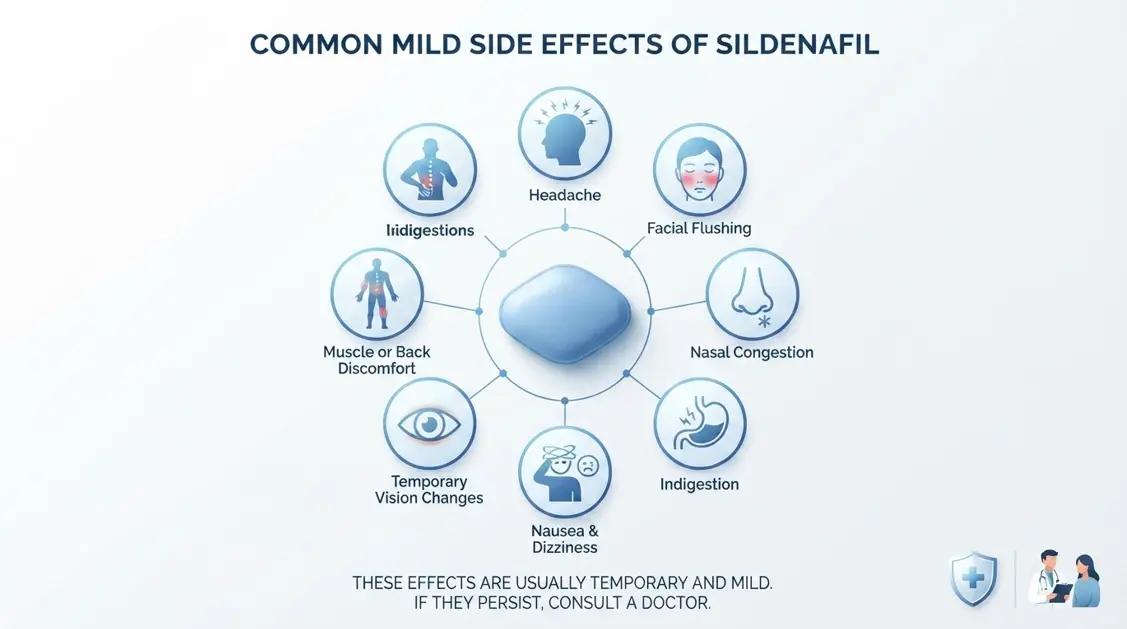
Most men who take sildenafil will experience at least one mild and temporary side effect. Most sildenafil side effects are mild, temporary, and occur because the medication relaxes and widens blood vessels throughout the body. These effects usually resolve on their own, but you should consult your healthcare provider if they become severe or persistent.
Headache
Headache is one of the most common Sildenafil side effects affecting more than 1 in 10 men. It occurs because sildenafil widens blood vessels, which can temporarily stimulate pain receptors in the brain. In most cases, the headache is mild to moderate and improves as the medication wears off. Staying well hydrated and getting adequate rest may help relieve discomfort. If appropriate, over-the-counter pain relievers such as paracetamol or ibuprofen can also be used after consulting your healthcare provider if you have any underlying medical conditions or concerns.
Flushing and Facial Redness
Flushing and facial redness are common Sildenafil side effects , affecting approximately 10% of users. This occurs because sildenafil relaxes and widens blood vessels, increasing blood flow to the skin and causing a temporary feeling of warmth or redness, particularly in the face, neck, or chest. These symptoms are generally mild and disappear as the medication is metabolized by the body. Keeping your face cool with a fan, staying hydrated, or using a cool, damp cloth may help relieve the sensation until it naturally subsides.
Nasal Congestion
Sildenafil causes the blood vessels in the nasal passages to widen, leading to a stuffy or runny nose. What you can do? A nasal decongestant or saline spray can help open up your airways. Steam inhalation may also provide relief.
Indigestion and Heartburn
Indigestion and heartburn affect about 7% of men . The relaxing effect of sildenafil can affect the lower esophageal sphincter, allowing stomach acid to flow back up. What you can do? Eat a healthy diet with plenty of fiber and avoid large or fatty meals before taking sildenafil . Antacids may also help manage symptoms.
Nausea and Dizziness
Nausea and dizziness are possible Sildenafil side effects, affecting more than 1 in 100 men. These can occur because the drop in blood pressure from vasodilation can stimulate the nervous system around the stomach. What you can do? If you feel nauseous, try eating a light meal to settle your stomach. Stay hydrated and limit alcohol intake, as alcohol can worsen dizziness.
Visual Disturbances
Some men experience mild, temporary changes in vision, including seeing a blue tinge to objects or having difficulty distinguishing between blue and green. This happens because sildenafil mildly inhibits PDE6, an enzyme in the retina important for color vision. You may also notice increased sensitivity to light or blurred vision. What you can do? These effects are usually temporary and fade as the drug leaves your system. If they are bothersome, talk to your doctor about adjusting your dose.
Muscle and Back Pain
Back pain and pain in the limbs are consistently reported in clinical trials. The exact mechanism is not fully understood, but it is a recognized effect that is generally mild and temporary.
Serious Side Effects
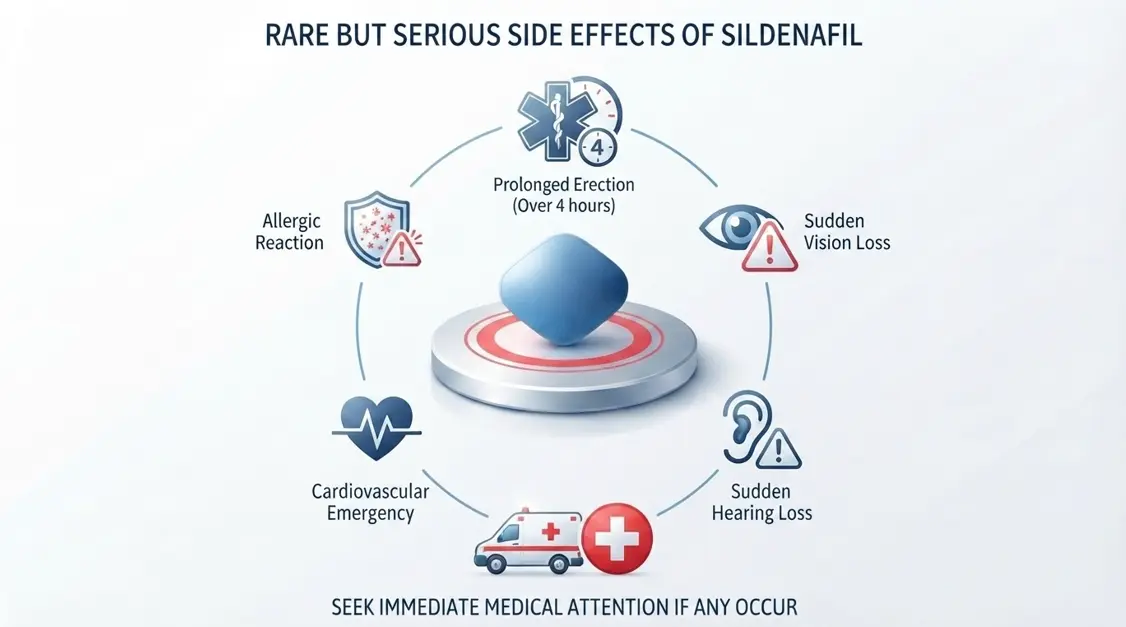
While rare, several serious Sildenafil side effects. If you experience any of the following, stop taking the medication and seek immediate medical attention.
Priapism: A Urological Emergency
Priapism is a persistent, painful erection lasting more than four hours that is not related to sexual stimulation . This is a medical emergency. If not treated immediately, priapism can cause permanent damage to the penile tissue, leading to permanent loss of erectile function.
Sudden Vision Loss
Sudden loss of vision in one or both eyes is a rare but serious side effect. This may be a sign of non-arteritic anterior ischemic optic neuropathy (NAION), a condition where blood flow to the optic nerve is blocked. Studies suggest an approximate two-fold increase in the risk of NAION with PDE5 inhibitor use, though a causal relationship has not been definitively established. Men over 50 with diabetes, heart disease, high blood pressure, high cholesterol, or who smoke are at greater risk. Individuals who have already experienced NAION are at increased risk of recurrence.
Sudden Hearing Loss
Sudden decrease or loss of hearing, sometimes accompanied by tinnitus (ringing in the ears) and dizziness, has been reported with PDE5 inhibitors.
Cardiovascular Events
Sildenafil has systemic vasodilatory properties that can cause a mild and transient decrease in blood pressure. While this is usually of little consequence, men with pre-existing cardiovascular disease may be at risk. In post-marketing experience, rare but serious events like myocardial infarction, stroke, and sudden cardiac death have been reported in temporal association with sildenafil.
Allergic Reactions
Though uncommon, some individuals may experience hypersensitivity reactions, including rash, itching, hives, swelling of the face, tongue, or throat, and difficulty breathing.
Drug Interactions: What to Avoid
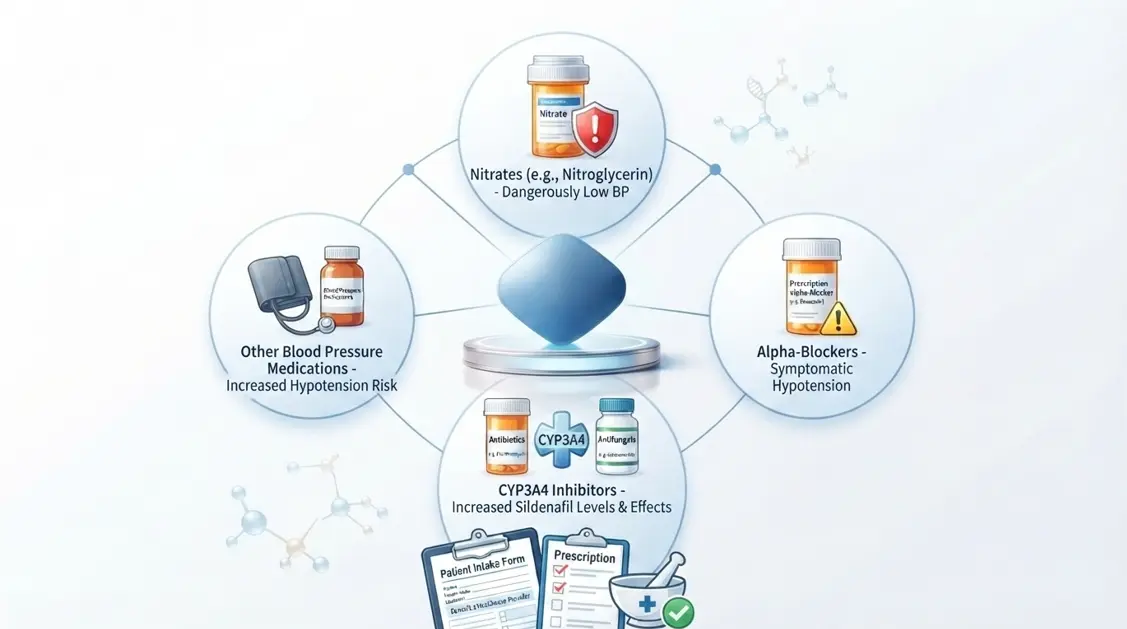
Sildenafil can interact with several medications, and some combinations may lead to serious or even life-threatening complications. Because sildenafil lowers blood pressure by relaxing blood vessels, taking it with certain drugs can cause a dangerous drop in blood pressure or increase the risk of side effects. Before starting sildenafil, always inform your healthcare provider about all prescription medications, over-the-counter drugs, herbal supplements, and vitamins you are taking. This helps ensure that your treatment is both safe and effective while minimizing the risk of harmful drug interactions.
The Critical Danger of Nitrates
The most critical contraindication is the concomitant use of nitrates, such as nitroglycerin, isosorbide dinitrate, and isosorbide mononitrate, commonly prescribed for chest pain (angina). Nitrates are also found in recreational drugs called poppers, such as amyl nitrate or butyl nitrate. Sildenafil potentiates the hypotensive effects of nitrates, which can cause a sudden, severe, and potentially fatal drop in blood pressure. You must never take sildenafil if you are using any form of nitrates.
Alpha-Blockers and Antihypertensives
Sildenafil should be used with caution in men taking alpha-blockers (for prostate conditions or high blood pressure) and other antihypertensive medications. Both sildenafil and alpha-blockers are vasodilators, and when combined, they can have an additive effect on lowering blood pressure, potentially leading to symptomatic hypotension dizziness, lightheadedness, and fainting. If you are stable on alpha-blocker therapy, your doctor may prescribe sildenafil, but it should be initiated at the lowest dose of 25 mg.
Strong CYP3A4 Inhibitors
Medications that inhibit the CYP3A4 enzyme can increase sildenafil levels in the blood, raising the risk of side effects. These include certain HIV medications like ritonavir (11-fold increase in sildenafil exposure) , and certain antibiotics and antifungals like erythromycin, ketoconazole, and itraconazole.
Action to take: If you are taking these medications, your doctor may recommend a lower starting dose of sildenafil.
Dosage and Best Practices for Safe Use
Following the recommended sildenafil dose can help reduce the risk of it’s side effects while ensuring the medication works effectively.
- Recommended dose: 50 mg, taken about 1 hour before sexual activity (or 30 minutes to 4 hours beforehand).
- Maximum dose: 100 mg once daily. Do not exceed the recommended dose, as it may increase sildenafil side effects.
- Food and alcohol: Sildenafil can be taken with or without food, but a high-fat meal may delay its effects. Limit alcohol, as it can reduce effectiveness and increase the risk of dizziness and headache.
- Special populations: A 25 mg starting dose is generally recommended for men over 65 years and those with severe liver or kidney impairment.
Beyond Side Effects: Cardiovascular and Neurological Benefits
Although sildenafil side effects are an important consideration, research suggests that Sildenafil may offer benefits beyond treating erectile dysfunction. A longitudinal study of over 500,000 men with erectile dysfunction found that sildenafil was associated with significant reductions in all-cause mortality, myocardial infarction, stroke, venous thromboembolism, and dementia. While this does not negate the need for caution, it highlights potential broader health benefits of these medications.
Frequently Asked Questions
Can sildenafil cause long-term side effects?
For most men, sildenafil is safe for long-term use when taken as directed. There is no evidence that taking it for many months or years causes lasting problems. Common side effects like headaches or flushing are mild and temporary, though they may persist with regular use. Serious side effects like NAION or priapism are rare events that require immediate attention but are not considered progressive conditions from long-term use.
Are sildenafil side effects different for men over 65?
Sildenafil side effects themselves are not different, but older men may be more susceptible to them because metabolism slows with age, leading to higher drug levels in the bloodstream. The recommended starting dose for men over 65 is 25 mg, rather than the standard 50 mg, to minimize the risk of side effects . Older men are also more likely to take other medications, increasing the risk of drug interactions.
Can I take sildenafil if I have low blood pressure?
This is a significant concern. Sildenafil can lower blood pressure, and if you have resting hypotension (blood pressure below 90/50 mmHg), its use is not recommended. You should discuss your specific blood pressure situation with your healthcare provider to determine if sildenafil is safe for you.
I have an eye condition. Is it safe to take sildenafil?
If you have a rare inherited eye condition like retinitis pigmentosa, sildenafil is not recommended because a minority of these patients have genetic disorders of retinal phosphodiesterases. Additionally, men with a history of NAION are at increased risk of recurrence and should only use sildenafil with caution and when the anticipated benefits clearly outweigh the risks.
Is it okay to drink alcohol while taking sildenafil?
While not prohibited, it is advisable to limit your alcohol intake. Alcohol can interfere with the drug’s ability to help you get an erection and can amplify side effects like dizziness, drowsiness, and headaches . For the best and safest experience, consume alcohol in moderation or avoid it when using sildenafil.
What should I do if sildenafil doesn’t work?
If sildenafil isn’t giving you the results you want, do not take more than the recommended dose. Several factors can affect its efficacy, including taking it after a heavy meal, consuming too much alcohol, or not being sexually aroused . Talk to your doctor about possibly adjusting your dose or trying a different treatment. Sometimes it takes a few attempts to find the right approach.
Key Takeaways
- Sildenafil is a clinically proven treatment for erectile dysfunction that has helped millions of men regain confidence and improve their sexual health.
- When used as prescribed, sildenafil is both safe and effective for most men.
- Discuss your medical history, current medications, and underlying health conditions with your healthcare provider before starting treatment.
- Common Sildenafil side effects, such as headache and flushing, are usually mild and temporary.
- Seek immediate medical attention if you experience chest pain, sudden vision or hearing loss, or an erection lasting longer than four hours.
- Sildenafil works only with sexual stimulation and is most effective when taken exactly as prescribed.
- Always purchase sildenafil from a licensed pharmacy to ensure you receive a genuine and safe medication.
Using sildenafil responsibly under the guidance of a healthcare provider helps maximize its benefits while minimizing potential risks. Combined with a healthy lifestyle and proper medical care, sildenafil can improve erectile function, restore confidence, strengthen intimate relationships, and enhance overall quality of life.