
Cialis Tablet Uses, Benefits & How It Works: A Complete Medical Guide
Cialis tablet uses have been studied for more than two decades, and yet most patients in Pakistan still receive the medicine without ever understanding what it does inside the body. The active ingredient, tadalafil, is approved for two distinct medical conditions, and the dosing for each is completely different. This guide explains every use of Cialis tablets, how the drug works at a chemical level, who it helps, who should avoid it, and the realistic expectations a patient should have before their first dose. The information is educational and does not replace a consultation with your physician.
What This Guide Covers
- What Cialis is and what it contains
- Approved medical uses of tadalafil
- How Cialis works inside the body
- Who benefits most from this medication
- Dosing differences between conditions
- Onset, duration, and what to expect
- Who should not take Cialis
- Practical considerations before starting treatment
- Frequently asked questions
What Is Cialis?
Cialis is the brand name for tadalafil, a prescription medicine that belongs to a class of drugs called PDE5 inhibitors (phosphodiesterase type 5 inhibitors). It was developed by Eli Lilly and Company and first received approval from the U.S. Food and Drug Administration in November 2003. Generic versions of tadalafil have been available since 2018, after the original patent expired.
In Pakistan, tadalafil is available under several brand names in addition to Cialis. The drug is sold in tablet strengths of 2.5 mg, 5 mg, 10 mg, and 20 mg. Each strength serves a specific clinical purpose, which we will explain in detail later in this guide.
The medicine is best known for treating erectile dysfunction, but this is not its only use. Tadalafil also has an approved indication for benign prostatic hyperplasia, and a separate, higher-dose version of the same molecule (sold as Adcirca) treats a rare lung condition called pulmonary arterial hypertension. Understanding this distinction matters because the dose and dosing schedule change dramatically depending on the condition being treated.
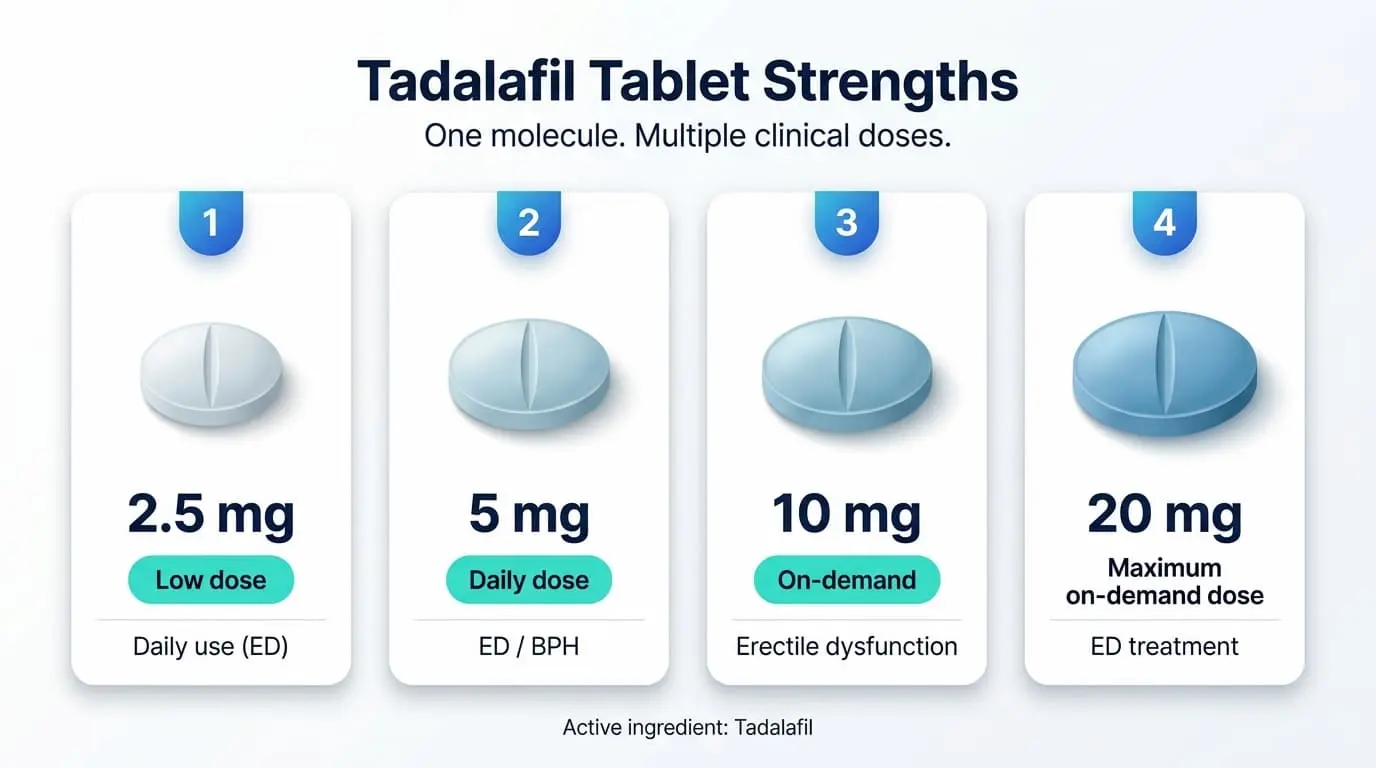
Tadalafil is dispensed in multiple strengths to match different clinical indications
Approved Medical Uses of Cialis (Tadalafil)
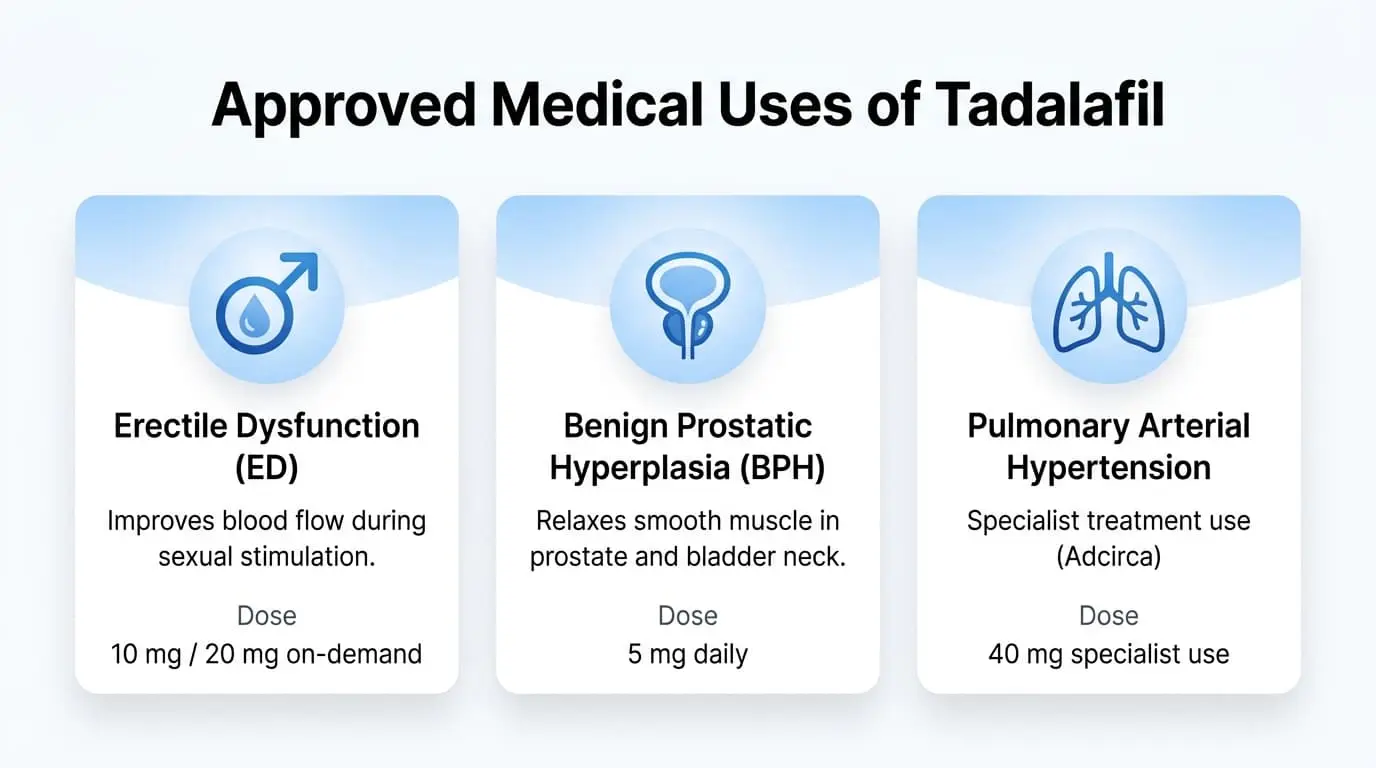
Tadalafil is approved by major drug regulators including the U.S. FDA, the European Medicines Agency, and DRAP in Pakistan for two main conditions in men. A third indication exists under a different brand name and dose for a serious cardiovascular condition. Each use has its own evidence base and clinical guidelines.
1. Erectile Dysfunction (ED)
Erectile dysfunction is the most widely known use of Cialis. ED is defined as the persistent inability to achieve or maintain an erection sufficient for satisfactory sexual activity. According to research published in international urology journals, the condition affects a significant portion of men over the age of 40, with prevalence rising with age and the presence of conditions like diabetes, hypertension, and cardiovascular disease.
Tadalafil treats ED by improving blood flow to the penis during sexual stimulation. It does not cause an erection on its own — sexual arousal is still required for the medicine to work. This is an important distinction that many patients misunderstand, leading to disappointment with the first dose.
2. Benign Prostatic Hyperplasia (BPH)
BPH is a non-cancerous enlargement of the prostate gland that commonly affects men over the age of 50. The enlarged prostate presses against the urethra, causing urinary symptoms such as weak urine stream, frequent urination (especially at night), urgency, and the feeling of incomplete bladder emptying.
In 2011, the FDA approved tadalafil 5 mg taken once daily for the treatment of BPH symptoms. The mechanism is different from ED treatment — here, tadalafil relaxes the smooth muscle in the prostate and bladder neck, easing urinary flow. For men who suffer from both ED and BPH at the same time (a common combination after 50), tadalafil offers the unique advantage of treating both conditions with a single daily tablet.
3. Pulmonary Arterial Hypertension (Off-label for general use)
Under the brand name Adcirca, tadalafil 40 mg is used to treat pulmonary arterial hypertension — a rare but serious condition involving high blood pressure in the arteries of the lungs. This is a specialist-prescribed use and is not what patients typically refer to when they ask about Cialis tablet uses. We mention it only for completeness.
How Cialis Works: The Mechanism Explained Simply
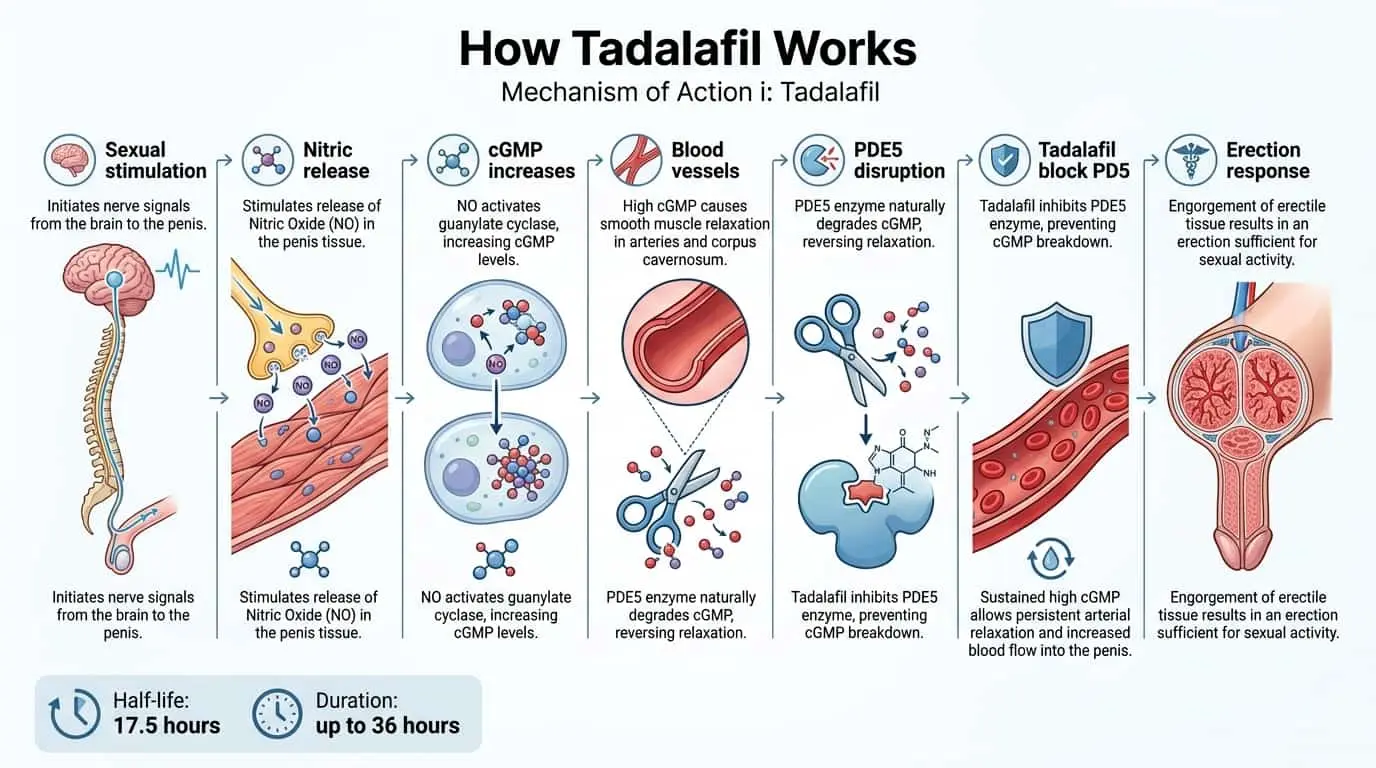
To understand how Cialis works, we need to look at what happens inside the body during normal sexual arousal. When a man becomes sexually stimulated, nerves in the penis release a chemical called nitric oxide. Nitric oxide triggers the production of another molecule called cyclic guanosine monophosphate, or cGMP for short.
cGMP is the molecule that actually causes the erection. It relaxes the smooth muscle in the walls of the blood vessels of the penis, allowing them to widen. As these blood vessels widen, blood rushes into the spongy tissue of the penis, producing an erection. The process is straightforward in healthy men.
In men with erectile dysfunction, the body produces an enzyme called PDE5 (phosphodiesterase type 5) that breaks down cGMP too quickly. As a result, the erection either fails to form properly or cannot be sustained. The blood vessels do not stay relaxed long enough.
Tadalafil works by blocking this PDE5 enzyme. With PDE5 blocked, cGMP stays active in the tissue for much longer. The blood vessels remain relaxed, blood flow improves, and the man can achieve and maintain an erection in response to sexual stimulation. The medicine does not increase desire and does not produce an erection without arousal — it simply restores the body’s natural response when stimulation occurs.
The same mechanism — smooth muscle relaxation through PDE5 inhibition — explains why tadalafil also helps with BPH. In the prostate and bladder neck, relaxed smooth muscle means easier urine flow and reduced symptoms of obstruction.
Why Tadalafil Lasts Longer Than Other ED Medicines
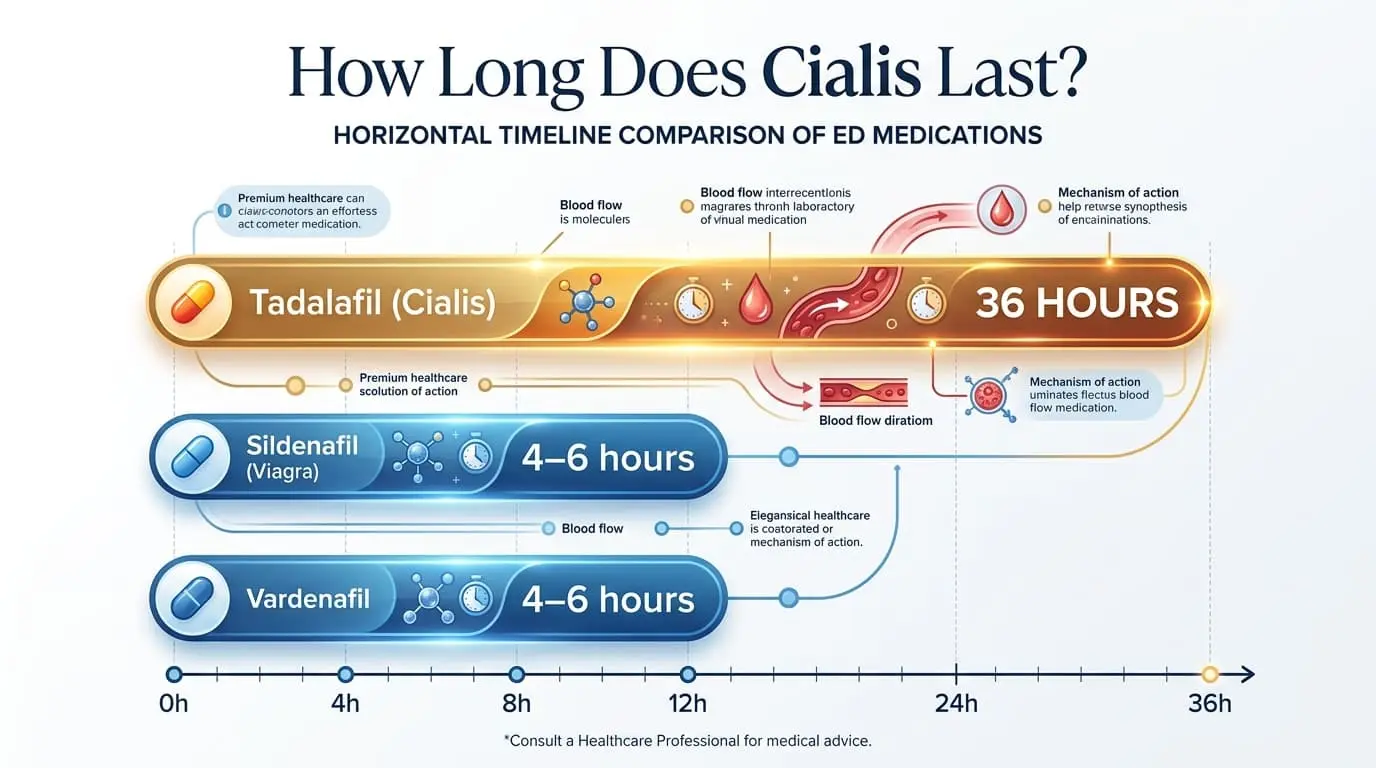
Cialis is famously known as the “weekend pill” because its effects can last up to 36 hours after a single dose. This is significantly longer than sildenafil (Viagra), which typically lasts 4 to 6 hours. The reason is pharmacokinetics — the way the body processes the drug.
Tadalafil has a half-life of around 17.5 hours, meaning it takes that long for the body to break down half of the dose. Sildenafil’s half-life is only 3 to 5 hours. The longer half-life of tadalafil allows for a wider window of sexual activity without the need to plan around the medication.
Who Benefits from Cialis Treatment?
Cialis is not for every man. It is intended for men diagnosed with erectile dysfunction or moderate to severe BPH symptoms after a proper clinical evaluation. The benefits are most consistent for the following groups, based on published clinical research.
Men with ED Caused by Vascular Conditions
Men whose ED is linked to conditions affecting blood vessels — such as well-managed type 2 diabetes, controlled high blood pressure, or stable cardiovascular disease — often respond well to tadalafil. Because the medicine works on the vascular system, it addresses the underlying physical mechanism behind the dysfunction.
A patient with diabetes and ED, for example, may find that tadalafil works reliably when blood sugar is well controlled. However, the treating physician must be involved, because some heart medications interact dangerously with tadalafil. This is covered in detail in our separate guide on safety and contraindications.
Men Over 50 with Combined ED and BPH
This is one of the strongest use cases for daily-dose tadalafil. A man in his 50s or 60s who struggles with both nighttime urination and erectile difficulty can be managed with a single 5 mg tablet taken at the same time each day. Two conditions, one treatment — a clinically elegant solution that is well-supported in urology guidelines.
Men Who Prefer Spontaneity
Because of its long duration of action, tadalafil suits patients who do not want to plan sexual activity around a tight time window. A 20 mg tablet taken on a Friday evening can remain active through Sunday morning. For many couples, this restores a more natural rhythm to intimacy without the pressure of timing a pill.
Men with Psychological ED Components
Even when the cause of ED is partly psychological — performance anxiety being the most common — tadalafil can play a useful role. A successful experience with the medication often breaks the cycle of anxiety, and over time some men can reduce their reliance on the drug as confidence returns. The pharmacological and psychological benefits reinforce each other.

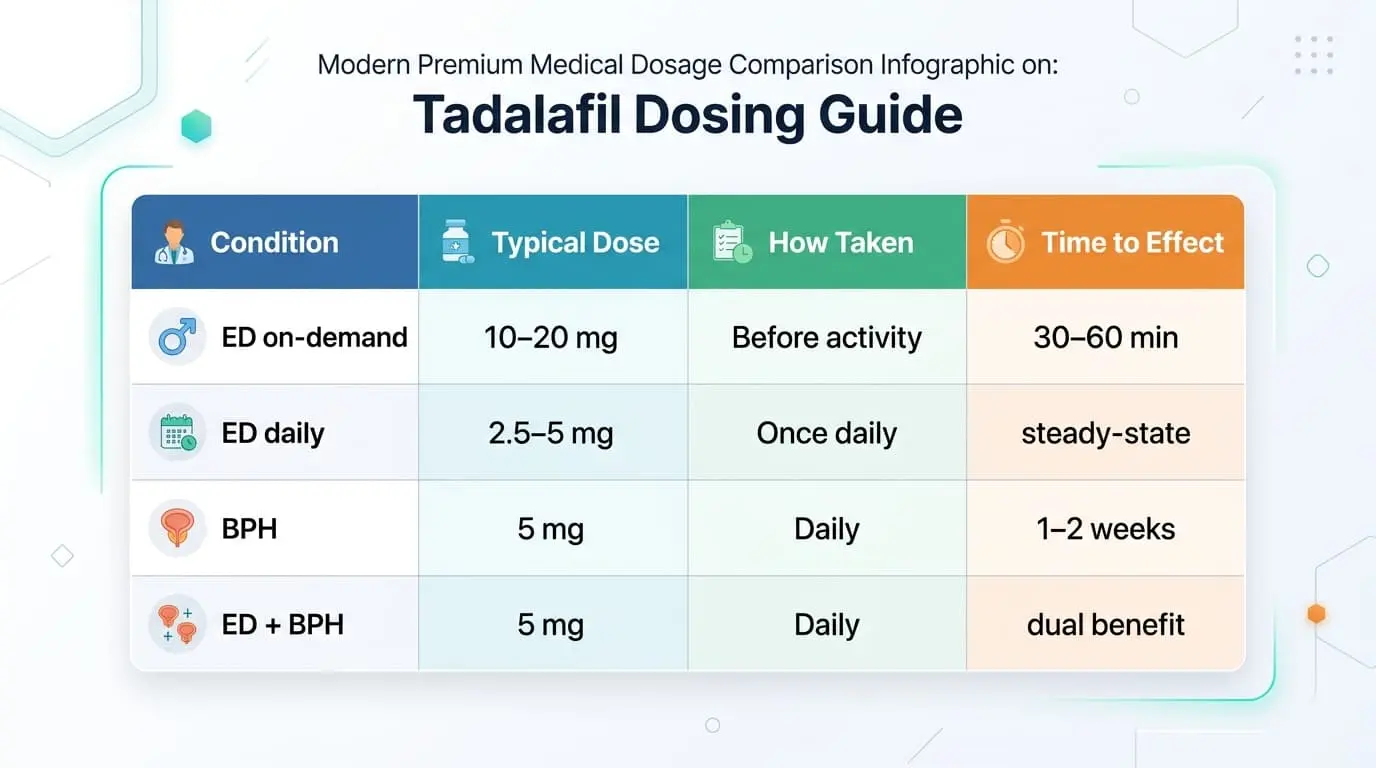
Dosing for Different Uses
One of the most confusing aspects of tadalafil for new patients is that the same drug is dosed completely differently depending on what it is treating. Below is a clear comparison.
| Condition | Typical Dose | How Taken | Time to Effect |
| Erectile Dysfunction (on-demand) | 10 mg or 20 mg | Single dose before activity | 30 to 60 minutes |
| Erectile Dysfunction (daily) | 2.5 mg or 5 mg | Same time every day | Continuous (steady-state in 5 days) |
| BPH symptoms | 5 mg | Same time every day | 1 to 2 weeks for full effect |
| ED + BPH combined | 5 mg | Same time every day | Both improve over 1 to 2 weeks |
The choice between on-demand dosing and daily dosing is a clinical decision made with the prescribing physician. On-demand dosing makes sense for patients who have intercourse less frequently and want flexibility. Daily dosing suits patients who want continuous readiness or who also need BPH symptom control. The maximum dose for on-demand use is 20 mg in any 24-hour period — never exceed this.
Older adults, patients with mild liver impairment, and patients taking certain other medications may need lower doses. This adjustment must come from a physician — self-adjusting the dose is one of the most common mistakes patients make, and it is risky.
What to Expect: Onset, Duration, and Realistic Outcomes
Patients often have unrealistic expectations from a first dose, shaped by online forums and word-of-mouth claims. Honest information helps avoid disappointment and prevents the dangerous practice of doubling the dose when the first one “does not work fast enough.”
Onset of Action
For on-demand 10 mg or 20 mg tadalafil, the medicine begins to take effect within 30 minutes for most men. Peak blood levels occur around two hours after the dose. However, the medicine does nothing unless there is sexual stimulation. Taking a tablet and expecting an erection without any arousal is a misunderstanding of how the drug works.
Food generally does not delay tadalafil the way it can delay sildenafil. Patients can take Cialis with or without a meal. Alcohol in moderate quantity does not block its action, but heavy drinking reduces the body’s ability to achieve an erection regardless of medication, and the combination can cause low blood pressure.
Duration of Effect
Tadalafil remains active in the body for up to 36 hours after a single dose. This does not mean the patient will have a 36-hour erection — that would be a medical emergency. What it means is that during that 36-hour window, the patient can achieve an erection in response to sexual stimulation. The medicine simply restores the body’s normal response capacity.
Realistic Success Rates
In published clinical trials, tadalafil produces successful erections in roughly 70 to 80 percent of attempts in men with ED. This is a high response rate, but it is not 100 percent. Some men do not respond, and others find that the medicine works for some encounters but not others depending on stress, fatigue, alcohol intake, and other factors. The response often improves with experience — many men report better results on the third or fourth use than on the first.
Who Should Not Take Cialis
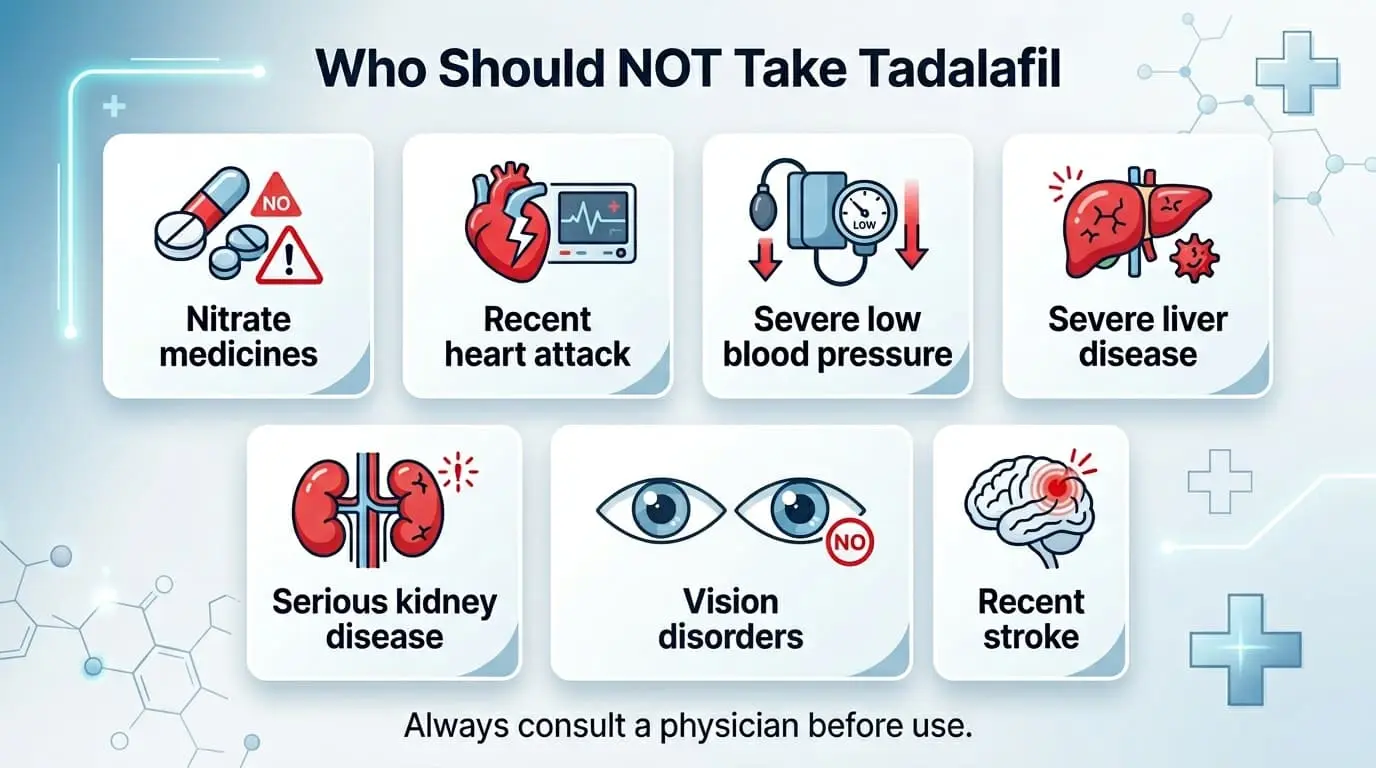
Tadalafil is generally well tolerated, but there are specific groups for whom the medicine is unsafe. These contraindications are not flexible. A prescribing physician will screen for them during consultation.
- Men taking nitrate medications for chest pain or heart conditions (such as nitroglycerin, isosorbide mononitrate, or isosorbide dinitrate) — the combination can cause life-threatening low blood pressure
- Men with severe heart disease, recent heart attack within 90 days, or unstable angina
- Men with severe liver disease
- Men with severely low or uncontrolled high blood pressure
- Men with certain types of vision problems, particularly non-arteritic anterior ischemic optic neuropathy
- Men who have had a stroke within the last six months
- Men with severe kidney disease (dose adjustment or avoidance, depending on severity)
Tadalafil also interacts with certain alpha-blocker medications used for blood pressure or BPH (such as doxazosin), some HIV protease inhibitors, certain antifungal medicines, and a few antibiotics. This is why a complete medication list must be shared with the prescribing physician — every medicine, supplement, and herbal product matters.
Practical Considerations Before Starting Treatment
Before a man fills his first prescription, a few practical points are worth considering. These are the things experienced pharmacists wish every patient knew.
Get a Proper Diagnosis First
ED is sometimes the first visible sign of an underlying problem — diabetes, heart disease, hormonal imbalance, or depression. Treating ED with a pill without investigating the cause can delay diagnosis of conditions that need their own management. A proper workup is the responsible first step.
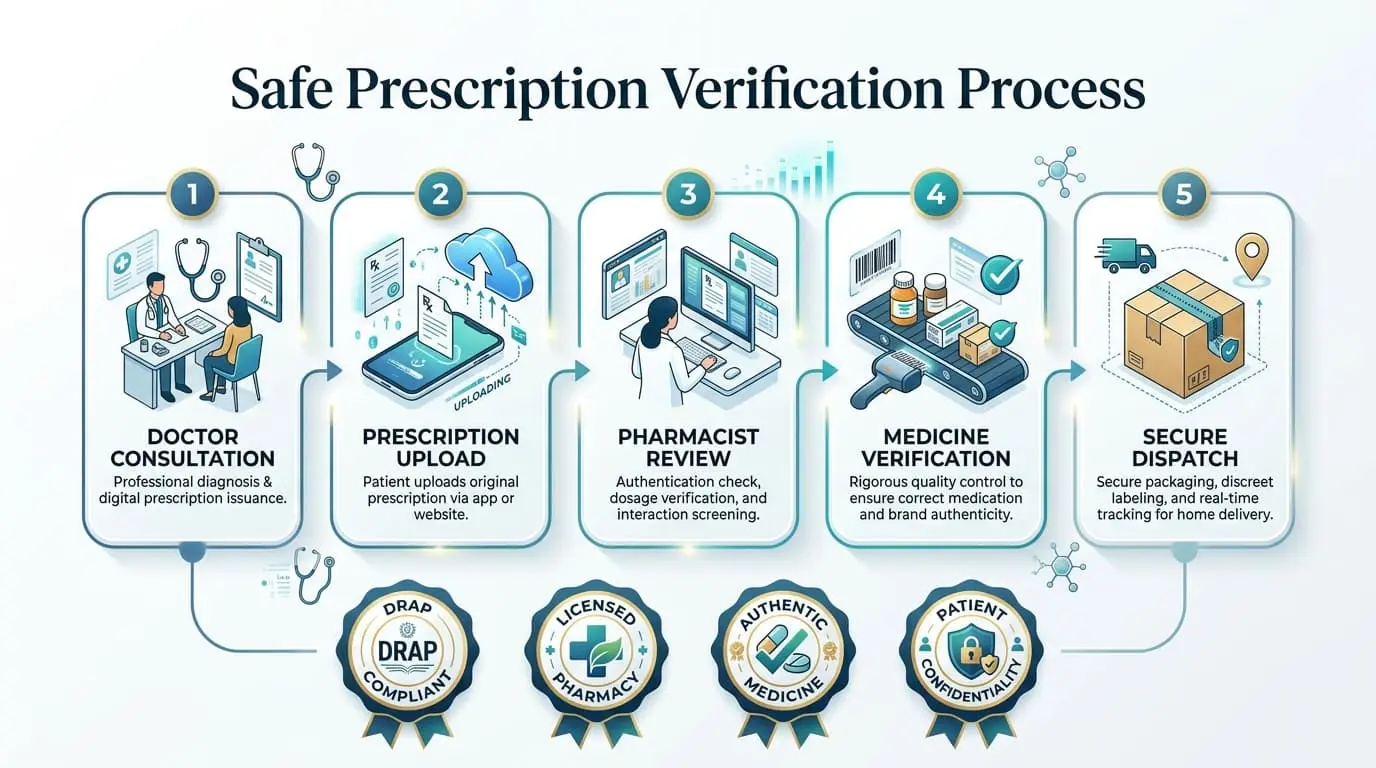
Always Source Medicine from a Verified Pharmacy
The market for ED medications attracts counterfeits more than almost any other drug category. Counterfeit tadalafil may contain incorrect doses, harmful impurities, or no active ingredient at all. Some counterfeits have caused serious harm in Pakistan and elsewhere. Always verify that your supplier is a DRAP-licensed pharmacy and that the product packaging matches manufacturer specifications.
Understand the Cost-Convenience Trade-Off
A 20 mg on-demand tablet costs more per use than a 5 mg daily tablet, but the daily approach adds up over a month. The right choice depends on frequency of use and whether BPH symptoms are also being treated. This is a conversation worth having with the prescribing physician, not a decision to make based on price alone.
Track Your Response
Keep a simple log for the first month — dose taken, time of dose, any side effects, and whether the medicine worked. This information helps the prescribing physician fine-tune the dose at the follow-up visit. Most patients find that the medicine works better as they learn how their body responds to it.
Frequently Asked Questions
Is Cialis only for older men?
No. Cialis is prescribed for adult men of any age who have been diagnosed with erectile dysfunction. While ED is more common with advancing age, men in their 30s and 40s can also be appropriate candidates if a clinical evaluation supports the prescription. BPH treatment, on the other hand, is typically for men over 50 because the condition itself is age-related.
Does Cialis increase sexual desire?
No. Tadalafil is not an aphrodisiac. It does not increase libido or desire. It only improves the physical response to sexual stimulation that is already present. Men with low desire driven by hormonal, psychological, or relationship issues will not see benefit from Cialis for that specific problem.
Can Cialis be taken every day?
Yes, in specific low doses. The 2.5 mg and 5 mg strengths are approved for once-daily continuous use in men with ED and in men with BPH. The 10 mg and 20 mg strengths are intended for on-demand use, not daily use. The choice between daily and on-demand must be made with a prescribing physician based on clinical fit.
How long does Cialis work?
A single dose of tadalafil 10 mg or 20 mg can remain effective for up to 36 hours, although the strongest effect is typically within the first 6 to 12 hours. With daily dosing, the body maintains a steady level of the medicine continuously, providing always-on readiness for sexual stimulation.
Is generic tadalafil the same as Cialis?
Pharmacologically, yes — generic tadalafil contains the same active ingredient as Cialis and is required by regulators to demonstrate the same effect. Differences may exist in inactive ingredients, tablet appearance, and price. Generic versions from DRAP-approved manufacturers are clinically equivalent to the brand.
Can I take Cialis if I have diabetes?
In many cases yes, but only after a physician confirms it is safe based on your specific health profile. Diabetic men often have additional conditions such as hypertension or heart disease that influence whether tadalafil is appropriate. Self-medicating without medical guidance is unsafe — this category of patient especially needs supervised treatment.
Is a prescription really required to buy Cialis in Pakistan?
Yes. Tadalafil is a Schedule G prescription medicine under DRAP regulations in Pakistan. Licensed pharmacies, including NobleDose, dispense it only against a valid prescription from a registered medical practitioner. This requirement exists for your safety — the screening process catches the dangerous drug interactions and underlying conditions described earlier in this guide.
What is the difference between Cialis and Viagra?
Both medicines treat erectile dysfunction by blocking the same enzyme, but their pharmacology differs. Cialis (tadalafil) lasts up to 36 hours and can be taken daily at low doses. Viagra (sildenafil) lasts 4 to 6 hours and is on-demand only. Cialis is less affected by food. The choice between them is individual — neither is universally better.
Key Takeaways
Cialis is one of the most studied and widely used medicines in modern urology, but it is also one of the most misunderstood. A short summary of the most important points from this guide:
- Cialis is the brand name for tadalafil, a PDE5 inhibitor approved for erectile dysfunction and benign prostatic hyperplasia
- The medicine works by improving blood flow during sexual arousal — it does not create desire or cause spontaneous erections
- On-demand dosing uses 10 mg or 20 mg taken before sexual activity; daily dosing uses 2.5 mg or 5 mg taken at the same time each day
- Effects last up to 36 hours, significantly longer than other ED medicines
- Men taking nitrates, with severe heart disease, or with several other specific conditions should not take tadalafil — proper screening is essential
- Counterfeit tadalafil is widespread; only buy from a DRAP-licensed pharmacy that verifies prescriptions
Continue Learning
This guide is part of a series of educational articles on tadalafil. For deeper information on specific aspects of treatment, the following articles may help:
- Cialis 20mg Side Effects — Complete Guide and How to Avoid Them
- How to Use Cialis Tablets: Dosage, Timing, and Practical Tips
- Cialis 20mg vs 5mg vs 10mg: Which Dose Is Right For You?
- Is Cialis Safe? Who Should and Should Not Take It
- Cialis Tablet Uses in Urdu — مکمل گائیڈ
- Cialis vs Viagra: Detailed Comparison for Pakistani Men
References
- U.S. Food and Drug Administration. Tadalafil prescribing information.
- European Medicines Agency. Cialis EPAR product information.
- American Urological Association. Guideline on the management of erectile dysfunction.
- American Urological Association. Guideline on the management of benign prostatic hyperplasia.
- Drug Regulatory Authority of Pakistan. Registered products database.
- Mayo Clinic. Tadalafil (oral route) drug information.