
Cialis 20mg vs 5mg vs 10mg: Which Dose is Right for You?
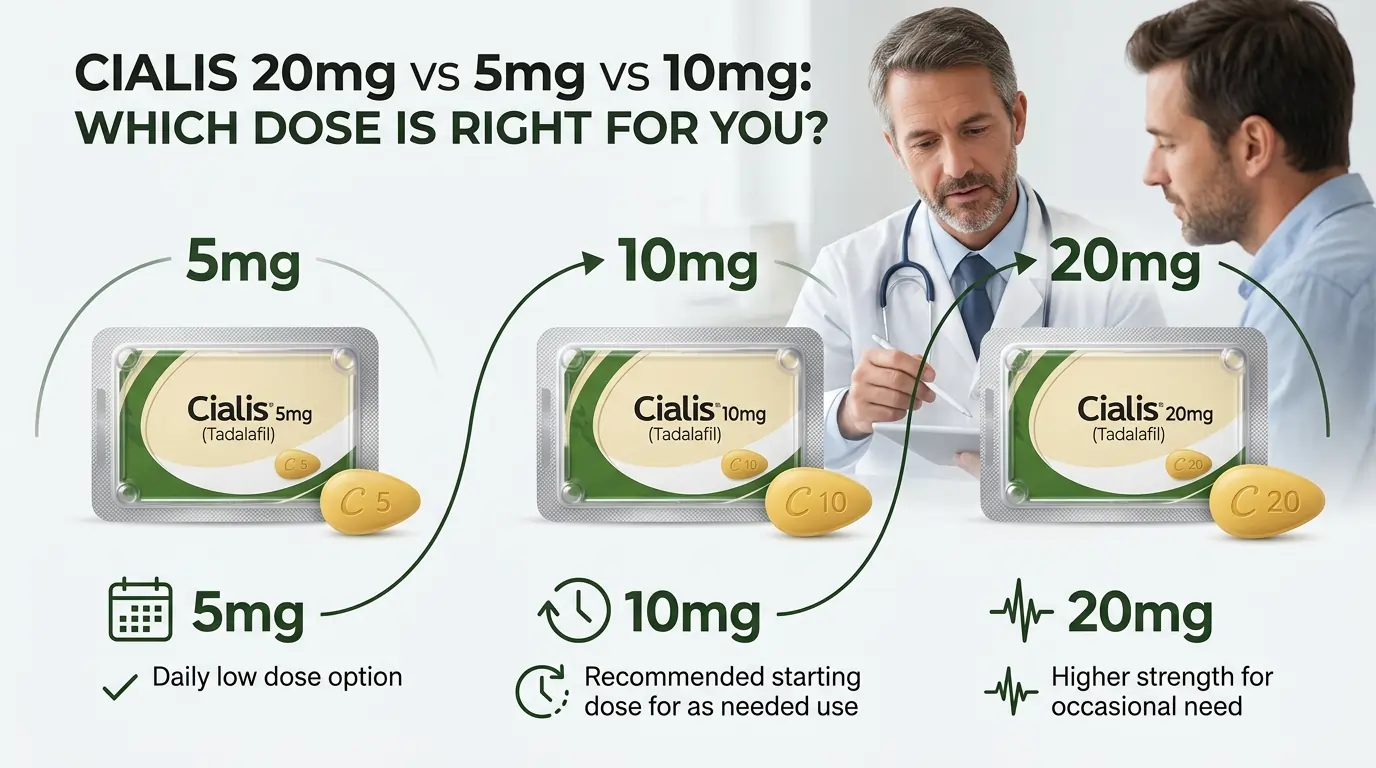
Cialis 20mg vs 5mg vs 10mg is one of the most common questions patients ask once they understand the basics of tadalafil. The four available strengths — 2.5mg, 5mg, 10mg, and 20mg — are not just bigger and smaller versions of the same dose. Each strength serves a specific clinical purpose, and the physician’s choice depends on what condition is being treated, how often the patient anticipates activity, their overall health, and the side-effect profile they tolerate. This guide compares the three most commonly prescribed strengths directly, explains why each exists, and helps you understand the physician’s decision framework. The final dose decision belongs to the prescriber, but informed patients have better conversations.
| If your physician has prescribed tadalafil, you can check original Cialis 20mg availability and prescription verification options in Pakistan. |
What This Guide Covers
- Quick comparison table — the three doses at a glance
- Cialis 5mg — what it does and who it suits
- Cialis 10mg — the moderate on-demand dose
- Cialis 20mg — the highest standard dose
- How physicians actually choose between doses
- Side effect differences between strengths
- Cost considerations across doses
- When and how doses change over time
- Frequently asked questions
Quick Comparison: The Three Doses at a Glance
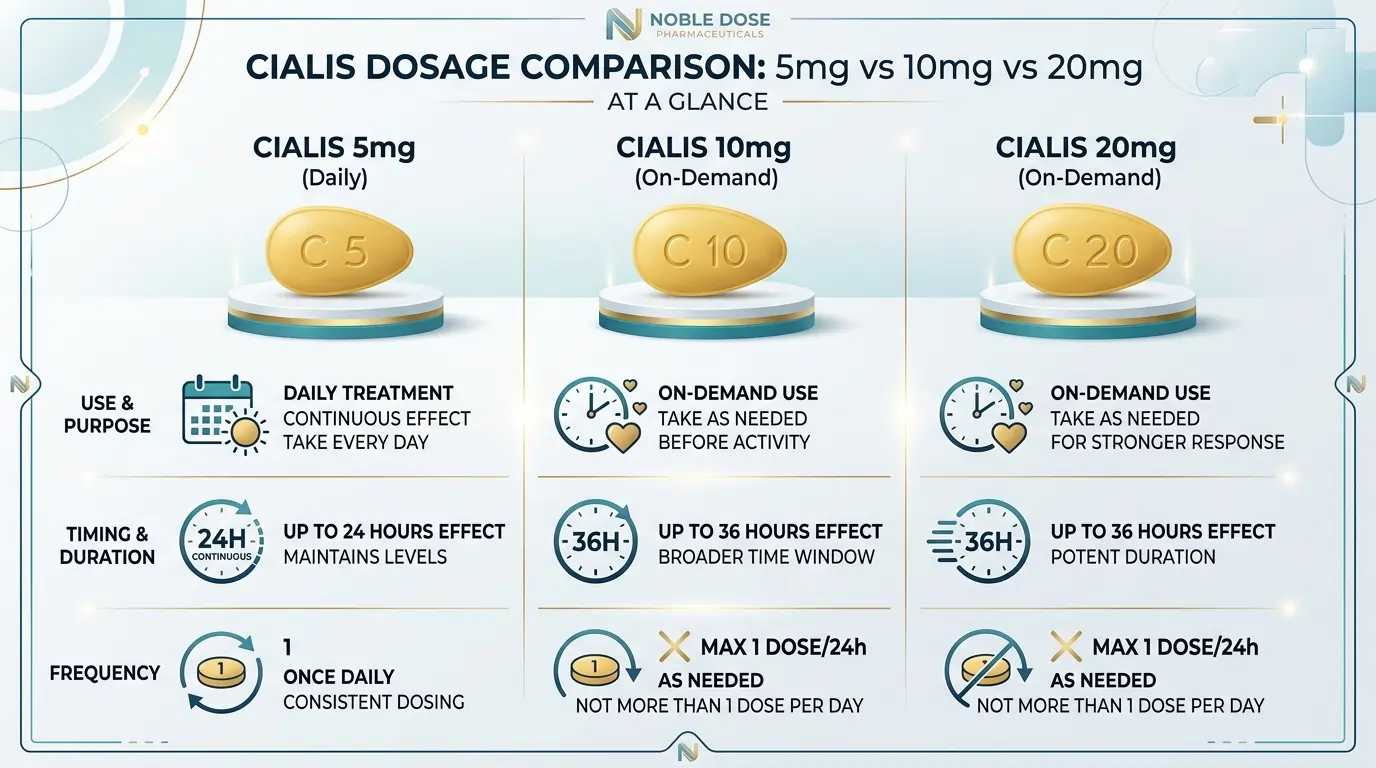
Before going into detail on each strength, here is the high-level comparison most patients want. This table summarizes the main differences across the three commonly prescribed Cialis doses.
| Feature | 5mg | 10mg | 20mg |
| Primary use | Daily treatment | On-demand | On-demand |
| When taken | Same time daily | Before activity | Before activity |
| Time to effect | Continuous after 5 days | 30 to 60 min | 30 to 60 min |
| Duration | Continuous | Up to 36 hours | Up to 36 hours |
| Best for | Frequent activity / BPH | Moderate response need | Strong response need |
| Side effects | Lowest frequency | Moderate | Highest frequency |
| Flexibility | No planning needed | Plan 30-60 min ahead | Plan 30-60 min ahead |
A key insight from this table: the three doses are not just “weak, medium, strong” versions of the same approach. The 5mg strength is primarily a daily dose, while 10mg and 20mg are on-demand doses. The choice between daily and on-demand is bigger than the choice between strengths within each strategy.
Cialis 5mg: The Daily Dose
The 5mg strength is the most commonly prescribed dose of Cialis worldwide. It is intended for daily use, taken at the same time every day. It is also the dose approved for treating BPH (enlarged prostate) symptoms, with or without ED present.
How 5mg Daily Works
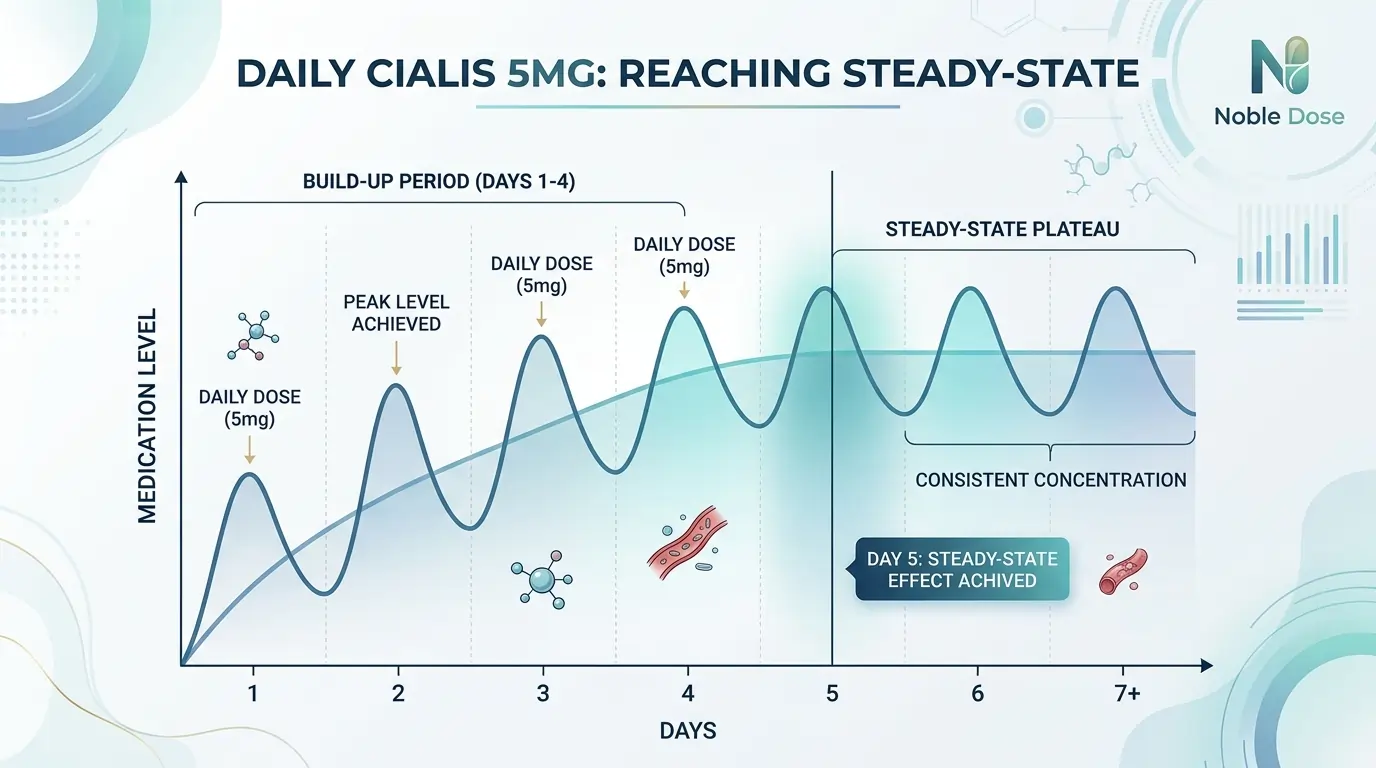
When you take 5mg tadalafil every day, the medication accumulates in your body to a stable steady state over about five days. After that, the drug is continuously present at low-but-active levels. Your body’s response to sexual stimulation is restored throughout the day and night, without needing to take a tablet before activity.
The continuous coverage is fundamentally different from how on-demand dosing works. With 5mg daily, sexual spontaneity is restored — there is no countdown from tablet to activity, no planning a window. This is one reason many men and their partners prefer the daily approach despite the slightly higher cost over a month.
Who 5mg Daily Suits Best
The 5mg daily dose works well for several patient profiles. Men who have sexual activity multiple times per week find that daily dosing is simpler than repeated on-demand dosing. Men over 50 who have both ED and BPH symptoms benefit from a single treatment that addresses both conditions. Men who prefer not to schedule activity around medication find the always-ready aspect more comfortable.
It also suits men who have had mixed results with on-demand dosing — sometimes good response, sometimes not. The steady-state mechanism produces more consistent response than the peak-and-trough pattern of on-demand dosing for some patients.
The 2.5mg Variant
A 2.5mg daily strength also exists. It is essentially a starter or sensitivity-adjustment dose, used for patients who experience side effects on 5mg, older patients with slower drug clearance, or patients with mild kidney or liver impairment. Most patients on daily dosing use 5mg, but 2.5mg gives physicians flexibility to fine-tune.
Limitations of 5mg Daily
Daily dosing is not for everyone. The cost over a month is typically higher than occasional on-demand use, particularly for men who have activity only a few times per month. The daily habit also requires consistency — irregular use means the body never reaches steady state, and the medication does not work as designed.
Daily dosing also requires that the patient has no contraindications to continuous drug exposure. Patients on certain other medications, with certain kidney or liver issues, or with specific cardiac concerns may not be candidates for daily tadalafil. This screening is done by the prescribing physician.
Cialis 10mg: The Moderate On-Demand Dose
The 10mg strength is intended for on-demand use — taken before anticipated sexual activity, not daily. It is often the starting dose for on-demand patients, used to establish how well the patient responds before considering whether 20mg might be needed.
How 10mg Works
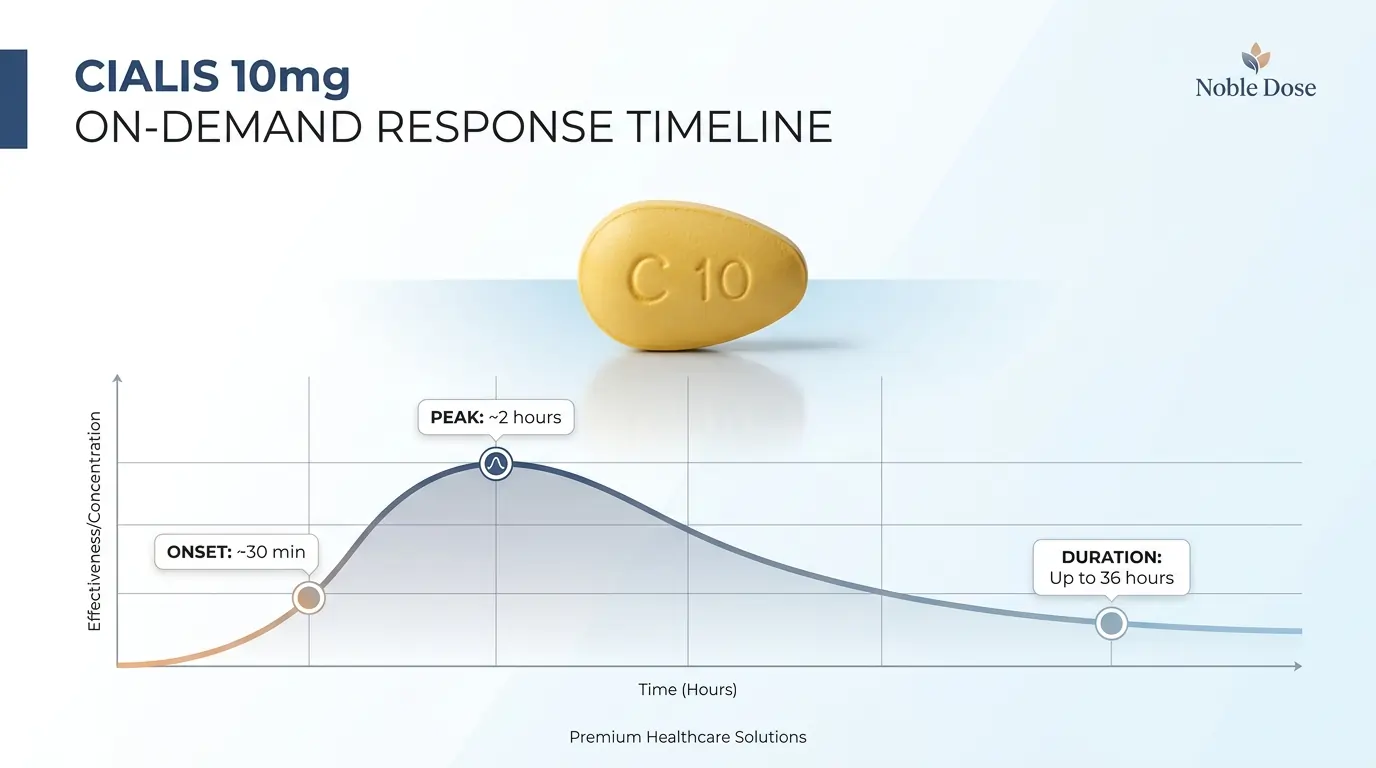
Taking a 10mg tablet produces a clear pharmacological peak in the bloodstream over the next two hours. The effect on sexual response begins within about 30 minutes and continues for up to 36 hours as the medication slowly clears. This is the same time course as 20mg — the difference is the peak level reached.
For many men, 10mg produces a strong enough response that 20mg is not needed. Clinical research suggests that the response curve flattens at moderate doses — meaning the jump from 10mg to 20mg gives less additional benefit than the jump from no treatment to 10mg. The marginal benefit of higher doses is smaller than patients often expect.
Who 10mg Suits Best
The 10mg dose suits men who want on-demand flexibility (rather than daily medication) but prefer to start with a moderate dose to assess their response. It is particularly appropriate for men who are otherwise healthy, in their 40s or younger, and starting ED treatment for the first time. The 10mg dose also fits men who have had good response to other ED treatments — they often respond well to 10mg tadalafil.
It is also the appropriate starting dose for older men using on-demand treatment, before considering whether 20mg is needed. Older patients are more likely to experience side effects, so starting lower is the standard approach.
When 10mg Is Not Enough
Some patients find 10mg produces partial response — better than no medication, but not the full effect they hoped for. In these cases, the physician will typically consider increasing to 20mg. This is the most common reason to move from 10mg to 20mg, and the change should be made with the prescribing physician, not on the patient’s own.
A small minority of patients do not respond to either 10mg or 20mg. This can indicate that tadalafil is not the right medication for them, or that there are other factors (vascular health, hormonal issues, psychological factors) requiring additional evaluation. The next step is a return to the prescribing physician for further workup.
Cialis 20mg: The Highest Standard Dose
The 20mg strength is the maximum on-demand dose of Cialis. It is intended for patients who do not respond adequately to 10mg, or for patients who specifically need the strongest available response. It is not the default starting dose for most patients.
How 20mg Differs from 10mg
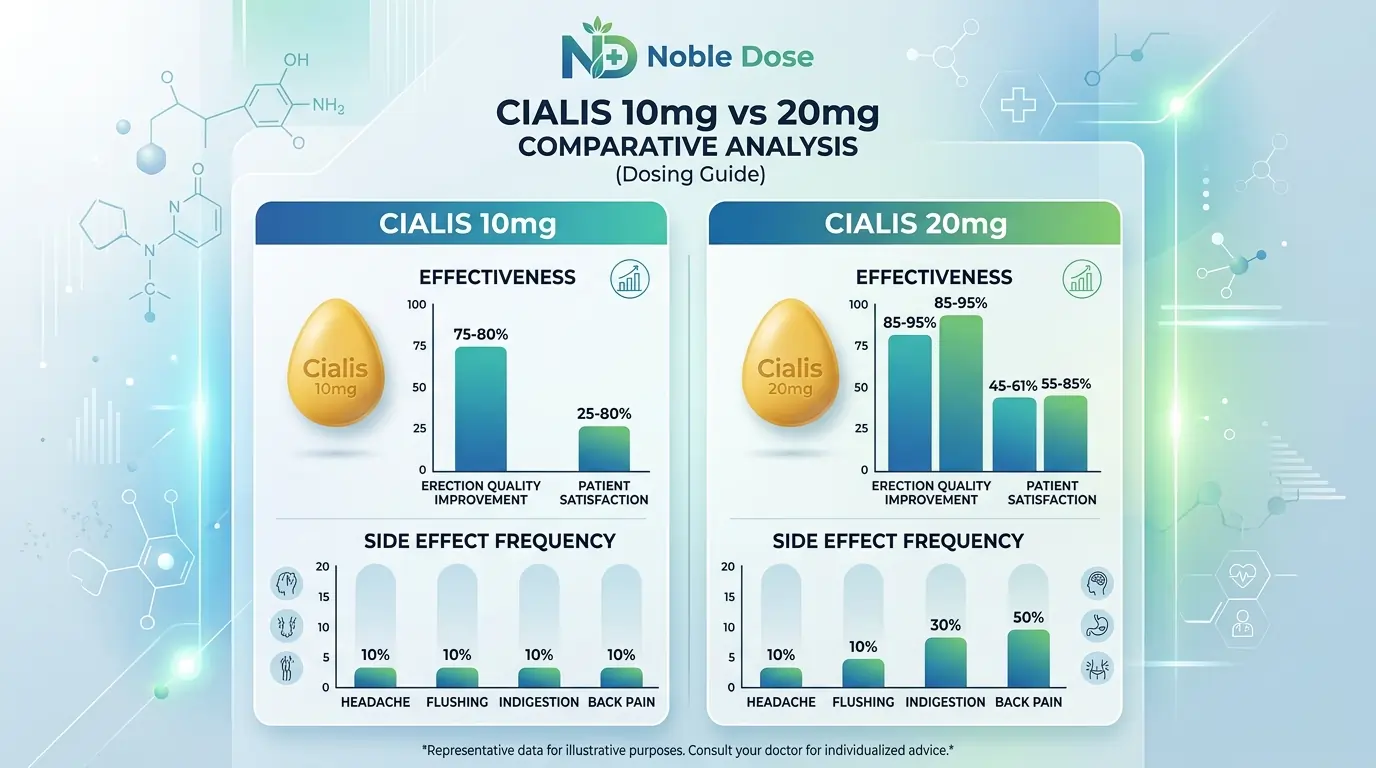
Pharmacologically, 20mg produces a peak blood level roughly twice that of 10mg, but the response in the body is not simply twice as strong. The PDE5 enzyme that tadalafil blocks has limited capacity to begin with — once mostly blocked, additional medication produces diminishing returns. The 20mg dose is somewhat more reliable for men with stronger ED, but for many patients, 10mg already produces excellent response.
The side effect profile is also stronger at 20mg. Headache, flushing, indigestion, and back pain all occur more frequently at 20mg than at 10mg. The increase is typically modest — for example, headache rates rise from about 7 percent at 10mg to about 11-15 percent at 20mg — but it is real and noticeable for those who experience side effects.
Who 20mg Is Appropriate For
The 20mg dose is appropriate for men who have tried 10mg and found the response insufficient. It is also appropriate for men with more severe ED at the outset, particularly those with multiple vascular risk factors (well-controlled diabetes, hypertension, etc.). The decision is made by the prescribing physician based on the patient’s response to lower doses or the severity of their condition at first evaluation.
It is the standard maximum on-demand dose — there is no higher Cialis strength available, and taking more than 20mg in 24 hours is unsafe. Patients who do not respond to 20mg should not increase the dose; they should return to their physician for further evaluation.
Why 20mg Is Not the Default Choice
Patients often assume that the strongest available dose is the best one. With tadalafil, this is not the case for most men. Starting at 20mg means accepting higher side effect risk before knowing whether the body needs that much medication. Many men respond well to 10mg with milder side effects.
Working up from a lower dose, when appropriate, is the standard medical approach. It allows the physician to find the lowest dose that produces the desired response — which is the principle of medicine in general. The result is the same effect with less side-effect burden.
How Physicians Actually Choose Between Doses
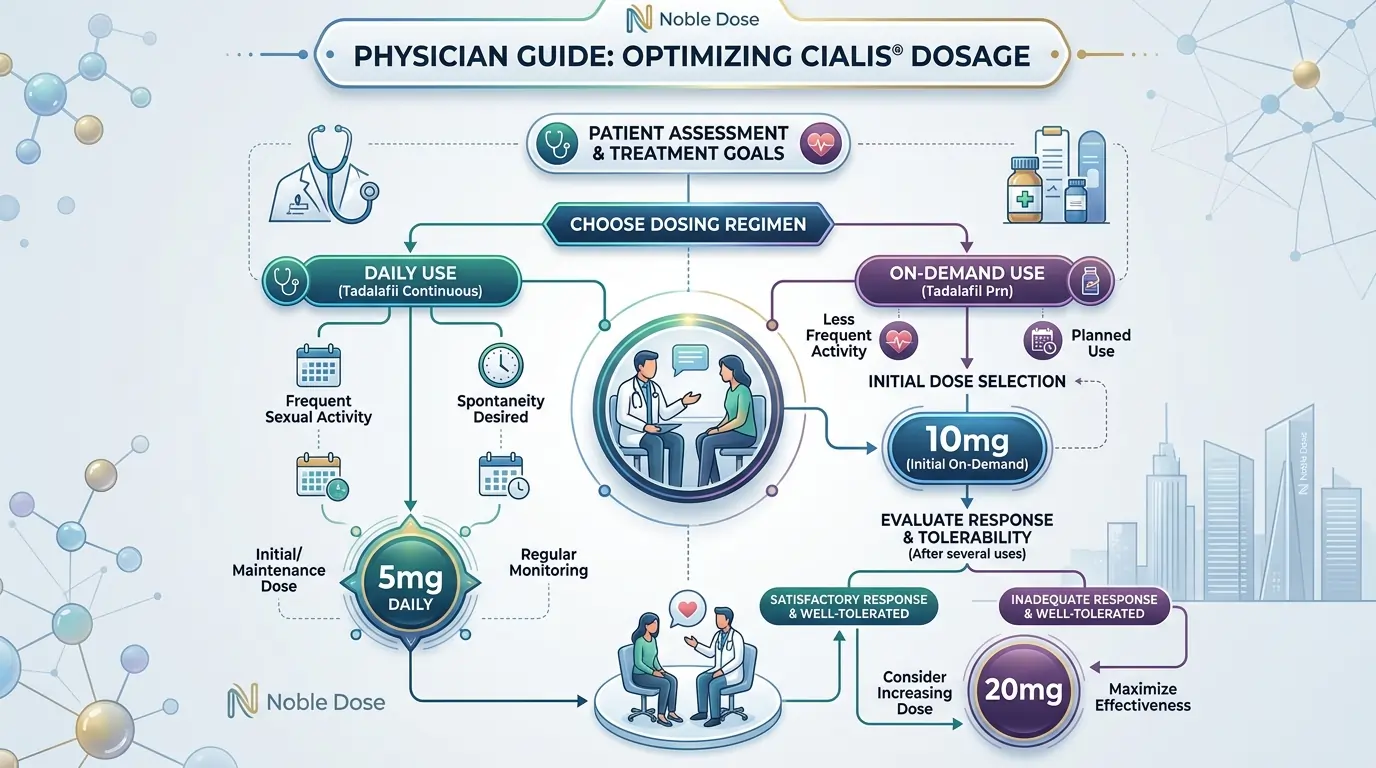
Understanding the physician’s decision framework helps patients have better conversations about their treatment. Dose choice is not random or based on patient preference alone. There is a clinical logic that follows a few key principles.
Principle 1: Strategy Before Strength
The first decision is between daily and on-demand dosing. This depends on activity frequency, presence of BPH, patient lifestyle, and personal preference. Daily dosing is appropriate when there are multiple weekly anticipated activities, BPH coexists with ED, or the patient prefers continuous readiness. On-demand dosing fits less frequent activity, particularly in younger patients without coexisting conditions.
Once the strategy is chosen, the strength follows from it. Daily dosing means 2.5mg or 5mg. On-demand dosing means 10mg or 20mg. The strategy comes first.
Principle 2: Start at the Lowest Effective Dose
For on-demand patients, the standard starting point is 10mg. Most patients respond adequately to this dose. If response is inadequate after three or four attempts, the physician will consider moving to 20mg.
For daily patients, 5mg is the standard starting point. The 2.5mg variant is used for patients with risk factors for stronger sensitivity — older age, mild liver issues, or specific medication interactions.
Principle 3: Patient Factors Modify the Choice
Several patient-specific factors influence the dose decision. Age over 65 typically means starting lower. Mild kidney or liver impairment means lower dose. Multiple medications, particularly those with known interactions, mean caution. Specific medical conditions (diabetes, heart disease, NAION risk) all influence the dose conversation.
This is why the prescribing visit matters. A complete medical history allows the physician to recommend a dose that fits the patient, not just the average patient in a clinical trial.
Principle 4: Adjust Based on Response, Not Time
If the starting dose works well, no change is needed. If response is partial or unsatisfactory after several attempts, the dose can be adjusted upward. If side effects are bothersome, the dose can be adjusted downward. These adjustments are based on the patient’s reported experience, not a calendar.
Patients sometimes ask whether they should “build up” tolerance over weeks or months. For on-demand dosing, this concept does not apply — the medication does not require gradual exposure. For daily dosing, side effects often improve over the first few weeks as the body adjusts, but the dose itself typically does not need to change unless the response is inadequate.
Side Effect Differences Between Strengths
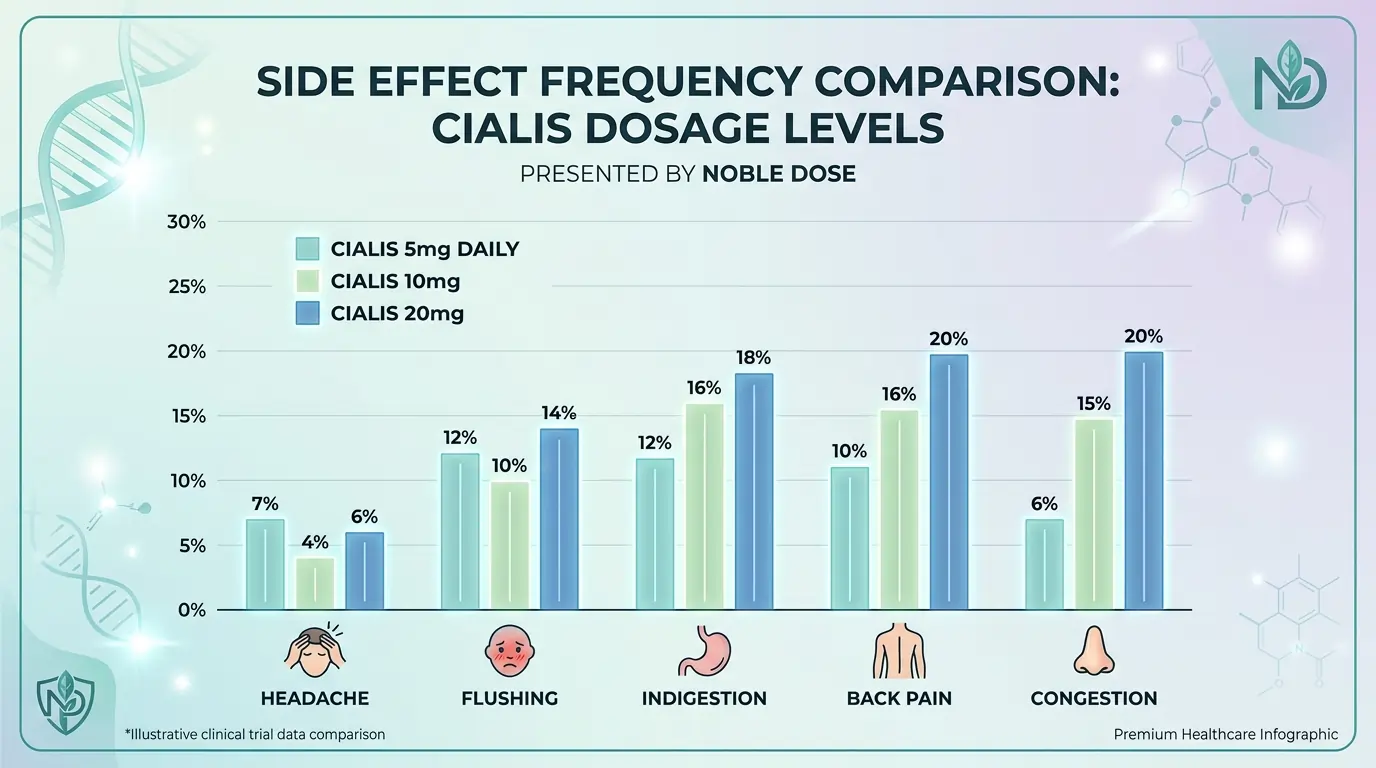
Side effect rates are not the same across all strengths. Generally, the higher the dose, the more frequent the side effects, but the relationship is not perfectly linear.
| Side Effect | 5mg Daily | 10mg On-Demand | 20mg On-Demand |
| Headache | ~3-4% | ~7% | ~11-15% |
| Flushing | ~1-2% | ~3% | ~4-5% |
| Indigestion | ~4-5% | ~6% | ~7-10% |
| Back pain / muscle ache | ~3% | ~4% | ~5-6% |
| Nasal congestion | ~1-2% | ~2% | ~3-4% |
Two patterns are worth noting. First, daily 5mg side effects are generally milder than on-demand 10mg side effects, even though the daily dose is half. This is because the daily dose does not produce sharp peaks in blood level — the body experiences a constant low level rather than periodic spikes. Many patients find this gentler.
Second, the jump from 10mg to 20mg adds notable side effect frequency, particularly for headache and indigestion. This is the practical trade-off for the somewhat stronger response at 20mg. For patients sensitive to these effects, staying at 10mg may produce the best overall experience even if 20mg produces a slightly stronger response.
Cost Considerations Across Doses
Cost is a legitimate factor in the dose conversation, particularly for patients paying out of pocket. The cost calculation is not as simple as comparing per-tablet prices.
Per-Tablet vs Per-Month Cost
A 20mg tablet typically costs more per unit than a 5mg tablet, but the dosing patterns are completely different. A patient on 20mg on-demand might use 4-8 tablets per month depending on activity frequency. A patient on 5mg daily uses 30 tablets per month — every day, without exception.
Doing the math: for occasional use (4 tablets per month), on-demand 20mg is usually less expensive overall than daily 5mg. For frequent use (3-4 tablets per week), the cost calculation reverses — daily 5mg becomes the more economical choice because of the lower per-tablet price. The crossover point varies by manufacturer and pharmacy, but typically sits around 10-12 tablets per month.
Generic vs Brand
Generic tadalafil costs significantly less than brand-name Cialis, often 50-80 percent less. The active ingredient is identical, and DRAP-approved generic manufacturers must meet the same quality standards as the brand. For most patients, generic tadalafil is a sensible choice that makes the medication accessible across all dose strategies.
The catch is sourcing. Generic medications from unverified sellers carry counterfeit risk. Always source from a DRAP-licensed pharmacy that verifies prescriptions — this is true for any dose strategy but particularly important when buying generic versions.
What Does Not Save Money
Splitting tablets to make a lower dose seems clever but rarely makes sense. The tablet coating affects absorption, so split halves do not deliver exactly half the dose. The savings are also smaller than patients expect. If you need a lower dose, ask your physician for the lower strength.
Buying in bulk from unverified online sellers may appear cheaper but risks counterfeit product. The medication looks identical; the contents may not be. Money saved on counterfeit tablets is money wasted at best, and dangerous at worst.
When and How Doses Change Over Time
Dose decisions are not permanent. Many patients have their dose adjusted over months and years based on response, side effects, age, and changes in overall health.
Adjusting Within a Strategy
Moving from 10mg to 20mg, or from 5mg to 2.5mg, is a common adjustment that happens within the on-demand or daily strategy. These adjustments are simple — the prescribing physician changes the prescription, and the patient transitions on the next refill. No washout period is needed.
Switching Strategies
Moving from on-demand to daily dosing, or vice versa, is a larger change. The dosing rules, expectations, and tablet strengths are all different. This switch is appropriate when the patient’s life circumstances change — moving from occasional to frequent activity, developing BPH symptoms, or preferring more spontaneity than on-demand allows.
The transition itself is straightforward: stop the old strategy, start the new one. Daily dosing requires about five days to reach steady state, so patients should understand that the new regimen will not feel “complete” for the first week.
Dose Reduction Over Time
In some cases, particularly with men who have a psychological component to their ED, the dose can be reduced or even discontinued over time. Successful experiences with the medication can reduce performance anxiety, and the underlying response can improve. This evolution is gradual and managed with the prescribing physician — not something a patient should attempt alone.
Dose Increase Due to Aging
Conversely, some men find that a dose that worked well in their 40s becomes less effective in their 50s or 60s. This is a normal response to aging vascular and hormonal changes, not a failure of the medication. The physician may adjust upward, switch strategies, or evaluate whether other interventions are appropriate alongside the medication.
Frequently Asked Questions
Is 20mg always better than 10mg?
No. 20mg produces a slightly stronger response on average, but for many men, 10mg already produces excellent response. The response curve flattens at moderate doses, meaning the additional benefit of 20mg over 10mg is smaller than patients often assume. 20mg also produces more side effects. For most patients, starting at 10mg and moving up only if needed is the better approach.
Can I take Cialis 5mg if I need a strong response?
Possibly, but it depends on use pattern. Daily 5mg is designed for continuous coverage, not a single strong response. If you need a strong on-demand response for occasional activity, 10mg or 20mg on-demand may suit you better. The physician will help you choose between strategies based on your specific situation.
Why would a physician prescribe 2.5mg instead of 5mg?
2.5mg is used for patients who experience bothersome side effects on 5mg, older patients with slower drug clearance, patients with mild liver impairment, or patients on certain interacting medications. It also serves as a sensitivity-test starting dose for very cautious patients. Most daily users end up on 5mg eventually, but 2.5mg gives physicians flexibility.
Can I switch from on-demand 20mg to daily 5mg myself?
No. Although both are tadalafil, the dosing strategies are different in many ways: tablet strength, daily routine, expectations, and steady-state buildup. A switch should be made by the prescribing physician, who will give you a new prescription and explain the transition. Self-switching often produces a frustrating gap in effective coverage during the first week.
Is daily 5mg dangerous because it accumulates in the body?
No. The 5mg daily dose is specifically designed to produce a safe steady state — the medication accumulates to a stable level, but the level itself is well within safe range. This was specifically studied during the approval process. Daily 5mg is FDA-approved for continuous use, including for BPH treatment which may continue for years. Routine medical follow-up monitors for any individual issues.
What if I want to try a higher dose for special occasions?
This question comes up often. The maximum on-demand dose is 20mg in 24 hours, regardless of the occasion. Exceeding this dose increases side effect risk significantly without producing meaningfully stronger response. If you are on daily 5mg and want occasional stronger response for special events, this is a conversation with your physician — there are approaches that may work, but they require medical supervision.
Are generic 5mg and brand 5mg the same dose?
Pharmacologically yes — the active ingredient and its effect are required to be equivalent under DRAP and international regulations. Generic and brand Cialis 5mg deliver the same 5mg of tadalafil. Differences in inactive ingredients (binders, coatings) are minor and rarely produce clinically noticeable differences.
How long should I try a dose before deciding it works or not?
For on-demand dosing, try the dose three to four times under reasonably similar circumstances (no excessive alcohol, no extreme stress, normal sleep) before judging the response. For daily dosing, allow at least two weeks — five days for steady state, plus another week to assess the full pattern. Hasty conclusions after one or two doses often miss what the medication can actually do.

Key Takeaways
Choosing between Cialis 5mg, 10mg, and 20mg is less about which is “strongest” and more about which fits your situation. The most important points:
- Strategy comes before strength — daily dosing (5mg) and on-demand dosing (10mg or 20mg) work differently and suit different patient profiles
- 5mg daily is best for frequent activity, BPH coexisting with ED, or patients who prefer no planning around medication
- 10mg on-demand is the standard starting dose for most patients on the on-demand strategy
- 20mg on-demand is appropriate when 10mg produces insufficient response, or for patients with more severe ED at the outset
- Side effects rise with dose — the jump from 10mg to 20mg adds noticeable side effect frequency
- For occasional use, on-demand 20mg is typically the more economical choice; for frequent use, daily 5mg becomes the better value
- All dose decisions belong to the prescribing physician — informed patients have better conversations, but the choice is medical
Continue Learning
This guide is part of a series of educational articles on tadalafil. For deeper information on related topics:
- Cialis Tablet Uses, Benefits & How It Works — Complete Medical Guide
- Cialis Tablet Uses in Urdu — مکمل گائیڈ
- Cialis 20mg Side Effects: Complete Guide and How to Avoid Them
- How to Use Cialis Tablets: Dosage, Timing, and Practical Tips
- Is Cialis Safe? Who Should and Should Not Take It
- Cialis vs Viagra: Detailed Comparison for Pakistani Men
| Medical Disclaimer
This article is published for educational purposes by NobleDose and has been reviewed by a licensed Pakistani Pharm-D pharmacist. Dose-comparison data is drawn from FDA prescribing information and published clinical research. This guide is informational only — the dose decision belongs to your prescribing physician based on your individual medical evaluation. Information may be updated as new evidence emerges. |
References
- U.S. Food and Drug Administration. Cialis (tadalafil) prescribing information — dose strengths and indications.
- European Medicines Agency. Cialis EPAR — clinical studies and dose-response data.
- American Urological Association. Guideline on the management of erectile dysfunction — dose selection.
- Mayo Clinic. Tadalafil (oral route) — dosing information.
- Drug Regulatory Authority of Pakistan. Registered product strengths and manufacturers.
- National Institutes of Health (NIH) MedlinePlus. Tadalafil drug information.