
Tadalafil: Complete Medical Guide — Uses, Doses, and Safety
Tadalafil is the active pharmaceutical ingredient behind Cialis and most of the generic medications used to treat erectile dysfunction and benign prostatic hyperplasia. Although patients usually encounter the medication under a brand name, the active drug is the same — and understanding the molecule itself, rather than just the brand, helps make sense of dosing decisions, generic equivalents, and how the medication will behave in your body. This guide is a complete reference to tadalafil: what it is, how it works, what it treats, how it differs from related medications, and the practical considerations every patient should know before starting. Information from a licensed Pakistani Pharm-D, written for patients and informed readers.
What This Guide Covers
- What tadalafil is and how it was developed
- Brand-name and generic versions explained
- How tadalafil works at the molecular level
- Approved medical uses across conditions
- Available strengths and dosing strategies
- Pharmacokinetics — what makes tadalafil different
- Side effect profile
- Safety considerations and contraindications
- Tadalafil in Pakistan — availability and quality
- Frequently asked questions
What Is Tadalafil?
Tadalafil is a prescription medicine that belongs to a class of drugs called PDE5 inhibitors — short for phosphodiesterase type 5 inhibitors. The class also includes sildenafil (Viagra) and vardenafil (Levitra), among others. Within this class, tadalafil is the molecule with the longest duration of action and the broadest set of approved uses.
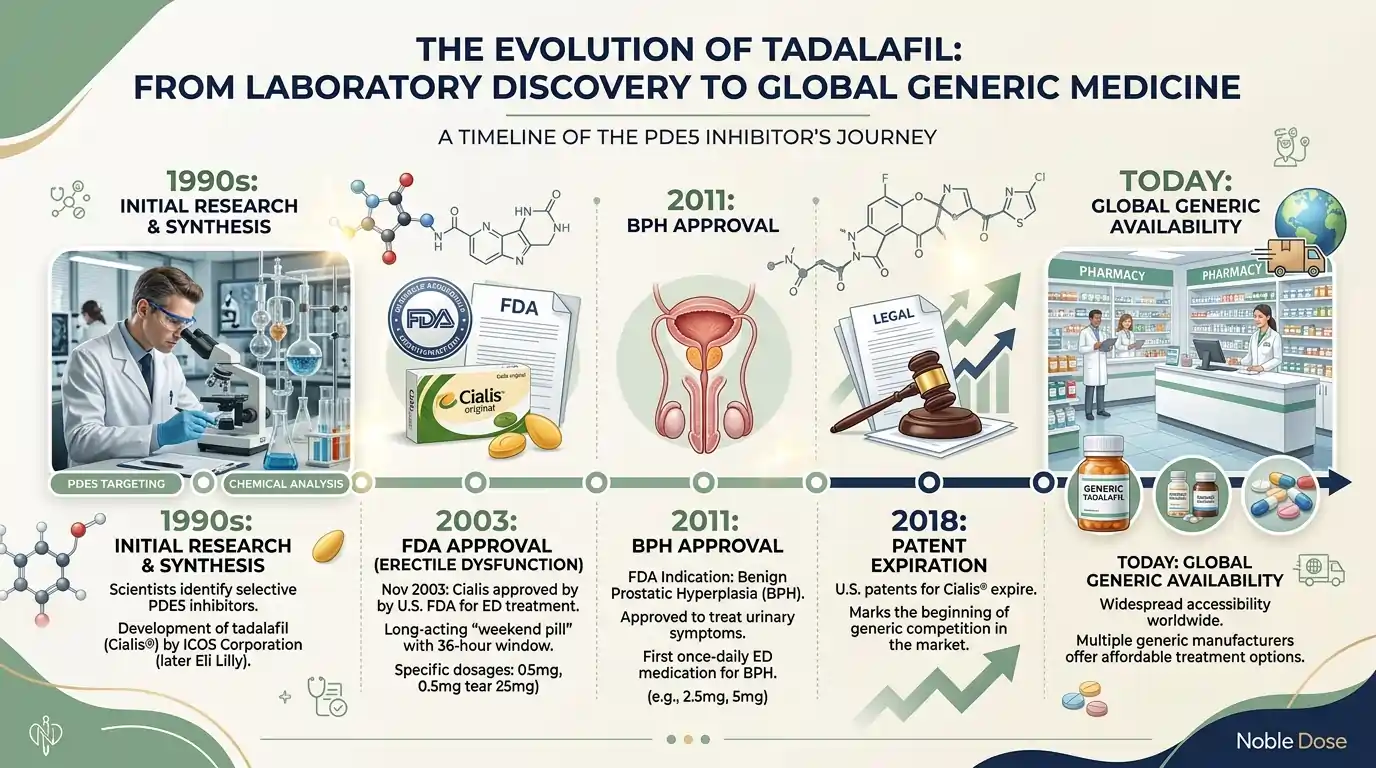
The drug was developed by ICOS Corporation in the 1990s and brought to market by Eli Lilly under the brand name Cialis after FDA approval in November 2003. The original patent expired in 2018, which opened the market for generic versions worldwide. Today, tadalafil is one of the most commonly prescribed medications in its category.
Chemically, tadalafil is a small synthetic molecule designed to bind specifically to the PDE5 enzyme. Its molecular structure is different from sildenafil and vardenafil, which is why it has its distinct pharmacological profile — particularly the long half-life that gives it the 36-hour duration of effect.
Development Timeline
Tadalafil’s development was the result of structure-based drug design — chemists deliberately built a molecule to match the shape of the PDE5 enzyme’s active site. This is in contrast to many older medications discovered by trial and error. The targeted design produced a drug with high specificity for PDE5 and relatively low binding to similar enzymes, which contributes to its favorable side effect profile.
After FDA approval in 2003, tadalafil received approval for benign prostatic hyperplasia (BPH) in 2011 and for combined ED and BPH treatment in subsequent years. A higher-dose version (Adcirca, 40mg daily) was also approved for pulmonary arterial hypertension. The Pakistani DRAP has approved tadalafil at standard dose strengths for prescription use through licensed pharmacies.
Brand-Name and Generic Versions Explained
Tadalafil reaches patients under many different names. Understanding the difference between brand-name and generic versions helps you understand what you are actually buying — and why prices vary so widely.
The Brand: Cialis
Cialis is the original brand name under which Eli Lilly markets tadalafil. Until 2018, Eli Lilly had patent protection, meaning no other company could legally sell the same molecule. During this time, Cialis was the only commercial tadalafil available, and prices reflected that monopoly position.
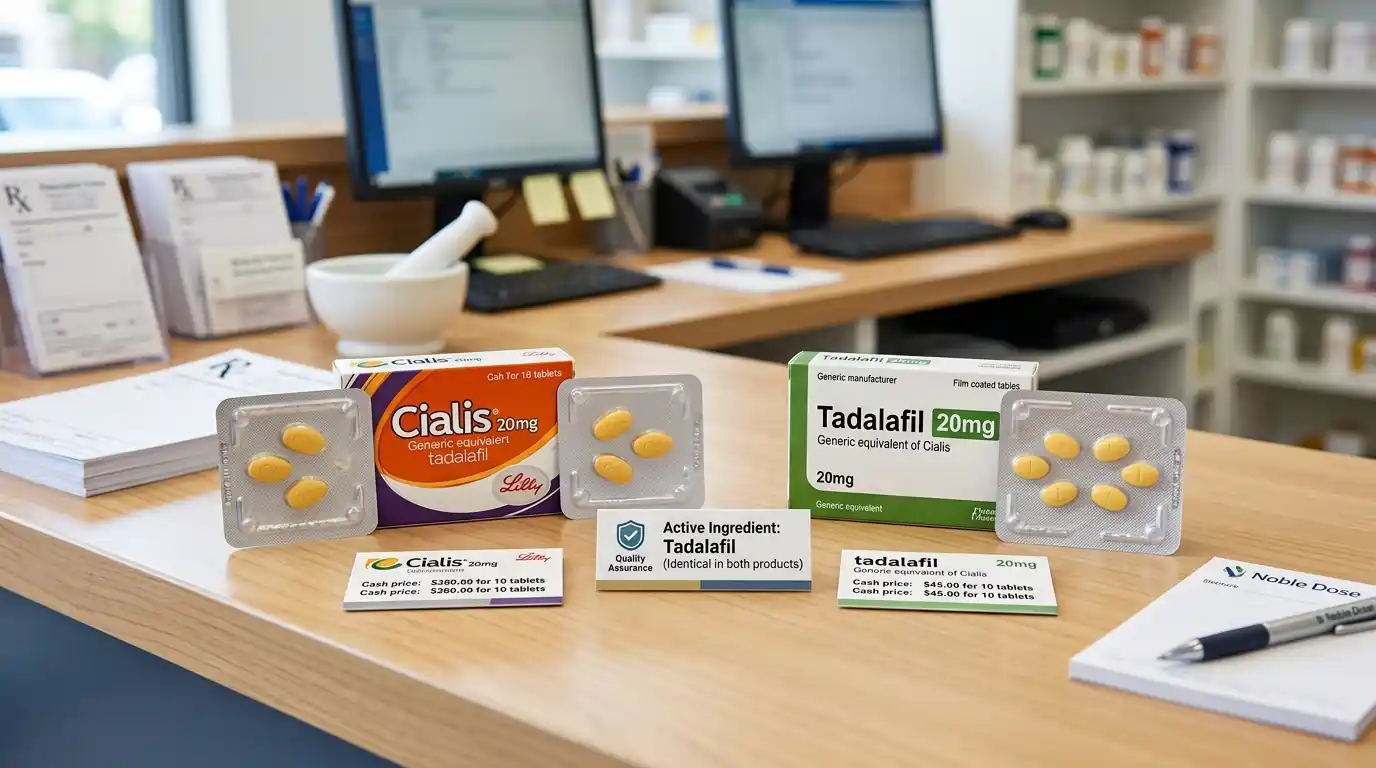
Cialis remains available worldwide and continues to be the brand with the strongest name recognition. The medication itself is identical to generic tadalafil from quality manufacturers — the active ingredient and its effect are pharmacologically equivalent. What patients pay for with brand Cialis is the brand recognition, the manufacturer’s reputation, and the consistent quality control of Eli Lilly’s production.
Generic Tadalafil
After patent expiry in 2018, many pharmaceutical companies began producing generic tadalafil. These versions contain the same active ingredient at the same strength as Cialis, manufactured by different companies. To receive approval from regulators like DRAP, generic versions must demonstrate bioequivalence — meaning the body absorbs the medication at the same rate and reaches the same blood levels as the brand.
In Pakistan, several DRAP-approved manufacturers produce tadalafil tablets. These generic versions are dramatically less expensive than brand Cialis — typically 50 to 80 percent less. For most patients, generic tadalafil from a quality manufacturer is a sensible choice that makes the medication accessible without sacrificing effectiveness.
Tadalafil and Adcirca
Tadalafil is also sold under the brand name Adcirca at a higher 40mg dose, specifically for treating pulmonary arterial hypertension. This is the same molecule but a different brand, indication, and prescribing pattern. Most patients encountering tadalafil are taking it as Cialis or generic versions for ED or BPH — not as Adcirca.
How to Identify Quality Generic Tadalafil
Not all generic tadalafil is equivalent. The differences come from manufacturer quality control, not the active ingredient itself. Quality indicators include: DRAP registration of the product, sourcing from a licensed pharmacy that verifies the supply chain, original sealed packaging, and a clear manufacturer name and address on the package.
The risk is counterfeit products that mimic legitimate generics but may contain incorrect doses, different drugs, or harmful contaminants. Counterfeits often look identical to genuine products. Always source tadalafil from a DRAP-licensed pharmacy that verifies prescriptions — this is the most reliable protection against counterfeit risk.
How Tadalafil Works at the Molecular Level
To understand tadalafil, you need a simple picture of what happens during normal erection — and what goes wrong in erectile dysfunction. The medication intervenes at a specific step in this process.
The Normal Process
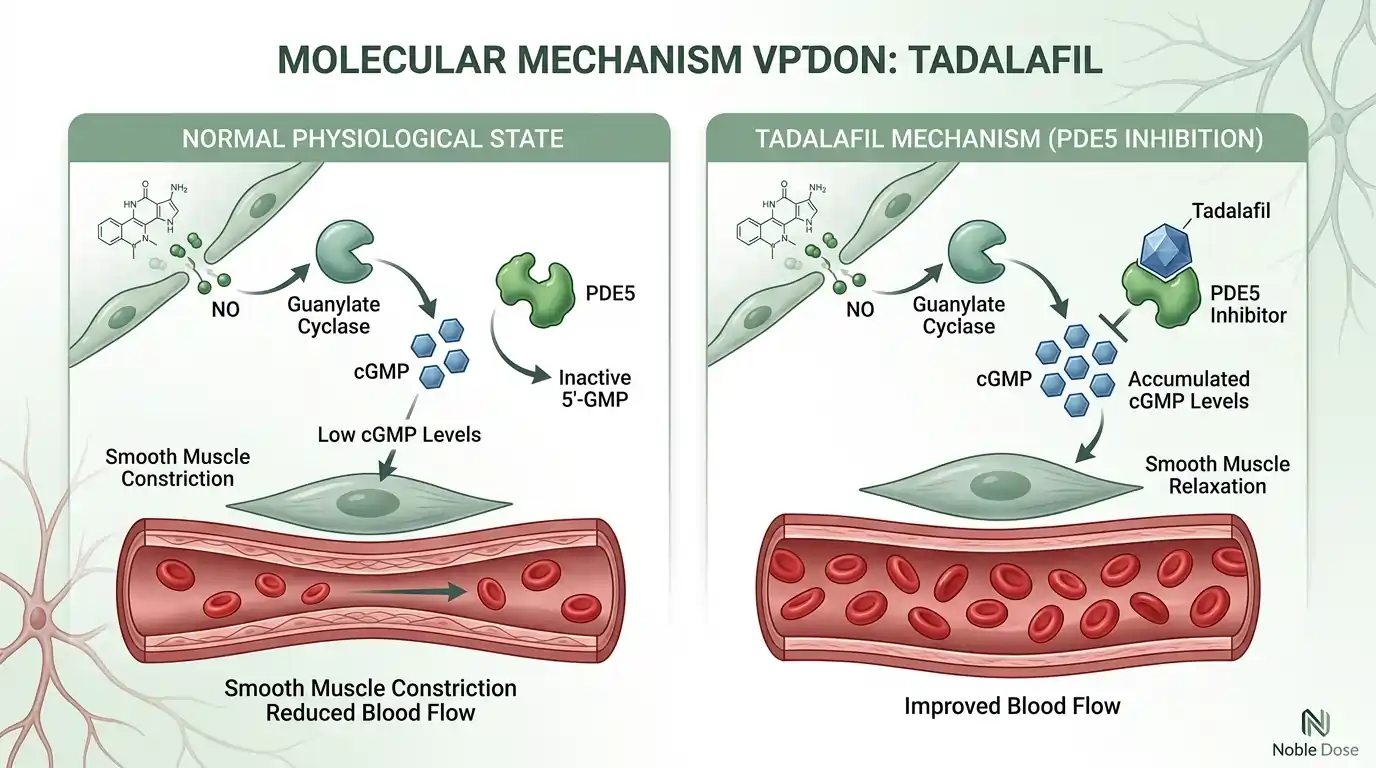
When sexual arousal occurs, nerves in the penis release a chemical called nitric oxide (NO). Nitric oxide triggers the production of another molecule called cyclic guanosine monophosphate (cGMP). cGMP is the active signal that causes smooth muscle in the blood vessels of the penis to relax. As the muscle relaxes, blood vessels widen, blood flows in, and an erection forms. This is the natural sequence in healthy men.
Where ED Happens
In men with erectile dysfunction, the body produces an enzyme called phosphodiesterase type 5 (PDE5). PDE5 breaks down cGMP, ending the signal that keeps blood vessels relaxed. In healthy men, PDE5 activity is balanced — cGMP rises with arousal, does its work, and is then cleared. In men with ED, PDE5 activity is excessive relative to cGMP production, so the signal is cleared too quickly. The blood vessels do not stay relaxed long enough for a satisfactory erection.
What Tadalafil Does
Tadalafil binds to PDE5 and inhibits its activity. With PDE5 blocked, cGMP remains active in the tissue much longer. The blood vessels stay relaxed, blood flow improves, and the body’s natural response to sexual stimulation is restored.
Important: Tadalafil does not produce an erection by itself. It only restores the body’s ability to respond to sexual arousal. Without arousal, the medication has no visible effect.
This is a crucial distinction that patients often misunderstand. Tadalafil is not an aphrodisiac, does not increase desire, and does not cause spontaneous erections. It is a pharmacological tool that restores normal physiological response when sexual stimulation occurs.
Why the Same Mechanism Helps BPH
The same mechanism that helps ED — smooth muscle relaxation through PDE5 inhibition — also helps with the urinary symptoms of BPH. In the prostate gland and bladder neck, relaxed smooth muscle means less obstruction of urine flow. Patients with BPH report improvement in symptoms like weak stream, frequent urination, and urgency. This dual benefit is unique among PDE5 inhibitors — tadalafil is the only one approved for BPH.
Approved Medical Uses
Tadalafil is approved for three distinct medical conditions, each with its own dosing pattern. The same molecule, used differently, addresses different clinical needs.
1. Erectile Dysfunction (ED)
This is the most widely known use. Tadalafil is prescribed for adult men diagnosed with ED after clinical evaluation. Both on-demand dosing (10mg or 20mg before activity) and daily dosing (2.5mg or 5mg) are approved for ED treatment. The choice depends on activity frequency, patient preference, and other factors discussed with the prescribing physician.
Clinical research shows tadalafil produces successful response in roughly 70 to 80 percent of attempts in men with ED. The response rate is similar across moderate and severe ED, though men with severe ED may need higher doses.
2. Benign Prostatic Hyperplasia (BPH)
Tadalafil 5mg daily is approved for the treatment of BPH symptoms — frequent urination, weak stream, urgency, nighttime urination, and the feeling of incomplete bladder emptying. The medication relaxes smooth muscle in the prostate and bladder neck, easing urinary flow.
BPH affects most men as they age, becoming common over 50 and prevalent over 65. The condition is not cancer and is generally not dangerous, but it significantly affects quality of life. Tadalafil is one of several treatment options; physicians choose based on symptom severity, prostate size, and the presence of related conditions like ED.
3. Combined ED and BPH
Many men over 50 have both ED and BPH simultaneously — this is one of the most common combinations in this age group. Tadalafil 5mg daily is specifically approved for this combination, providing treatment for both conditions with a single medication. This is one of the strongest indications for daily tadalafil and a major reason patients prefer the daily dosing strategy.
4. Pulmonary Arterial Hypertension
Under the brand name Adcirca, tadalafil 40mg taken twice daily is approved for pulmonary arterial hypertension — a rare but serious condition affecting the arteries of the lungs. This indication is managed by specialists (typically pulmonologists or cardiologists) and is not what most patients encounter when discussing tadalafil.
Available Strengths and Dosing Strategies
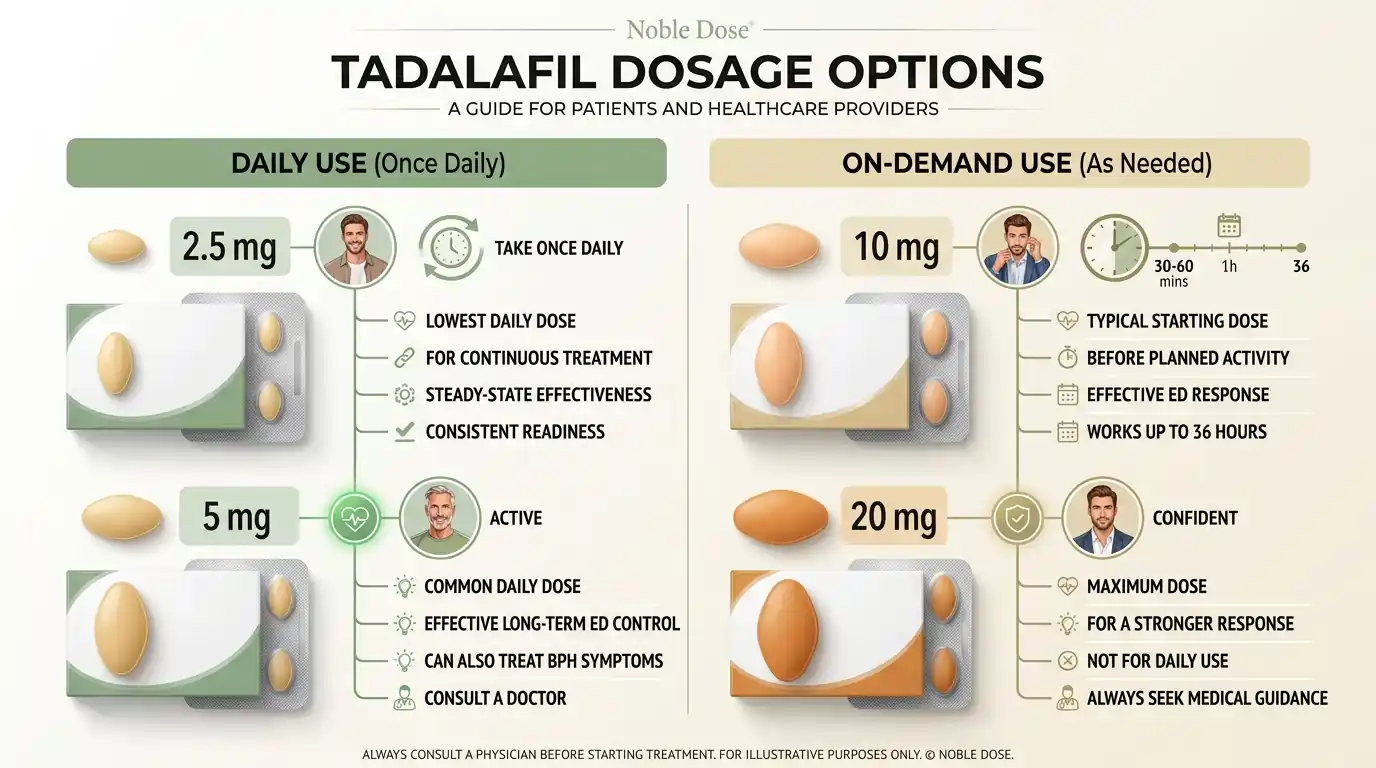
Tadalafil is available in four standard strengths for ED/BPH treatment: 2.5mg, 5mg, 10mg, and 20mg. Each strength serves a specific clinical purpose. A fifth strength (40mg) exists for pulmonary hypertension but is not relevant to most patients.
| Strength | Use Pattern | Primary Indication | Typical Patient |
| 2.5mg | Daily | Sensitive patients, dose-adjusted | Elderly, mild liver/kidney issues |
| 5mg | Daily | ED daily + BPH | Frequent activity, ED+BPH combined |
| 10mg | On-demand | ED moderate response | Most on-demand starting dose |
| 20mg | On-demand | ED maximum response | When 10mg insufficient |
On-Demand vs Daily Strategy
The fundamental choice in tadalafil dosing is between on-demand and daily use. These are not the same medication used at different doses — they are different treatment strategies.
On-demand dosing uses 10mg or 20mg taken about 30 to 60 minutes before anticipated sexual activity. The dose produces a clear pharmacological peak that supports activity for up to 36 hours, then clears. This suits men with less frequent activity who prefer to take medication only when needed.
Daily dosing uses 2.5mg or 5mg taken at the same time every day. After about five days, the medication reaches steady state — a continuous low-but-active level — and the body’s response is supported continuously, without needing to time the dose around activity. This suits men with frequent activity, BPH symptoms, or preference for spontaneity.
Maximum Daily Dose
The maximum on-demand dose is 20mg in any 24-hour period. This limit is not flexible. Taking more does not produce stronger or longer effects — it only increases the risk of side effects, sometimes dangerously. Patients should never exceed this dose, regardless of perceived need.
Dose Adjustments for Special Populations
Several patient factors lead to lower doses or special caution. Older patients (over 65) tend to clear the medication more slowly, so physicians often start at lower doses. Patients with mild kidney or liver impairment need dose reduction. Patients on certain interacting medications — alpha-blockers, antifungals, HIV protease inhibitors — may need lower doses or alternative treatments. Severe kidney or liver impairment may rule out tadalafil entirely.
Pharmacokinetics — What Makes Tadalafil Different
Pharmacokinetics is the science of how a drug moves through the body — how it’s absorbed, distributed, processed, and eliminated. Tadalafil’s pharmacokinetics are what distinguish it from other PDE5 inhibitors, and understanding them helps explain why it behaves the way it does.
Absorption
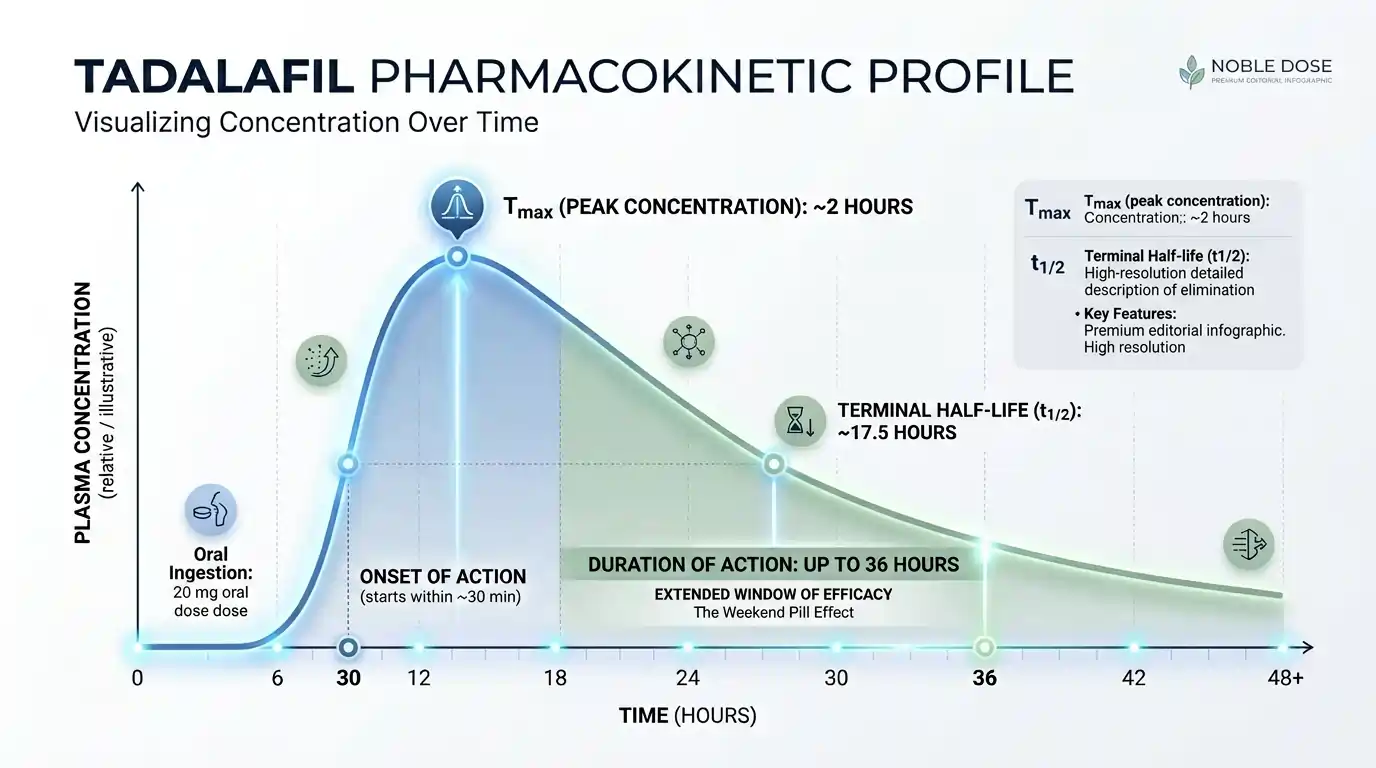
After taking a tablet, tadalafil is absorbed from the gastrointestinal tract relatively quickly. Onset of clinical effect begins around 30 minutes after dosing for most patients, with peak blood levels reached at about 2 hours.
Unlike sildenafil, tadalafil absorption is not significantly affected by food. A normal meal — even one with some fat content — does not delay or reduce absorption meaningfully. This is one of tadalafil’s most practical advantages in daily use.
Distribution
Once absorbed, tadalafil distributes through body tissues with a volume of distribution suggesting it spreads to multiple tissues, not just the bloodstream. The drug binds approximately 94% to plasma proteins (mostly albumin) when circulating in the blood. This protein binding affects how much active drug is available at any moment.
Metabolism
Tadalafil is metabolized primarily by the liver enzyme CYP3A4. The drug is broken down into inactive metabolites that are then eliminated. This metabolism pathway is the source of many drug interactions — substances that inhibit CYP3A4 (like ketoconazole or grapefruit juice) increase tadalafil levels, while substances that induce CYP3A4 (like rifampin or St. John’s Wort) decrease levels.
Half-Life and Duration
Tadalafil’s half-life is approximately 17.5 hours — meaning it takes that long for the body to clear half of any given dose. This is dramatically longer than sildenafil (3-5 hours) or vardenafil (4-5 hours). The long half-life produces the famous 36-hour effective window — clinical effects continue at meaningful levels for that entire period.
With daily 5mg dosing, the medication reaches steady state in about 5 days. At steady state, the blood level remains relatively constant, providing continuous coverage rather than peak-and-trough cycles.
Elimination
Tadalafil and its metabolites are eliminated primarily through the feces (about 61%) and to a lesser extent through urine (about 36%). This dual-elimination pathway makes the medication relatively forgiving of mild kidney impairment — though severe kidney disease still requires dose adjustment or avoidance.
Side Effect Profile
Tadalafil is generally well tolerated. Most patients experience either no side effects or mild, self-limiting effects. The pattern of side effects reflects the medication’s vasodilatory mechanism — the same blood vessel relaxation that helps ED also affects vessels elsewhere in the body.
Common Side Effects
The most commonly reported side effects in clinical trials, with approximate frequencies for 20mg on-demand dosing:
- Headache — reported by 11-15% of patients
- Indigestion or stomach discomfort — 7-10%
- Back pain or muscle aches — 5-6%, often appearing 12-24 hours after dose
- Flushing of face, neck, or upper chest — 4-5%
- Nasal congestion — 3-4%
- Limb pain — less common but reported
These side effects are typically mild, last a few hours to a day or two, and resolve on their own. They often diminish in intensity with repeated use as the body adjusts.
Daily Dosing Side Effects
Daily 5mg side effects are generally less common than on-demand 20mg side effects. The lower peak blood level means less acute vasodilation, and patients tend to tolerate daily dosing well over time. Side effect rates for daily dosing are roughly:
- Headache — 3-4%
- Indigestion — 4-5%
- Back pain — 3%
- Flushing — 1-2%
Serious Side Effects Requiring Medical Attention
These side effects are uncommon but require immediate medical care if they occur:
| 🚨 Seek Emergency Care Immediately If You Experience:
• Chest pain, irregular heartbeat, or feeling that your heart is racing • Sudden loss or significant decrease in vision (one or both eyes) • Sudden hearing loss, possibly with ringing or dizziness • Erection lasting longer than 4 hours (priapism — urological emergency) • Severe allergic reaction: swelling, breathing difficulty, severe rash |
Reducing Side Effect Frequency
Several practical steps reduce side effect frequency and severity. Drink plenty of water with the dose and afterward to reduce headache risk. Take with a light meal rather than heavy fatty food to reduce indigestion. Avoid grapefruit on dosing day. Limit alcohol to moderate amounts. Stand up slowly to avoid dizziness. If side effects on 20mg are bothersome, ask your physician about 10mg — many men find equivalent benefit with milder effects.
Safety Considerations and Contraindications
Tadalafil has a favorable overall safety record, but specific conditions and medications make it unsafe for certain patients. Proper medical screening before prescribing identifies these patients.
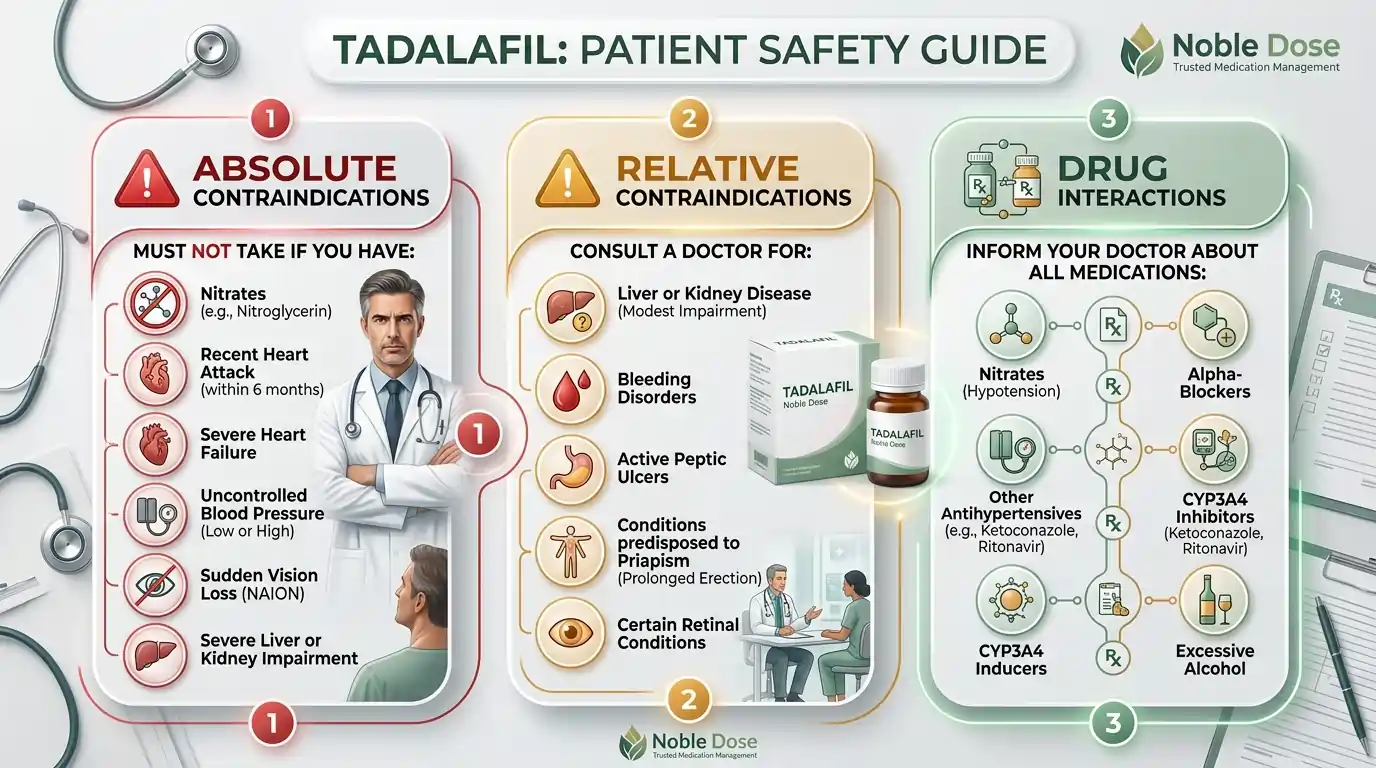
Absolute Contraindications — Never Take Tadalafil If…
- You take nitrate medications (nitroglycerin, isosorbide, etc.) — life-threatening blood pressure drop
- You use recreational poppers (amyl nitrite, butyl nitrite) — same dangerous interaction
- You have had a heart attack within the past 90 days
- You have unstable angina or severe heart failure
- You have had a stroke within the past 6 months
- You have severe liver disease (Child-Pugh Class C)
- You have severely abnormal blood pressure (very low or uncontrolled high)
- You are allergic to tadalafil or any inactive ingredient
Relative Contraindications — Requires Careful Evaluation
Other conditions do not absolutely rule out tadalafil but require careful evaluation: mild to moderate heart disease, well-controlled hypertension, type 2 diabetes (particularly with complications), kidney impairment, certain vision conditions, bleeding disorders, sickle cell disease, and concurrent use of certain other medications.
In these cases, the physician weighs the potential benefit against the specific patient risk profile. Sometimes the answer is a lower starting dose; sometimes it’s a switch to a different ED medication; sometimes it’s no medication at all until other conditions are managed.
Drug Interactions That Matter
Several medications interact significantly with tadalafil:
- Alpha-blockers (doxazosin, terazosin) — blood pressure effects, requires dose adjustment
- HIV protease inhibitors (ritonavir, etc.) — increased tadalafil levels, maximum 10mg
- Strong CYP3A4 inhibitors (ketoconazole, itraconazole) — increased levels, dose reduction
- Moderate CYP3A4 inhibitors (erythromycin) — increased levels, caution
- CYP3A4 inducers (rifampin, St. John’s Wort) — decreased levels, may need higher dose
- Other ED medications — never combine
- Grapefruit juice — increased levels, avoid on dosing day
A complete medication list — including over-the-counter products and herbal supplements — must be shared with the prescribing physician. This is where most interaction issues are caught and managed.
Tadalafil in Pakistan — Availability and Quality
Pakistani patients have several options when sourcing tadalafil. Understanding the landscape helps make informed choices about quality and cost.
Regulated by DRAP
The Drug Regulatory Authority of Pakistan (DRAP) is responsible for approving and monitoring all prescription medications in Pakistan, including tadalafil. DRAP-approved tadalafil products meet specified standards for active ingredient quality, manufacturing processes, and labeling accuracy. The approval is publicly verifiable through DRAP’s registered products database.
Available Brands in Pakistan
Several DRAP-approved tadalafil products are available in the Pakistani market. These include the original Cialis brand (manufactured by Eli Lilly) and a number of generic versions from various Pakistani and international pharmaceutical manufacturers. The choice between them comes down to physician preference, patient preference, and cost considerations — the active ingredient is the same across all DRAP-approved products.
Counterfeit Risk
The counterfeit market for tadalafil is significant in Pakistan, as it is globally. Counterfeit products often look identical to legitimate medications but may contain incorrect doses, wrong active ingredients, or harmful contaminants. The sources are typically unverified online sellers, street markets, and informal pharmacies without proper licensing.
The harm from counterfeit tadalafil ranges from inadequate response (the most common outcome) to dangerous side effects (when wrong doses are present) to serious medical complications (when contaminants are involved). There have been documented cases in Pakistan and globally of counterfeit ED medications causing significant harm.
How to Source Tadalafil Safely
The reliable approach is to source tadalafil only from a DRAP-licensed pharmacy that verifies prescriptions. Quality pharmacies — including those operating online — should be transparent about their licensing, their supplier network, and their prescription verification process. A pharmacy that dispenses without checking the prescription is not following Pakistani regulations and should not be trusted.
At NobleDose, every order is verified by a licensed Pharm-D pharmacist before dispatch. The medication is sourced only from DRAP-approved manufacturers, and the supply chain is verified at each step. This is the standard a legitimate online pharmacy should meet — both for patient safety and to comply with Pakistani regulations.
Frequently Asked Questions
Is tadalafil the same as Cialis?
Yes. Tadalafil is the active ingredient in Cialis — they are pharmacologically the same medication. Cialis is the brand name; tadalafil is the chemical name. Generic tadalafil from DRAP-approved manufacturers contains the same active ingredient at the same strength and produces equivalent effects.
Is generic tadalafil as effective as brand-name Cialis?
Yes, when sourced from quality DRAP-approved manufacturers. Bioequivalence testing is required for generic approval, meaning the body absorbs and processes the generic version at equivalent rates. Differences in inactive ingredients (binders, coatings) are minor and rarely produce clinically noticeable differences in effect.
How does tadalafil compare to sildenafil?
They are both PDE5 inhibitors with the same general mechanism. The key differences are duration (tadalafil lasts up to 36 hours; sildenafil 4-6 hours), food effects (tadalafil is minimally affected; sildenafil is significantly delayed by fatty meals), and approved uses (tadalafil is approved for BPH; sildenafil is not). Side effect patterns differ but overall rates are similar.
Can tadalafil be used by women?
Tadalafil is not approved for female sexual disorders. Some research has explored its use in women, but there is no current clinical indication. Women should not take tadalafil unless specifically prescribed for an off-label use by a physician familiar with the limited available evidence.
How long does tadalafil stay in your system?
With a half-life of 17.5 hours, tadalafil is essentially cleared from the body in about 4 to 5 half-lives — roughly 3 to 4 days. The clinically effective window is up to 36 hours, but trace amounts remain longer than that without producing meaningful effect.
Can you build tolerance to tadalafil?
Tadalafil does not produce significant tolerance with regular use. Patients on daily dosing do not need progressively higher doses over time. The dose-response relationship remains stable for most patients across years of use. If a previously effective dose becomes inadequate, the cause is usually progression of the underlying condition rather than medication tolerance.
Is tadalafil safe to take long-term?
Long-term safety data for tadalafil is favorable. Patients have been studied on continuous daily dosing for multiple years without identifying significant cumulative harm. Routine medical follow-up monitors for any individual issues. The medication is considered safe for long-term use in appropriately screened patients.
Can tadalafil cure ED permanently?
No — tadalafil treats the symptom (ED) but does not cure the underlying cause. When the medication is stopped, the original condition returns. However, for some men with psychological components to their ED, successful experience on tadalafil can reduce performance anxiety, and over time the underlying response can improve. This is a separate phenomenon from medication action.
Where can I buy tadalafil legitimately in Pakistan?
Only from DRAP-licensed pharmacies that verify prescriptions. Legitimate pharmacies — including online ones — should clearly display their licensing, be transparent about their suppliers, and require a valid prescription before dispatch. NobleDose meets these standards: all orders are verified by a licensed Pharm-D pharmacist, all products are sourced from DRAP-approved manufacturers, and prescriptions are required for every dispatch.

Key Takeaways
Tadalafil is one of the most studied and widely used medications in its category. The key facts every patient should know:
- Tadalafil is the active ingredient in Cialis and most generic versions used for ED and BPH treatment
- It is a PDE5 inhibitor — it blocks the enzyme that breaks down cGMP, restoring blood flow during sexual arousal
- Available in 2.5mg, 5mg, 10mg, and 20mg strengths for ED/BPH; daily 5mg is most prescribed
- Half-life of 17.5 hours gives the 36-hour effective window — unique among PDE5 inhibitors
- Approved for ED, BPH, combined ED+BPH, and (as Adcirca 40mg) pulmonary arterial hypertension
- Common side effects (headache, flushing, indigestion, back pain) are usually mild and self-resolving
- Absolute contraindications include nitrates, severe heart disease, recent stroke, severe liver disease
- Generic tadalafil from DRAP-approved manufacturers is bioequivalent to brand Cialis at substantially lower cost
- Always source from a DRAP-licensed pharmacy that verifies prescriptions — counterfeit risk is real
Continue Learning
This guide is part of a series of educational articles on tadalafil and related medications:
- Cialis Tablet Uses, Benefits & How It Works — Complete Medical Guide
- Cialis Tablet Uses in Urdu — مکمل گائیڈ
- Cialis 20mg Side Effects: Complete Guide and How to Avoid Them
- How to Use Cialis Tablets: Dosage, Timing, and Practical Tips
- Cialis 20mg vs 5mg vs 10mg: Which Dose is Right for You?
- Is Cialis Safe? Who Should and Should Not Take It
- Cialis vs Viagra: Detailed Comparison for Pakistani Men
| Have a Prescription for Tadalafil?
If you have been prescribed tadalafil — whether as Cialis or in generic form — NobleDose can fulfill your prescription with verified, DRAP-approved products. Every order is reviewed by a licensed Pharm-D pharmacist before dispatch, ensuring you receive genuine medication at fair pricing. |
References
- U.S. Food and Drug Administration. Cialis (tadalafil) prescribing information — complete medication reference.
- European Medicines Agency. Cialis EPAR — clinical pharmacology and pharmacokinetics.
- American Urological Association. Guideline on the management of erectile dysfunction.
- American Urological Association. Guideline on the management of benign prostatic hyperplasia.
- Mayo Clinic. Tadalafil (oral route) — comprehensive drug information.
- Drug Regulatory Authority of Pakistan. Registered products database.
- National Institutes of Health (NIH) MedlinePlus. Tadalafil drug information.