Is Centrum Halal? What Every Pakistani Buyer Should Know
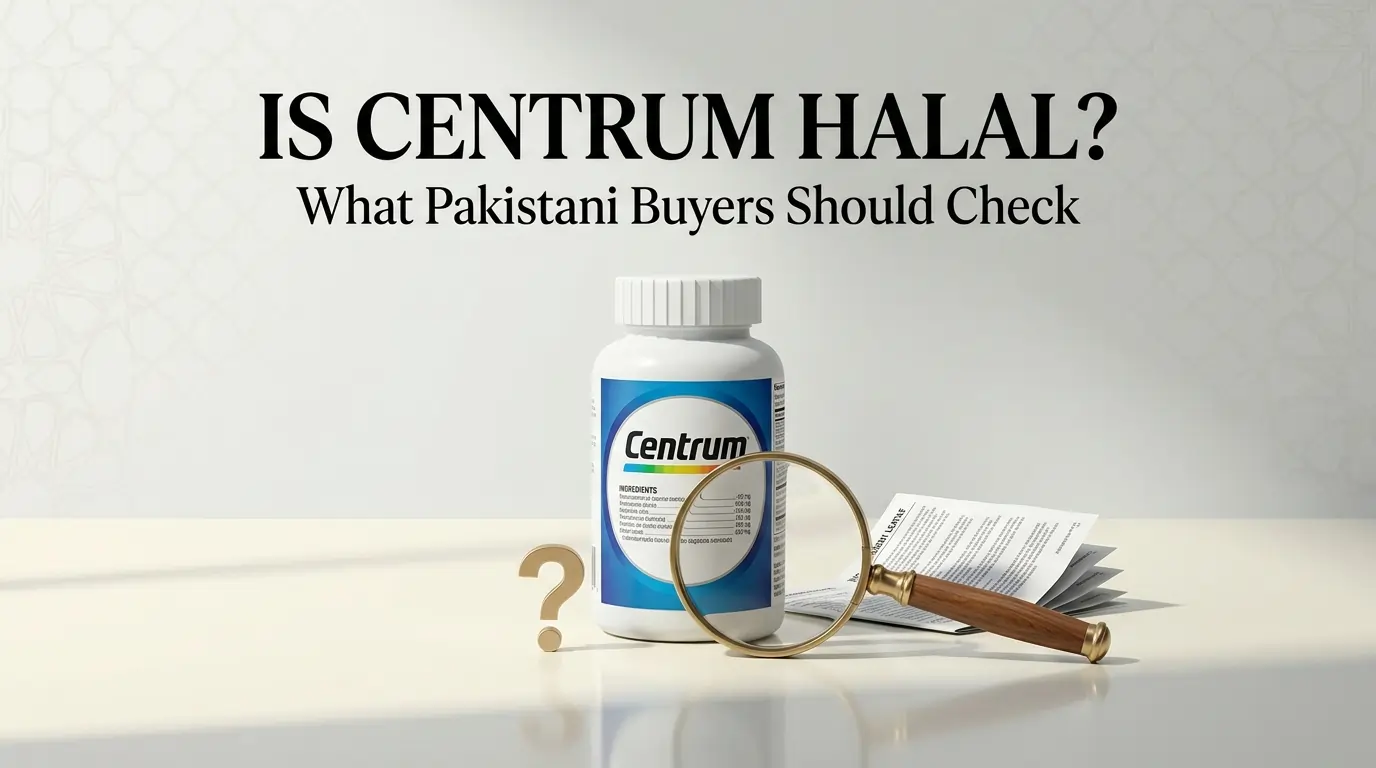
Millions of people take Centrum every day for its blend of vitamins and minerals. For Muslim consumers, though, one question always comes first: is Centrum halal? The answer isn’t a simple yes or no. It depends on where the product is made, which variant you buy, and how its capsules or tablets are coated. This guide breaks down everything you need to know about Centrum halal status before adding Centrum to your daily routine. If you are wondering, Is Centrum Halal in Pakistan?, understanding the ingredients and formulation is the first step toward making an informed decision.
Why Pakistani Shoppers Keep Asking About Centrum
Centrum has been a household name in the multivitamin space for decades, built on a reputation for broad nutrient coverage and consistent quality. That popularity is exactly why the question “is Centrum halal” comes up so often. A supplement doesn’t need to be eaten as food to fall under Islamic dietary rules; anything swallowed daily, including tablets and capsules, is held to the same standard as what goes on a dinner plate.
For a health-conscious buyer in Lahore, Karachi, or smaller cities across Punjab, the Centrum halal concern isn’t theoretical. Pharmacy shelves stock imported and locally distributed versions side by side, often with near-identical packaging. Without a clear certification mark, shoppers are left comparing fine print, checking country-of-origin codes, and asking pharmacists questions that don’t always get a confident answer. This growing interest explains why Is Centrum Halal has become a common question among Pakistani buyers. This guide closes that information gap using facts drawn from manufacturer disclosures and regional supply patterns.
Many Pakistani consumers also rely on online marketplaces and imported healthcare products, making it more difficult to identify whether every bottle follows the same formulation. Products that look identical on the outside may come from different manufacturing facilities and target different regions. This is one reason why checking the packaging instead of relying only on the brand name is so important. Buyers should always verify the product details before assuming the halal status of any Centrum supplement.
This is one of the main reasons why many consumers search ‘Is Centrum Halal in Pakistan?’ before buying a multivitamin.
What Makes a Supplement Halal or Haram?
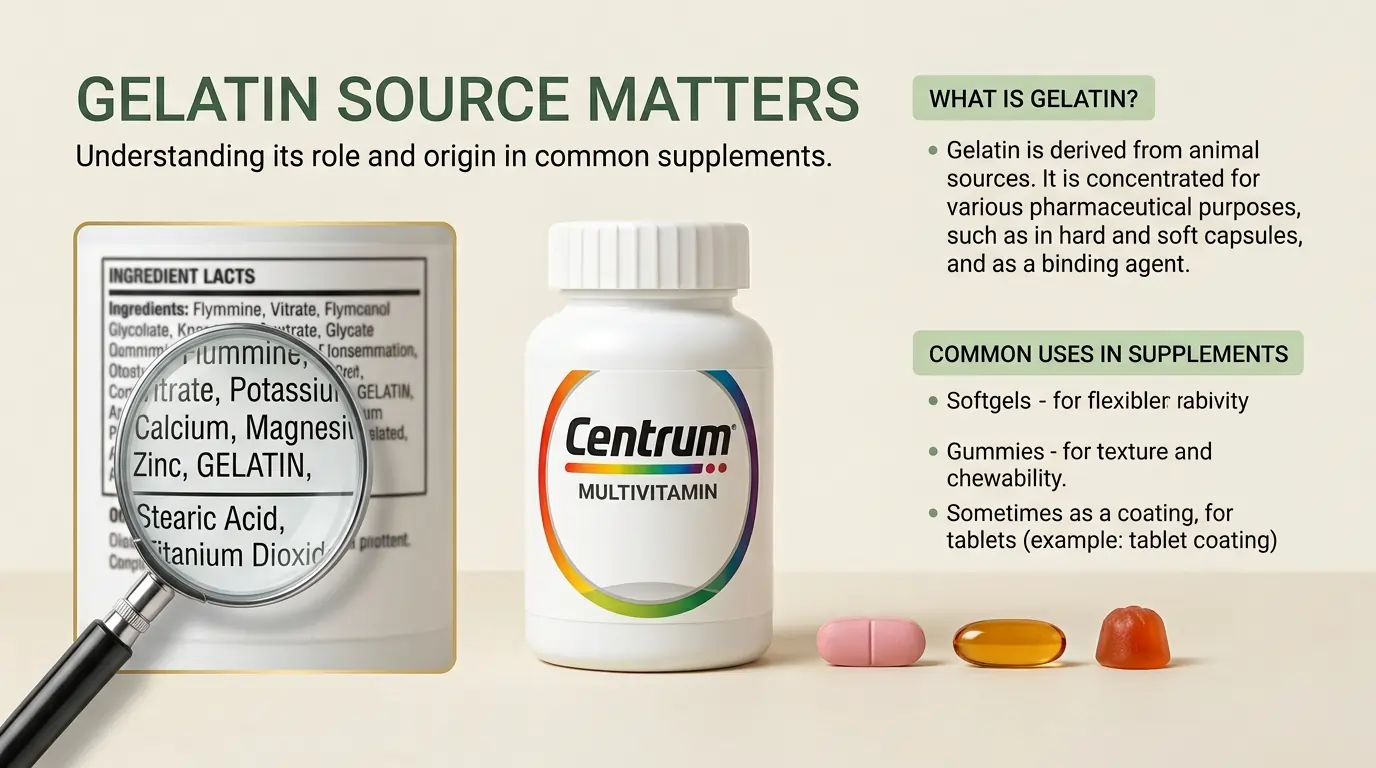
A supplement earns halal status when every ingredient in it comes from a permissible source. For most multivitamins, the biggest concern is gelatin. Manufacturers use gelatin to coat tablets, form softgel capsules, or bind ingredients together.
Gelatin usually comes from animal collagen. Bovine (cow) and fish gelatin are generally considered halal, provided the animal was slaughtered according to Islamic guidelines. Porcine (pig) gelatin is haram, regardless of how it’s processed. Since pigs are impure in Islamic dietary law, any product containing pork-derived gelatin cannot be halal, even in trace amounts. Understanding these factors makes it easier to answer the question, Is Centrum Halal?, instead of relying on assumptions.
Vitamin D3 adds another layer of complexity. Some manufacturers extract it from lanolin, a substance found in sheep’s wool. Lanolin-derived D3 isn’t automatically haram, but scholars differ on how it should be processed to remain compliant. This is why ingredient transparency matters so much when evaluating the halal status of Centrum or any other multivitamin brand.
Besides gelatin, some consumers also pay attention to capsule coatings, flavoring agents, stabilizers, and processing aids used during manufacturing. While these ingredients are usually present in very small amounts, their source can still influence whether a supplement meets halal dietary requirements. Reading the complete ingredient list helps consumers make more informed decisions instead of relying on assumptions or social media claimsIs Centrum Halal? Why the Answer Depends on the Specific Product.
Is Centrum Halal? Why the Answer Depends on the Specific Product
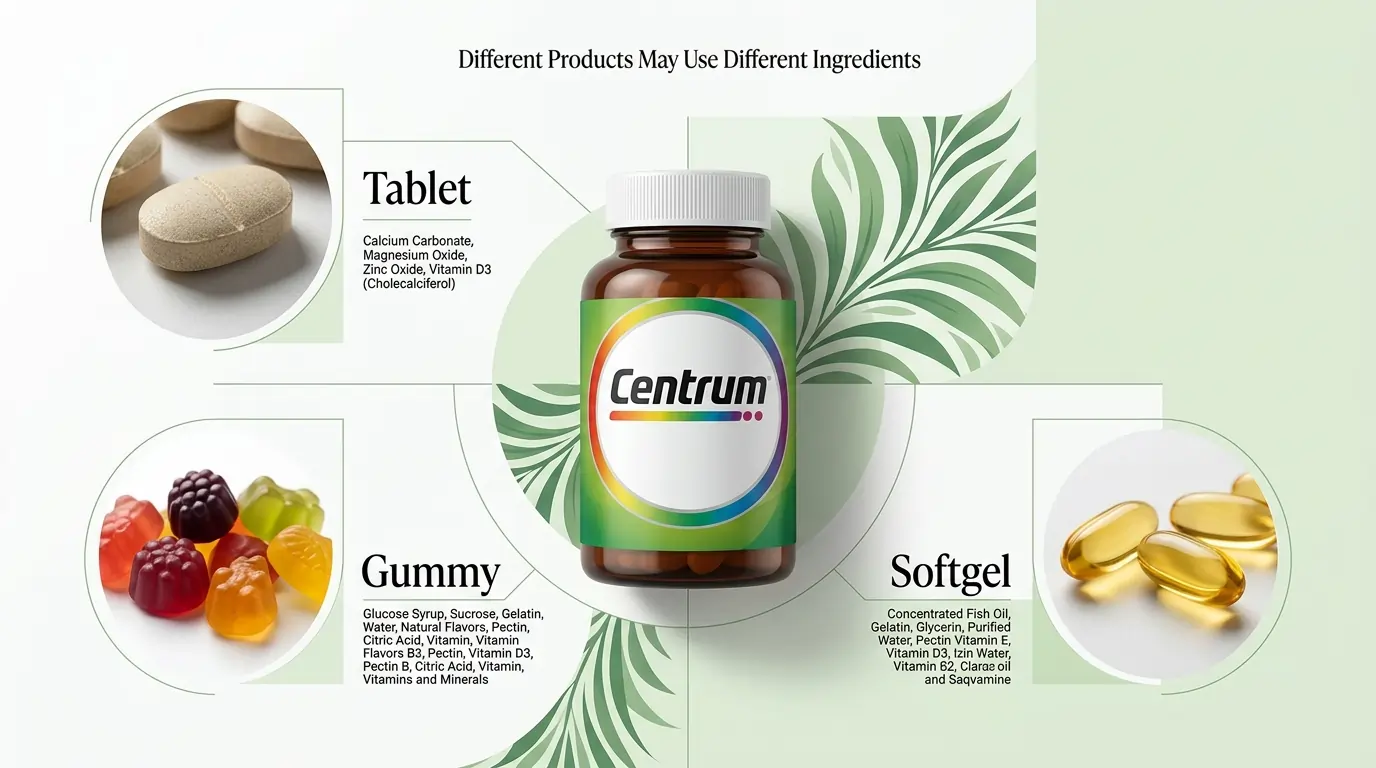
Centrum cannot be classified as universally halal or non-halal because its ingredients and formulations may differ by product type, dosage form, manufacturing location, and intended market. A standard film-coated tablet may use different coating ingredients from a gummy, capsule, or softgel product.The answer to Is Centrum Halal? depends on the exact formulation, dosage form, and manufacturing location rather than the brand name alone
The main points Muslim consumers should check when asking “is Centrum halal” include the source of gelatin, the type of tablet or capsule coating, animal-derived additives, the source of vitamin D3, and the presence of recognized halal certification. This is why Centrum halal status can differ between products.
A Centrum product should not be assumed to be halal simply because it is sold in a Muslim-majority country. Similarly, one non-halal formulation does not automatically mean that every Centrum product worldwide contains the same ingredients.
The most reliable approach to confirming Centrum halal status is to examine the exact product label, country of manufacture, dosage form, and certification status. When the source of an ingredient is unclear, buyers should contact the manufacturer or authorized distributor for product-specific confirmation. Therefore, Is Centrum Halal in Pakistan cannot be answered without checking the specific product.
How to Check the Halal Status of Centrum Sold in Pakistan
Centrum products available in Pakistan may come through different importers, distributors, or international supply channels. For this reason, their formulation and country of manufacture may not always be identical.
Pakistani buyers should not rely only on the product name or the country where it is being sold. Before purchasing, check the following information on the box or bottle:
- Country of manufacture
- Full ingredient list
- Tablet, gummy, capsule, or softgel form
- Source of gelatin, where stated
- Name of the importer or authorized distributor
- Batch number and expiry date
- Recognized halal certification logo
- Certification number, where available
If you are asking Is Centrum Halal in Pakistan, following these simple checks can help you make a more informed decision. A product may be free from clearly identified pork ingredients without being formally halal-certified. These are not the same claims. “Pork-free” only indicates the reported absence of pork-derived ingredients, while halal certification generally involves broader review of ingredients, processing, handling, and manufacturing controls.
Products purchased through unofficial sellers may have been imported from a different market and could carry a different formulation. For greater confidence in the Centrum halal status of a specific bottle, consumers should purchase from a reputable pharmacy or verified online healthcare store and request batch-specific information when necessary.
Why Checking the Label Matters
Reading the product label carefully is one of the easiest ways to answer the question, Is Centrum Halal in Pakistan? The ingredient list, dosage form, country of manufacture, and halal certification can provide valuable information before purchasing a Centrum supplement Does Centrum Contain Pig Fat or Pork Gelatin?
Some Centrum products may contain gelatin, but the source can vary depending on the specific formulation and market. Gelatin may be used in softgel shells, gummy products, capsule coverings, or certain tablet coatings.
It is important to distinguish between pig fat and porcine gelatin. Porcine gelatin is produced from pig-derived collagen and is not the same substance as pig fat, although both are derived from pork and may be unacceptable to Muslim consumers.
Buyers should check the ingredient list for terms such as:
- Gelatin
- Porcine gelatin
- Bovine gelatin
- Capsule shell
- Softgel
- Hydrolyzed collagen
- Film coating
This is one of the main reasons why Centrum halal status should always be verified before purchase. If a label mentions only “gelatin” without identifying its source, the Centrum halal status remains uncertain. In that situation, the manufacturer or official distributor should be contacted for clarification.
Film-coated tablets may sometimes use cellulose or polymer-based coatings rather than animal gelatin. However, this should be confirmed from the exact packaging instead of assumed from the product’s appearance. Many people searching Is Centrum Halal? are actually trying to confirm whether the product contains porcine gelatin or other animal-derived ingredients.
Is Centrum Multivitamin Halal? A Closer Look at the Ingredients
Centrum’s product line includes formulas for men, women, seniors, and general adult use. Each one has a slightly different ingredient list, so the halal status of Centrum multivitamin products can vary even within the same brand. When people ask Is Centrum Halal?, the concern usually relates to gelatin, capsule coatings, and ingredient sources rather than the vitamins themselves
Common ingredients across the range include:
- Vitamins A, C, D, E, and K
- B-complex vitamins (B1, B2, B6, B12, folic acid)
- Minerals like calcium, magnesium, zinc, and iron
- Gelatin or cellulose-based coatings
- Colecalciferol (vitamin D3), sometimes sourced from lanolin
The vitamins and minerals themselves are almost always plant-based, synthetic, or mineral-derived, which makes them halal by default. The real question mark sits with the coating and the D3 source. This is why two Centrum products with nearly identical vitamin profiles can have different halal outcomes, simply because one uses a gelatin shell and the other uses a plant-based or cellulose coating.
Manufacturing processes also matter more than most buyers realize. Even when a formula lists “gelatin” without specifying the animal source, the coating line used to produce it can carry cross-contact residue from other products made on the same equipment. This is less of a concern for large multinational manufacturers with segregated production lines, but it’s part of why some scholars recommend certified products over self-verified ones whenever the choice is available.
Another detail worth knowing: film-coated tablets, as opposed to gelatin-based softgels, use a thin polymer or cellulose layer instead of animal collagen. Several Centrum variants sold as standard tablets fall into this category, which removes the gelatin question entirely for that specific product and makes the Centrum halal question easier to answer. Softgel versions, often marketed for easier swallowing, are the ones that carry the highest likelihood of animal-derived coatings.
Is Centrum Silver 50+ Halal? What Older Adults Should Check
The halal status of Centrum Silver 50+ depends on the exact variant, dosage form, ingredients, manufacturing country, and certification. The Centrum Silver range may include products intended for general adults over 50, men over 50, and women over 50, and these formulas may not always be identical.
Before purchasing Centrum Silver 50+, check whether the product is supplied as a film-coated tablet, gummy, capsule, or softgel. Softgel and gummy products deserve particular attention because gelatin may be used in their outer shell or texture.
Consumers should review the label for:
- Gelatin or capsule-shell ingredients
- Porcine or bovine source information
- Vitamin D3 source, where disclosed
- Country of manufacture
- Halal certification logo
- Importer and distributor details
Older adults may also take prescription medicines or several supplements at the same time. Product suitability should therefore be discussed with a doctor or pharmacist, especially when the user takes blood-thinning medicine or has an existing health condition.
The words “Silver” or “50+” describe the intended age group and nutritional formulation; they do not confirm Centrum halal status. Verification must be based on the exact product packaging and manufacturer information.
Older adults often purchase supplements for long-term daily use, making ingredient transparency even more important. Before starting any supplement, it is also helpful to review the label carefully and consult a healthcare professional if you have medical conditions or take prescription medicines alongside multivitamins. The same approach should be followed when determining whether Centrum Silver is halal in Pakistan, as ingredients may differ between markets
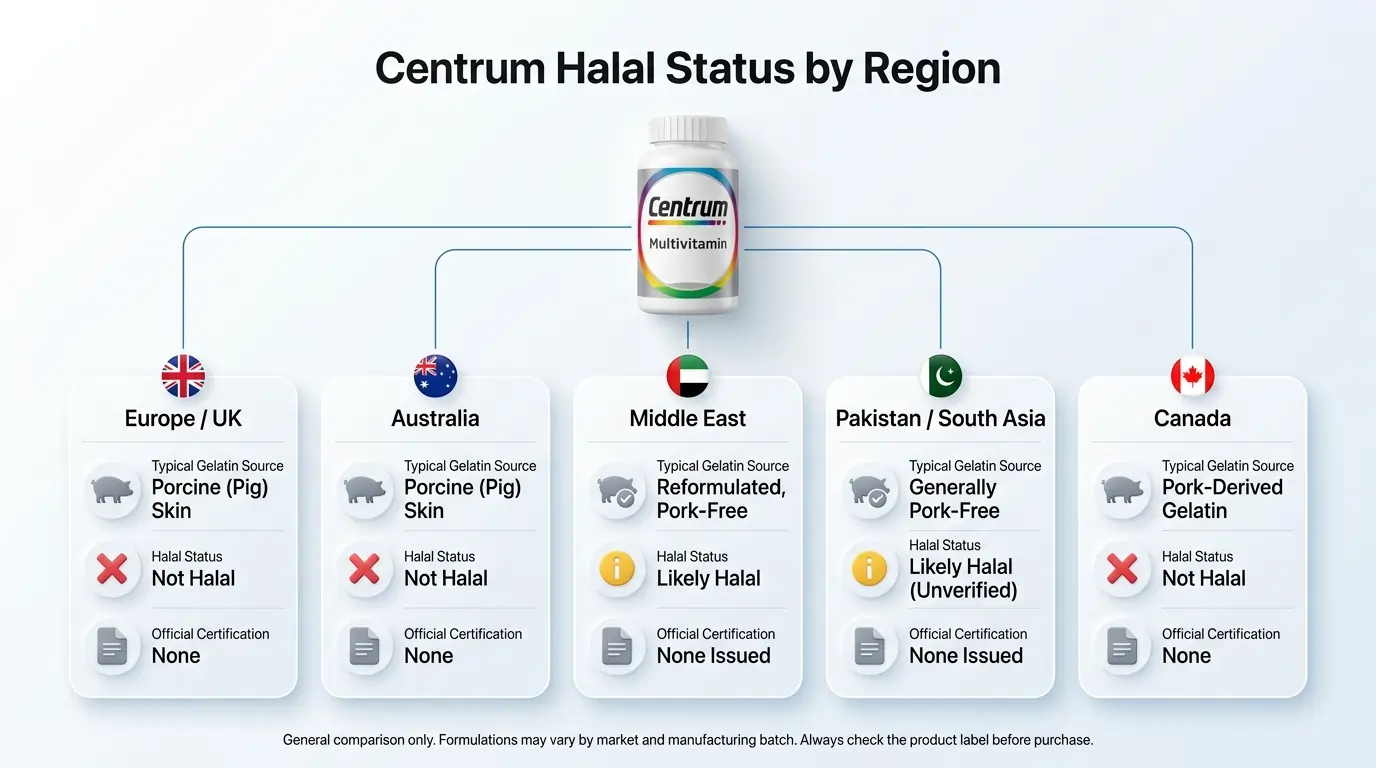
Centrum Halal Status by Region: Comparison Table
| Region | Typical Gelatin Source | Halal Status | Official Certification |
|---|---|---|---|
| Europe / UK | Porcine (pig) skin | Not halal | None |
| Australia | Porcine (pig) skin | Not halal | None |
| Middle East | Reformulated, pork-free | Likely halal | None issued |
| Pakistan / South Asia | Generally pork-free | Likely halal, unverified | None issued |
| Canada | Pork-derived gelatin | Not halal | None |
This table reflects general patterns reported by the manufacturer and regional distributors regarding Centrum halal status. Formulations can change between batches, so it should guide your research rather than replace checking the actual product in hand.
How to Check If Your Centrum Bottle Is Halal
A few practical steps can help you verify whether a specific bottle is halal before you buy or consume it:
- Look at the country of manufacture printed on the box or label.
- Check the ingredient list for the words “gelatin,” “porcine,” or “bovine.”
- Search for a coating description; cellulose or non-gelatin coatings carry no pork risk.
- Avoid softgel capsule formats unless the shell is explicitly marked as fish-derived or plant-based.
- Buy only from licensed pharmacies or verified online retailers in Pakistan to avoid mislabeled imports.
- Contact the distributor or GSK/Haleon’s regional office if the label doesn’t specify the gelatin source.
None of these steps replace an official halal certificate, but together they lower the chance of unknowingly consuming a Centrum product that isn’t halal. If you are still wondering ‘Is Centrum Halal in Pakistan?’, contacting the manufacturer or checking the importer details can provide additional confidence.
Taking a few extra minutes to inspect the packaging can help prevent confusion later. If important information is missing, consider contacting the manufacturer directly instead of relying on unofficial online discussions. Manufacturer responses are generally more reliable than assumptions shared on forums or social media.
How to Choose a Halal-Certified Multivitamin Alternative
Consumers who prefer to avoid uncertainty around Centrum halal status may choose a multivitamin carrying recognized halal certification. However, the presence of the word “halal” in a product listing is not enough. The certification should be visible on the packaging and issued by a credible halal-certification organization.
When comparing alternatives, check for:
- A recognized halal-certification logo
- A valid certification or registration number
- A clear and complete ingredient list
- Plant-based cellulose capsules
- Pectin-based gummies instead of gelatin-based gummies
- Clearly disclosed bovine, fish, or plant-based ingredients
- Transparent information about vitamin D3 and other animal-derived ingredients
- Manufacturer and distributor contact details
Certification should be checked whenever possible through the issuing organization’s official records. Buyers should also compare the nutrient amounts, recommended age group, dosage, and suitability for their individual health needs. If you are still unsure whether Is Centrum Halal, choosing a certified halal multivitamin may provide additional peace of mind.
A halal-certified supplement is not automatically the best medical or nutritional choice for every person. It should also provide the appropriate nutrients and dosage for the intended user.
Frequently Asked Questions
Is Centrum halal? It depends on the region of manufacture. Versions sold in Europe and Australia have confirmed porcine gelatin, while versions distributed in Pakistan and the Middle East are generally reformulated without pork content, though without formal halal certification.
Is Centrum halal in Pakistan? Centrum sold through authorized Pakistani distributors is typically manufactured to exclude pork-derived gelatin, in line with regional import requirements. It still lacks an official halal certificate, so checking the batch and packaging is recommended to confirm Centrum halal status.
Is Centrum multivitamin halal? Most of the vitamins and minerals in Centrum are halal by nature. The main concern is the gelatin coating or capsule shell, which varies by product and manufacturing region.
Is Centrum Silver Halal in Pakistan? Centrum Silver follows the same regional pattern as standard Centrum. South Asian and Middle Eastern batches are generally pork-free, while Western market batches may not be.
Is Centrum Silver 50 halal? The same rules apply as with Centrum Silver. Check the country of manufacture and ingredient list on your specific bottle to confirm.
Does Centrum contain pig fat? Some regional versions do, specifically through porcine-derived gelatin used in tablet coatings or softgel shells. Others are formulated without it.
Does Centrum contain pork gelatin? Yes, in certain markets like Europe and Australia. GSK has confirmed this in their own product FAQs. Pakistani and Middle Eastern batches are generally reformulated to avoid it.
Is Centrum halal, or should I switch to a certified brand? If avoiding all uncertainty matters to you, a halal-certified multivitamin removes the need to check batches and packaging every time. If you’re comfortable verifying labels yourself, a South Asian-market Centrum bottle is generally a lower-risk choice than an imported Western version.
Final Verdict: Is Centrum Halal?
Is Centrum Halal? The answer depends on the exact product you purchase. For Pakistani buyers, checking ingredients, the country of manufacture, and halal certification is the safest approach. If you are still unsure whether Centrum is halal in Pakistan, contact the manufacturer or choose a certified halal alternative.
Pakistani consumers should carefully check the product label, particularly when purchasing gummies, capsules, or softgels. The presence of gelatin without a clearly identified source requires further confirmation. Buyers should also verify the importer, batch details, and country of manufacture, especially when purchasing an imported Centrum product online.
A product described as pork-free is not necessarily halal-certified. Consumers seeking the highest level of certainty may prefer a multivitamin carrying a recognized halal-certification logo and a verifiable certificate number.
The safest conclusion to the “is Centrum halal” question is to assess each Centrum product individually rather than relying on a general statement about the entire brand. Purchasing from a reputable pharmacy, reading the packaging carefully, and contacting the manufacturer when necessary can help buyers make a more informed decision about Centrum halal status.