
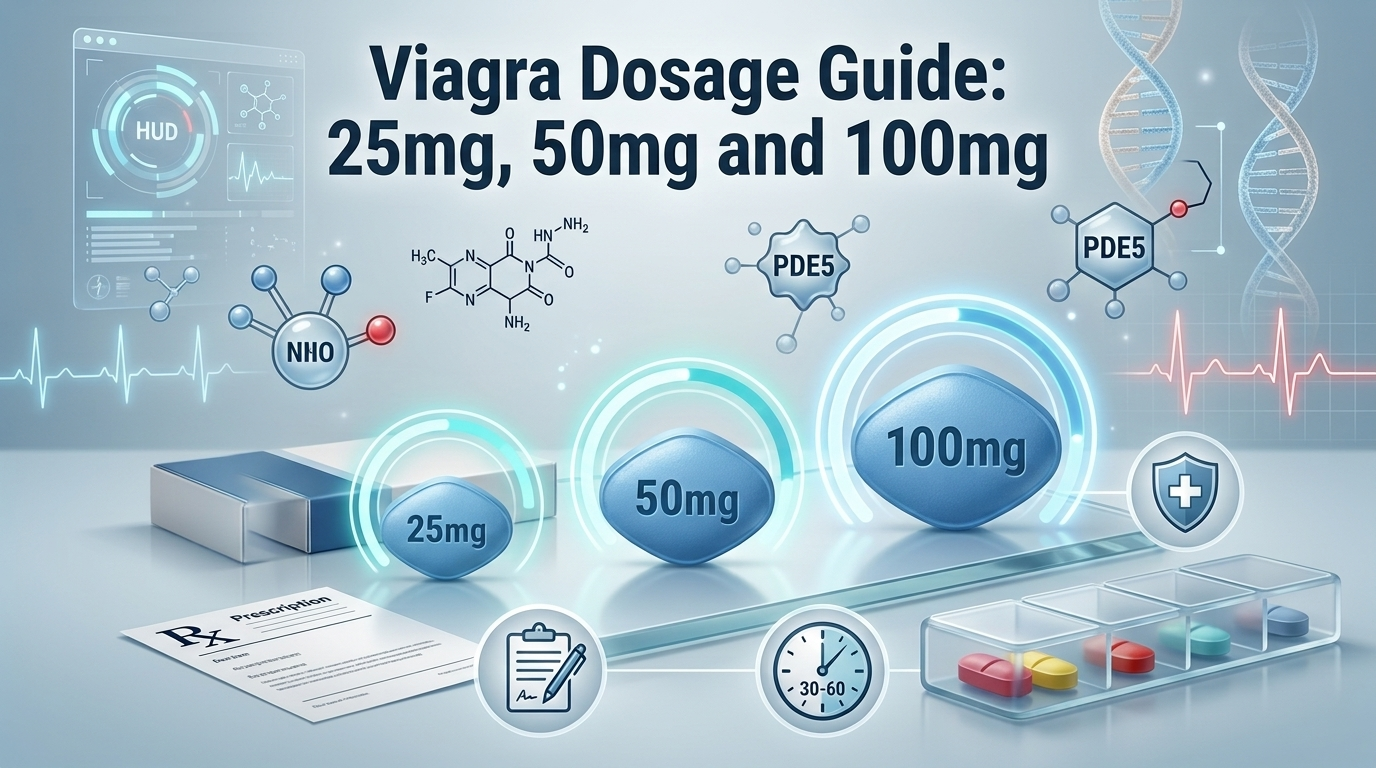
Choosing the right Viagra dosage is essential for achieving the best results. Since individual needs vary, Viagra is available in different strengths to ensure both effectiveness and safety.
Understanding Viagra Dosage and Strengths
Choosing the right Viagra dosage is key to achieving safe and effective treatment for erectile dysfunction (ED). Viagra is available in 25 mg, 50 mg, and 100 mg strengths, allowing your healthcare provider to select the dose that best suits your age, overall health, and response to treatment. The goal is to use the lowest effective dose that provides the desired results while minimizing side effects. The following sections explain each Viagra strength, when it is typically prescribed, and the factors that influence dosage adjustments.
The Available Viagra Strengths
Viagra dosage is available in three distinct strengths, each designed to suit different needs and levels of erectile dysfunction . You can identify each strength by the unique marking on the tablet.
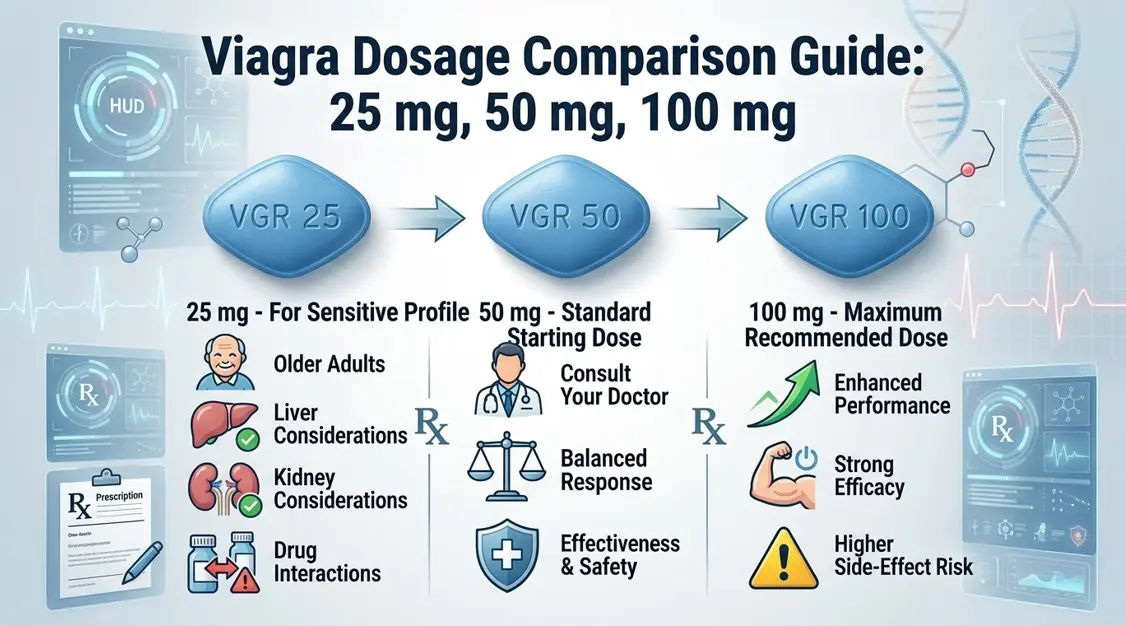
All genuine Viagra tablets are blue and diamond-shaped. On one side, they are debossed with “VIAGRA”. On the other side, you will find the specific strength marking: “VGR 25”, “VGR 50”, or “VGR 100”.
Viagra 25 mg: The Low-Dose Option
This is the lowest available Viagra dosage. It is typically recommended for men who may be more sensitive to the medication or are at a higher risk of side effects.
Who should take the 25 mg dose?
- Older men. Since sildenafil clearance is reduced in elderly patients, a starting dose of 25 mg should be considered.
- Men with certain health conditions. Those with severe renal impairment (creatinine clearance less than 30 mL/min) or hepatic impairment (like cirrhosis) are often prescribed a 25 mg starting dose.
- Men taking interacting medications. If you are taking certain medications, such as alpha-blockers (for high blood pressure or prostate issues) or strong CYP3A4 inhibitors (like erythromycin or ketoconazole), a 25 mg starting dose is often recommended to minimize the risk of significant blood pressure drops and other side effects.
- Men who experienced side effects on a higher dose. If the 50 mg dose was effective but caused mild to moderate side effects, a doctor may reduce the dose to 25 mg.
Viagra 50 mg: The Standard Starting Dose
For most men, the recommended Viagra dosage is 50 mg . It is the most commonly prescribed strength because it offers a balance of effectiveness and tolerability.
This is the dose doctors typically start with for men with moderate erectile dysfunction who do not have the specific conditions that warrant the lower 25 mg dose. It is effective for a large majority of patients while maintaining a favorable safety profile.
Based on how your body responds to this starting dose, your doctor will either recommend increasing to 100 mg if the effect is not strong enough or decreasing to 25 mg if you experience side effects.
Viagra 100 mg: The Maximum Strength
The 100 mg Viagra dosage is the highest recommended daily strength. This is not a starting point for most men but is an option for those who find the 50 mg dose is not effective enough.
You might be prescribed the 100 mg strength if you have tried the lower doses and found them insufficient to achieve or maintain an erection. Because it is the highest strength, the risk of side effects is also at its peak, so your doctor will only recommend it if you have tolerated lower doses well and need more efficacy.
The Maximum Daily Dose: A Critical Rule
The maximum recommended Viagra dosage is once per day. The maximum recommended dose in a 24-hour period is 100 mg. You should never take more than one dose of Viagra in a day, regardless of the strength you are prescribed. Taking more than the recommended dose will not lead to better results; it will only increase the risk of serious side effects.
How to Use Viagra: Timing and Administration
Knowing the right Viagra dosage is only part of the equation. Understanding how to use Viagra correctly can significantly improve its effectiveness.
The Timing Window
The standard recommendation is to take Viagra approximately 1 hour before sexual activity. However, the medication can be taken anywhere from 30 minutes to 4 hours before sexual activity . This gives you a window of opportunity to work with, and it is a myth that you need to take it right before you start. You can take it earlier and let the effects build.
The Food and Alcohol Factor
What you consume along with your Viagra dosage can affect how well it works. Viagra can be taken with or without food . The official prescribing information notes that if Viagra is taken with food, the onset of activity may be delayed compared to taking it on an empty stomach . Taking it after a high-fat meal (like a cheeseburger and fries) can significantly delay the absorption of the medication and reduce its effectiveness . For the best results, it is often recommended to take it on an empty stomach or after a light meal.
Grapefruit juice can also interfere with the way your body metabolizes sildenafil, potentially leading to higher levels of the drug in your blood and an increased risk of side effects . It is best to avoid grapefruit products while on this medication. Similarly, alcohol can impair your ability to get an erection and can also interact with Viagra, potentially increasing side effects like dizziness and headaches.
Sexual Stimulation Is Required
This is one of the most important points to understand. Viagra is not a spontaneous erection pill. It works in response to sexual stimulation. You need to be aroused for the medication to facilitate the increased blood flow that leads to an erection. Without stimulation, the medication will not work.
Dosing in Special Populations: Getting the Right Start
The right Viagra dosage is not the same for everyone. Factors such as age, kidney or liver function, and certain medications can affect how your body responds to Viagra. That’s why some people require a lower starting dose to ensure safe and effective treatment.
Older Men
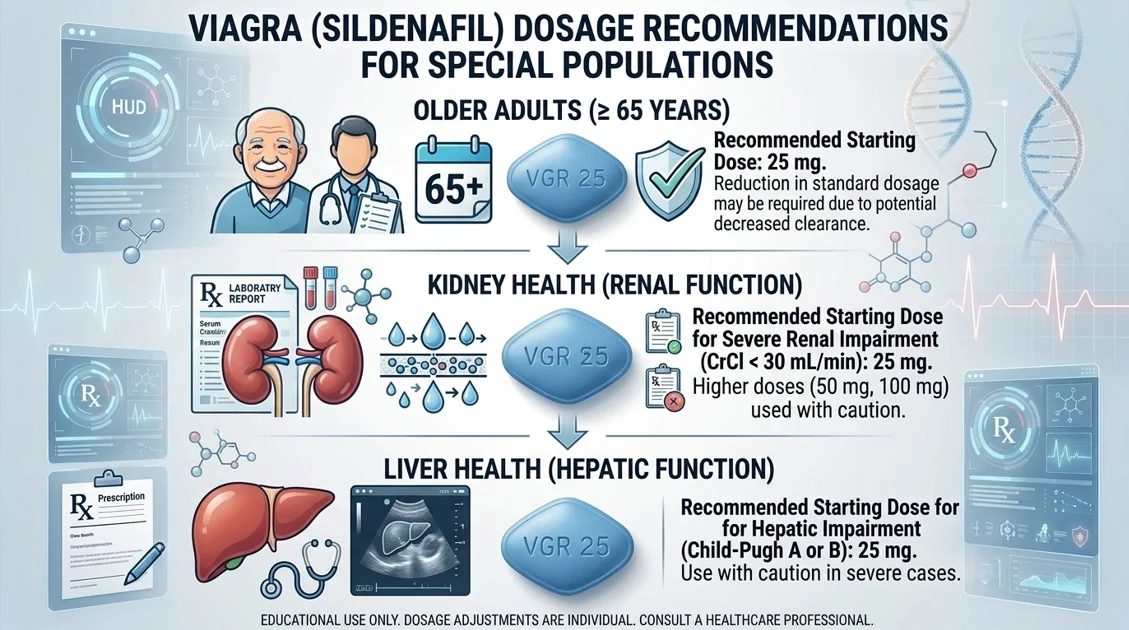
As men age, the body’s ability to clear sildenafil from the system decreases. This means the medication can stay in the system longer and have a stronger effect. Therefore, a starting dose of 25 mg should be considered for men aged 65 and older. This is a precautionary measure to minimize the risk of side effects while still providing therapeutic benefit. The dose can then be adjusted based on effectiveness and tolerance.
Renal and Hepatic Impairment
The kidneys and liver are the primary organs responsible for processing and removing sildenafil from the body. When these organs are not functioning optimally, drug levels can build up, increasing the risk of adverse effects.
- Severe Renal Impairment (Creatinine Clearance less than 30 mL/min): A starting dose of 25 mg should be considered.
- Hepatic Impairment (e.g., cirrhosis): A starting dose of 25 mg should be considered.
Your doctor will carefully evaluate your kidney and liver function and may start you at the lowest dose before considering an increase.
Medication Interactions
Certain medications can interact with Viagra and alter how it works in your body, primarily by increasing the concentration of sildenafil in your bloodstream.
- Alpha-Blockers: These are medications used to treat high blood pressure and benign prostatic hyperplasia (enlarged prostate). Taking Viagra with an alpha-blocker can cause a significant drop in blood pressure, leading to dizziness and fainting. To minimize this risk, you should be stable on your alpha-blocker therapy before starting Viagra, and it is recommended to start with a 25 mg dose of Viagra.
- CYP3A4 Inhibitors: This is a group of medications, including certain antibiotics (like erythromycin), antifungals (like ketoconazole, itraconazole), and antivirals (like saquinavir), that can increase sildenafil levels. A starting dose of 25 mg should be considered when taking these medications concurrently.
- Ritonavir: This is a strong protease inhibitor used to treat HIV. The interaction with Viagra is so significant that co-administration is not advised. If it must be used, it is recommended not to exceed a maximum single dose of 25 mg of sildenafil in a 48-hour period.
The Nitrate Contraindication: A Critical Warning
This is the most important safety warning. Taking Viagra with any form of nitrate medication is absolutely contraindicated. Nitrates are often prescribed for chest pain (angina) and include medications like nitroglycerin, isosorbide dinitrate, and isosorbide mononitrate. Also included are recreational drugs known as “poppers” that contain amyl or butyl nitrite.
Combining Viagra and nitrates can cause a sudden, severe, and potentially fatal drop in blood pressure. If you take nitrates, you cannot take Viagra. Always inform your healthcare provider of all medications you are taking.
What to Expect: Results and Side Effects
The effectiveness of your Viagra dosage depends on taking it correctly and allowing enough time for it to work. Understanding what to expect including its onset, duration, and possible side effects can help you use the medication with confidence.
How Long Does It Take to Work?
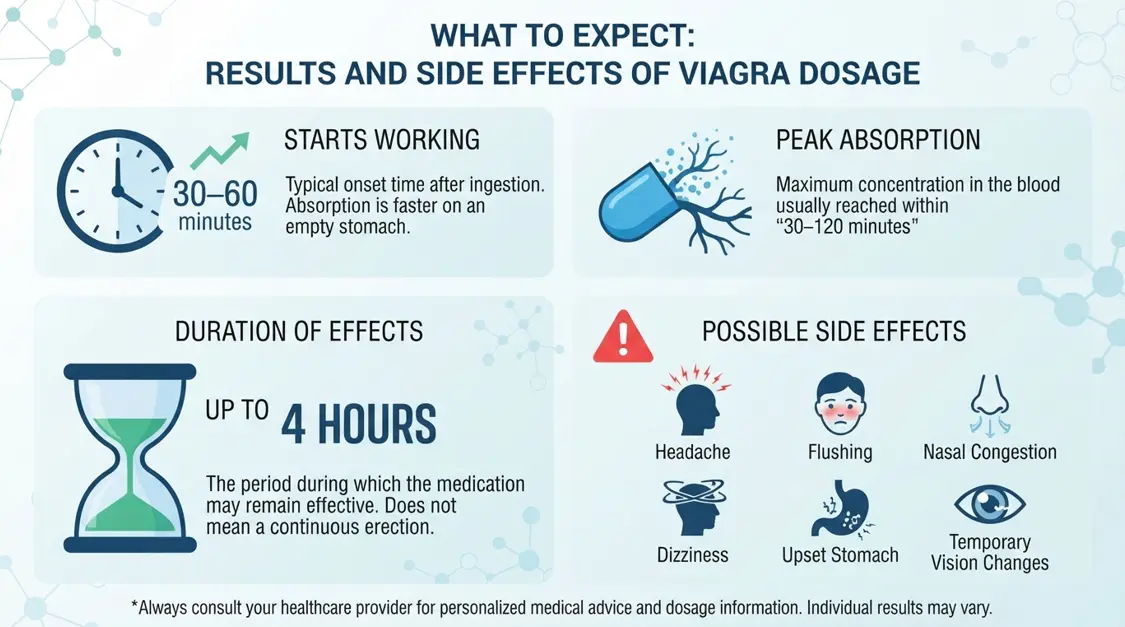
Most Viagra dosages begin working within 30 to 60 minutes, although absorption can vary from person to person. The time to reach maximum concentration in the blood is usually between 30 to 120 minutes after taking the tablet. The overall effect of the medication can last for up to 4 hours. This is why the dosing window is 30 minutes to 4 hours before sexual activity.
Common Side Effects
Like all medications, Viagra can cause side effects. Most are mild and temporary and will often resolve as your body gets used to the medication.
The most common side effects include:
- Headache
- Flushing (a feeling of warmth)
- Upset stomach or nausea
- Nasal congestion
- Back pain and muscle aches
- Dizziness
- Changes in color vision (seeing a blue tinge or trouble distinguishing blue and green)
- Sensitivity to light
These side effects are often dose-dependent, meaning they are more likely to occur or be more pronounced at higher doses like 100 mg.
Serious Side Effects
While rare, serious side effects can occur and require immediate medical attention.
- Priapism: This is a painful and prolonged erection lasting longer than 4 hours. If not treated promptly, it can cause permanent damage to the penis. Seek medical help immediately if an erection lasts longer than 4 hours.
- Sudden Vision Loss: A sudden loss of vision in one or both eyes can be a sign of non-arteritic anterior ischemic optic neuropathy (NAION). Stop taking Viagra and seek immediate medical care.
- Sudden Hearing Loss or Decrease: A sudden decrease or loss of hearing, sometimes accompanied by ringing in the ears or dizziness, should be investigated immediately.
- Chest Pain, Dizziness, or Nausea During Sexual Activity: Sexual activity can be a strain on the heart. If you experience these symptoms, stop the activity and seek immediate medical attention.
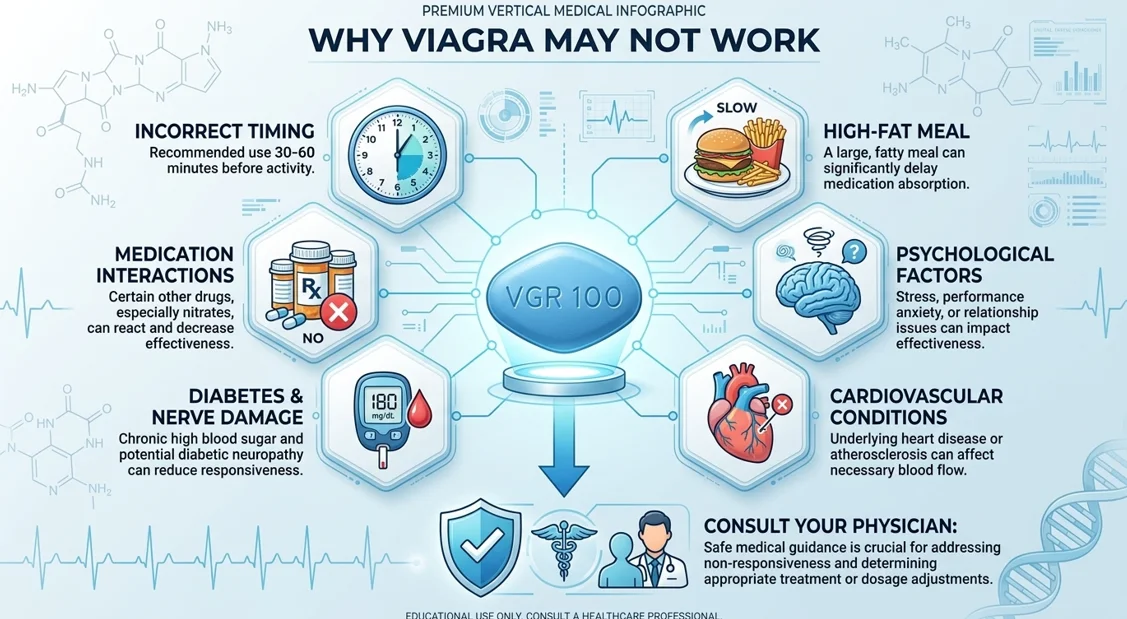
What If Viagra Does Not Work?
It is a fact that even with the correct Viagra dosage, it may not work for some men or on some occasions. Do not despair. There are several reasons this might happen.
- Incorrect Timing: You may have taken it too close to a high-fat meal, delaying absorption, or you may have taken it too far outside the 30-minute to 4-hour window.
- Lack of Stimulation: Remember, you must be sexually aroused for the medication to work.
- Underlying Health Issues: The cause of your erectile dysfunction may be more complex than initially thought, involving psychological factors (anxiety, stress, depression) or other underlying health conditions like diabetes or cardiovascular disease that need to be managed.
- Incorrect Dose: You may need a higher dose, or you may be on a dose that is too high, causing side effects that interfere with performance.
- Medication Interactions: Other medications you are taking may be interfering with the efficacy of Viagra.
If you find the medication is not working, never take a second dose in a single day. The maximum dose is 100 mg per day, and taking more will not be safer or more effective. Speak with your healthcare provider to discuss your experience. They may recommend adjusting your dose, trying a different medication (like tadalafil or vardenafil), or exploring other underlying causes of your ED.
Combining Viagra with a Healthy Lifestyle
For the best results, the right Viagra dosage should be combined with healthy lifestyle habits that support good blood flow and overall vascular health.
- Exercise Regularly: Physical activity improves blood flow and can reduce the risk of ED.
- Maintain a Healthy Weight: Obesity is a risk factor for ED.
- Eat a Nutritious Diet: A diet that promotes heart health also promotes sexual health.
- Manage Stress and Anxiety: Psychological factors can be a major contributor to erectile dysfunction.
- Limit Alcohol: Heavy alcohol consumption can impair sexual function.
- Quit Smoking: Smoking damages blood vessels and can contribute to ED.
Frequently Asked Questions
What is the most common starting Viagra dosage?
The most common starting Viagra dosage for most men is 50 mg. It is a standard dose that provides an effective balance between efficacy and tolerability. Your doctor may prescribe this as an initial dose, and based on how well it works for you and any side effects you experience, they may adjust your dose up to 100 mg or down to 25 mg. This personalized approach helps in finding the smallest effective dose that works for you.
Can I take Viagra 100 mg if 50 mg works for me?
You should not take a higher dose than what is prescribed and works for you. If 50 mg is effective and well-tolerated, there is no medical benefit to taking the 100 mg dose. The 100 mg dose comes with a higher risk of side effects. Only take the 100 mg dose if your healthcare provider recommends it because the 50 mg dose was not effective enough for you. Taking more than the recommended dose does not enhance the effects but does increase the risk of adverse reactions.
What happens if I take 100 mg of Viagra for the first time?
Starting with a 100 mg dose is not recommended without consulting a doctor. The standard starting Viagra dosage is 50 mg because it balances efficacy and safety. Taking the maximum 100 mg dose as your first dose significantly increases the likelihood and severity of side effects such as headaches, facial flushing, nasal congestion, and dizziness. It also increases the risk of more serious but rare side effects. It is always safer to start low and go slow, allowing your doctor to guide you to the most appropriate dose based on your individual response.
Can I cut a Viagra 100 mg tablet in half to get 50 mg?
You should not split Viagra tablets. The film coating on the tablets is crucial for how the medication is released and absorbed in your body. Splitting the tablet not only makes it impossible to ensure you are getting exactly half the dose, but it can also alter the way the medication is metabolized. Additionally, the distribution of the active ingredient throughout the tablet may not be perfectly even, meaning one half could have more than 50 mg and the other less. It is always best to take the exact tablet strength your doctor prescribes.
How long does the effect of Viagra last?
The effect of Viagra can last for up to 4 hours. This does not mean you will have an erection for 4 hours. It means that for up to 4 hours after taking the medication, you can achieve and maintain an erection sufficient for sexual activity when you are sexually aroused. The peak effect is usually around 1 hour after taking the tablet, but the duration of action provides a window of opportunity for sexual activity. If you have an erection that lasts for more than 4 hours, this is a medical emergency called priapism, and you should seek immediate medical help.
Does Viagra work if you are not sexually aroused?
No. Viagra will not work without sexual stimulation. This is a critical distinction. The medication facilitates the physiological process of getting an erection by increasing blood flow to the penis, but this process is triggered by sexual arousal. Without arousal, the chemical cascade that leads to an erection does not initiate, and the medication will not produce an erection. It is not an aphrodisiac and does not create sexual desire.
What is the difference between Viagra 25 mg, 50 mg, and 100 mg?
The Viagra dosage determines how much active ingredient is in each tablet. 50 mg is the standard dose. 25 mg is a lower dose, often used for men who are older, have certain health conditions, or are taking interacting medications, to minimize the risk of side effects. 100 mg is the maximum dose, used for men who do not get a sufficient response from the 50 mg dose and who can tolerate the medication well. The higher the dose, the greater the potential for efficacy, but also the greater the risk of side effects. All strengths work in the same way and have the same requirements for sexual stimulation.
Is Viagra safe for men with heart disease?
Viagra is not inherently unsafe for all men with heart disease, but it requires careful consideration by a doctor. Sexual activity itself puts a strain on the heart. Viagra can also cause a mild and temporary decrease in blood pressure. Men with certain conditions, such as those who have had a heart attack or stroke within the last 6 months, have unstable angina, or have severe heart failure, should not take Viagra. It is crucial to discuss your entire cardiovascular history with your doctor to determine if Viagra is safe for you. A doctor will also need to ensure you are not taking any nitrate medications, as this combination is strictly contraindicated.
What should I do if Viagra 50 mg is not strong enough?
If you find that the 50 mg Viagra dosage is not providing the desired effect, the next step is to discuss this with your healthcare provider. Do not adjust your dose on your own. Your doctor may recommend increasing your dose to 100 mg, but they will first want to rule out other factors. They may ask about your timing, your meals (specifically high-fat meals), the level of sexual stimulation, and any underlying health conditions or psychological factors like stress or anxiety that might be affecting performance. The doctor may also consider switching you to another ED medication if Viagra is not the best option for you.
How much Viagra can you take in a day?
The maximum recommended Viagra dosage in a 24-hour period is 100 mg. You should never take more than one tablet per day. Taking more than 100 mg in a day will not improve the medication’s effectiveness, but it will significantly increase the risk of side effects and potentially serious health risks. Always adhere to the dosing frequency and amount prescribed by your doctor to ensure your safety.
Key Takeaways
- Finding the right Viagra dosage requires guidance from a qualified healthcare provider.
- Understanding the available dosage strengths helps you make informed treatment decisions.
- The goal is to use the lowest effective dose that provides the desired results while minimizing side effects.
- Dosage may vary based on factors such as age, overall health, underlying medical conditions, and other medications.
- Maintaining a healthy lifestyle can improve the effectiveness of Viagra and support better sexual health.
- Always take Viagra exactly as prescribed and consult your healthcare provider before making any dosage changes.